

SP
BravenNow
LPL Research: 8 reasons why the SCOTUS tariff win isn’t a total victory
| USA | economy | ✓ Verified - investing.com

LPL Research: 8 reasons why the SCOTUS tariff win isn’t a total victory

#Supreme Court #Trump tariffs #IEEPA #Trade policy #Market reaction #Reciprocal tariffs #Trade war #Legal challenge

📌 Key Takeaways

  • Supreme Court invalidated Trump-era tariffs under IEEPA
  • Decision removes nearly half of current U.S. tariffs including those on Canada, Mexico, and China
  • Market reacted with complex movements across equities and bonds
  • Ruling is not a complete victory for free trade advocates due to limited scope and alternative legal frameworks
  • Tariff removals will benefit some sectors while creating uncertainty for others

📖 Full Retelling

The U.S. Supreme Court ruled on Friday that the Trump administration's tariffs implemented under the International Emergency Economic Powers Act (IEEPA) were illegal, effectively eliminating nearly half of the current tariff regime including reciprocal levies on Canada, Mexico, and China, a decision that significantly reshaped the American trade landscape and sparked complex reactions across financial markets. The landmark 5-4 decision focused on the administration's expansive use of IEEPA to justify unilateral tariff actions without proper congressional approval, marking a significant check on executive power in trade matters. The ruling specifically targets tariffs that had been imposed as part of broader trade disputes with key economic partners, affecting billions of dollars in annual trade flows. According to LPL Research analysts, while the court's decision represents a major victory for free trade advocates and businesses burdened by tariff costs, it falls short of being a comprehensive triumph for several reasons. First, many of the contested tariffs were already being phased out or modified through ongoing trade negotiations, limiting the immediate economic impact. Second, the ruling doesn't address the underlying trade tensions that led to the tariff imposition in the first place, leaving unresolved issues between the U.S. and its trading partners. Third, alternative legal frameworks and executive authorities remain available for future tariff implementations, potentially allowing similar measures to be reintroduced under different justifications. The market response to the decision has been mixed, with equity markets initially rallying on the news of reduced trade barriers before giving back some gains as investors digested the nuanced implications. Bond markets showed particular volatility as traders reassessed interest rate expectations in light of potentially improved economic outlook from reduced trade friction. Industry analysts note that while the immediate tariff removals will benefit certain sectors like agriculture and manufacturing, other industries that had adapted to the tariff regime may now face new uncertainties as they restructure their supply chains and pricing strategies in response to the changing trade environment.

🏷️ Themes

Trade Policy, Legal Ruling, Market Impact, International Relations

📚 Related People & Topics
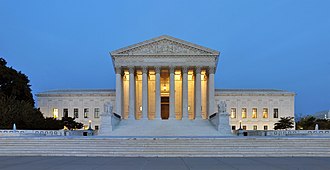
Supreme court

Supreme court

Highest court in a jurisdiction

In most legal jurisdictions, a supreme court, also known as a court of last resort, apex court, high (or final) court of appeal, and court of final appeal, is the highest court within the hierarchy of courts. Broadly speaking, the decisions of a supreme court are binding on all other courts in a nat...

View Profile → Wikipedia ↗
Commercial policy

Commercial policy

Government's policy governing international trade

A commercial policy (also referred to as a trade policy or international trade policy) is a government's policy governing international trade. Commercial policy is an all encompassing term that is used to cover topics which involve international trade. Trade policy is often described in terms of a ...

View Profile → Wikipedia ↗
International Emergency Economic Powers Act

International Emergency Economic Powers Act

United States federal law

The International Emergency Economic Powers Act (IEEPA), Title II of Pub. L. 95–223, 91 Stat. 1626, enacted December 28, 1977, is a United States federal law authorizing the president to regulate international commerce after declaring a national emergency in response to any unusual and extraordinary...

View Profile → Wikipedia ↗

Tariffs in the Trump administration

Topics referred to by the same term

Tariffs in the Trump administration could refer to:

View Profile → Wikipedia ↗

Entity Intersection Graph

Connections for Supreme court:

👤 Donald Trump 19 shared
🌐 Tariff 15 shared
🌐 Tariffs in the Trump administration 12 shared
🌐 International Emergency Economic Powers Act 7 shared
🌐 Commercial policy 5 shared
View full profile

Deep Analysis

Why It Matters

The Supreme Court ruling invalidates half of the U.S. tariff regime, reshaping trade policy and market expectations, potentially easing tensions with key partners while raising uncertainty about future tariffs

Context & Background

  • Supreme Court decision struck down IEEPA-backed tariffs
  • Tariffs on Canada, Mexico, China were largely eliminated
  • Market reaction included volatility in equities and bonds

What Happens Next

The U.S. government will likely negotiate new trade agreements or adjust tariffs, while businesses adjust supply chains; markets will monitor policy shifts and potential retaliatory measures

Frequently Asked Questions

What tariffs were affected by the ruling?

Reciprocal levies on Canada, Mexico, and China were largely eliminated.

How did markets react?

Equity and bond markets experienced volatility following the decision.

What could be the next step for U.S. trade policy?

The administration may negotiate new agreements or adjust remaining tariffs to align with legal requirements.

Original Source
Investing.com – The U.S. trade landscape was upended on Friday after the Supreme Court ruled the Trump administration’s IEEPA-backed tariffs illegal. The decision effectively eliminates nearly half of the current tariff regime, including reciprocal levies on Canada, Mexico, and China, sparking a complex reaction across equity and bond markets.
Read full article at source

Source

investing.com

More from USA

News from Other Countries

🇬🇧 United Kingdom

🇺🇦 Ukraine