

Macron says US Supreme Court tariff ruling shows it is good to have counterweights to power in democracies
#Macron #Supreme Court #Tariffs #Trump #Democracy #Counterweights #Rule of law #Trade policy
📌 Key Takeaways
- Macron commented on US Supreme Court ruling on Trump's tariffs
- French president emphasized importance of counterbalances in democracies
- Ruling demonstrates role of judicial oversight in checking executive power
- Macron's stance aligns with France's advocacy for multilateral trade
📖 Full Retelling
🏷️ Themes
Democracy, Trade Policy, Checks and Balances
📚 Related People & Topics

Democracy
Form of government
Democracy (from Ancient Greek: δημοκρατία, romanized: dēmokratía, from dēmos 'people' and krátos 'rule') is a form of government in which political power is vested in the people or the population of a state. Under a minimalist definition of democracy, rulers are elected through competitive elections...
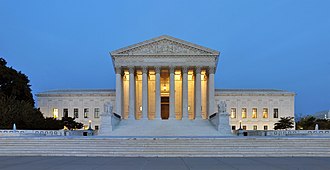
Supreme court
Highest court in a jurisdiction
In most legal jurisdictions, a supreme court, also known as a court of last resort, apex court, high (or final) court of appeal, and court of final appeal, is the highest court within the hierarchy of courts. Broadly speaking, the decisions of a supreme court are binding on all other courts in a nat...

Tariff
Goods import or export tax
A tariff or import tax is a duty imposed by a national government, customs territory, or supranational union on imports of goods and is paid by the importer. Exceptionally, an export tax may be levied on exports of goods or raw materials and is paid by the exporter. Besides being a source of revenue...

Donald Trump
President of the United States (2017–2021; since 2025)
Donald John Trump (born June 14, 1946) is an American politician, media personality, and businessman who is the 47th president of the United States. A member of the Republican Party, he served as the 45th president from 2017 to 2021. Born into a wealthy New York City family, Trump graduated from the...
Entity Intersection Graph
Connections for Democracy:
Mentioned Entities
Deep Analysis
Why It Matters
The Supreme Court ruling demonstrates the importance of checks and balances in a democracy, showing that executive power can be constrained by the judiciary. It underscores the rule of law and signals to other nations that democratic institutions can effectively counteract unilateral decisions.
Context & Background
- The U.S. Supreme Court struck down President Donald Trump's steel and aluminum tariffs as unconstitutional
- French President Emmanuel Macron highlighted the ruling as evidence of healthy democratic counterweights
- The decision has implications for U.S. trade policy and international economic relations
What Happens Next
The U.S. government may seek alternative trade measures or negotiate with affected partners to address the tariffs. Other countries will monitor the outcome as a precedent for judicial checks on executive trade actions.
Frequently Asked Questions
The Court invalidated President Trump's steel and aluminum tariffs as exceeding executive authority.
He wanted to illustrate that democratic systems function best when there are institutions that can restrain concentrated power.
The administration may revise tariff levels, pursue new trade agreements, or seek further legal challenges.