
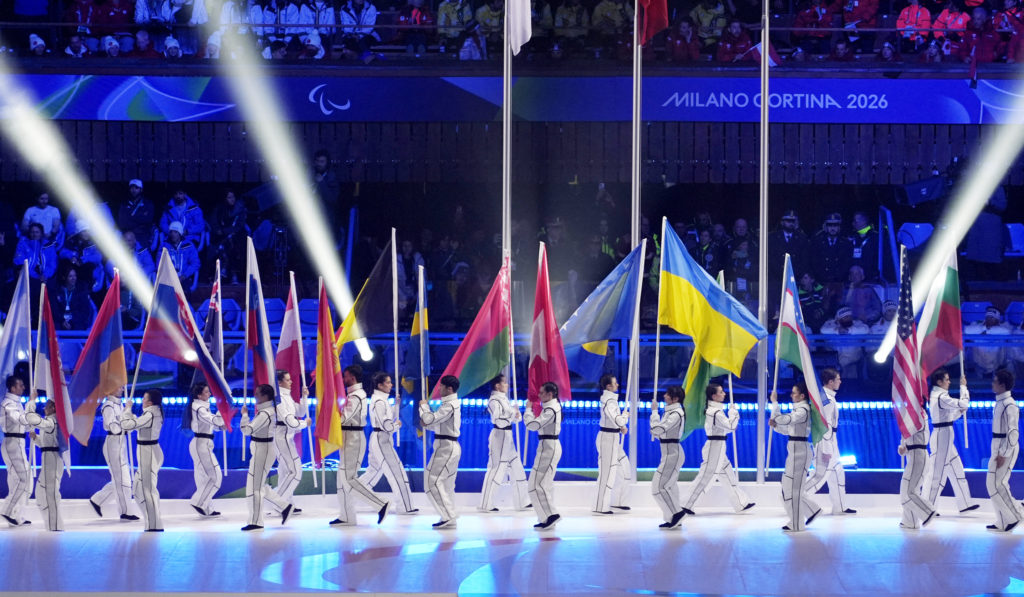
Milan Cortina Paralympics end with boycott by Ukraine at Games marked by Russia's return
#Paralympics #Ukraine #Russia #boycott #Milan Cortina #international sports #political protest
📌 Key Takeaways
- Ukraine boycotted the closing ceremony of the Milan Cortina Paralympics in protest.
- The Games were notable for the controversial return of Russian athletes.
- The boycott highlighted ongoing political tensions in international sports.
- The event concluded amid debates over inclusion and geopolitical conflicts.
📖 Full Retelling
🏷️ Themes
Sports Boycott, Geopolitical Tensions
📚 Related People & Topics

Paralympic Games
Major international sport event for people with disabilities
The Paralympic Games or Paralympics is a periodic series of international multisport events involving athletes with a range of disabilities. There are Winter and Summer Paralympic Games, which since the 1988 Summer Olympics in Seoul, South Korea, have been held shortly after the corresponding Olympi...

Ukraine
Country in Eastern Europe
# Ukraine **Ukraine** is a country located in Eastern Europe. It is the second-largest country in Europe by area, after Russia. Known for its extensive fertile plains, the nation serves as a critical global exporter of grain and is considered a middle power in international affairs. ## Geography a...

Russia
Country in Eastern Europe and North Asia
Russia, or the Russian Federation, is a country in Eastern Europe and North Asia. It is the largest country in the world, spanning eleven time zones and sharing land borders with fourteen countries. With a population of over 140 million, Russia is the most populous country in Europe and the ninth-mo...
Entity Intersection Graph
Connections for Paralympic Games:
Mentioned Entities
Deep Analysis
Why It Matters
This news matters because it highlights how geopolitical conflicts are spilling over into international sports, undermining the Paralympic movement's mission of unity and inclusion. The Ukrainian boycott directly affects Ukrainian athletes who trained for years only to withdraw, while Russia's return creates division among participating nations and the International Paralympic Committee. This situation sets a precedent for how future sporting events might handle nations involved in armed conflicts, potentially politicizing what should be neutral athletic competitions.
Context & Background
- Russia was banned from the 2022 Beijing Paralympics following its invasion of Ukraine, with athletes initially allowed to compete as neutrals before being fully excluded
- The International Paralympic Committee had allowed Russian and Belarusian athletes to compete as neutrals in Milan Cortina under strict conditions
- Ukraine has consistently opposed any Russian participation in international sports since the 2022 invasion began
- The Paralympic Games have historically positioned themselves as apolitical events focused on ability rather than nationality
What Happens Next
The IPC will likely face pressure to review its neutral athlete policy ahead of future events. Ukraine may continue boycotting competitions where Russian athletes participate, potentially affecting upcoming World Championships. There will be increased scrutiny on how international sports federations balance inclusion against geopolitical realities. The 2026 Paralympics in Milan Cortina will proceed with ongoing debates about participation criteria.
Frequently Asked Questions
Ukraine boycotted to protest the International Paralympic Committee's decision to allow Russian athletes to compete as neutrals. The Ukrainian government and Paralympic committee believe any Russian participation legitimizes Russia's invasion of Ukraine and violates the Olympic Truce principle.
Russian athletes competed as neutrals without national flags, anthems, or symbols. They underwent additional vetting and could not have military affiliations or publicly supported the war in Ukraine. The IPC implemented these conditions to separate athletes from government actions.
This creates a significant rift in the Paralympic community between those prioritizing inclusion of all athletes and those believing sports should take moral stands against aggression. The movement's reputation for unity suffers, and future participation decisions will be more politically charged.
Yes, though less common than in Olympic history. The 1980 Moscow Paralympics saw some Western boycotts following the Soviet invasion of Afghanistan. More recently, North Korea boycotted the 2016 Rio Paralympics over political disputes with South Korea.
Reactions were mixed with some nations supporting the neutral athlete approach while others, particularly Eastern European countries, joined Ukraine in criticizing the decision. Several national Paralympic committees expressed concern about setting dangerous precedents for future conflicts.