

Missouri redistricting ruling to be appealed to state Supreme Court
#Missouri #redistricting #Supreme Court #appeal #legislative maps
📌 Key Takeaways
- A Missouri redistricting ruling is being appealed to the state Supreme Court.
- The appeal challenges a lower court's decision on legislative district maps.
- The outcome could impact the balance of political power in Missouri.
- The case centers on the interpretation of state redistricting criteria.
📖 Full Retelling
🏷️ Themes
Redistricting, Legal Appeal
📚 Related People & Topics
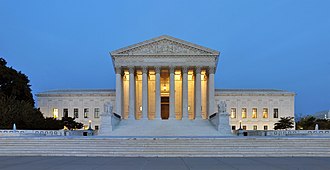
Supreme court
Highest court in a jurisdiction
In most legal jurisdictions, a supreme court, also known as a court of last resort, apex court, high (or final) court of appeal, and court of final appeal, is the highest court within the hierarchy of courts. Broadly speaking, the decisions of a supreme court are binding on all other courts in a nat...

Missouri
U.S. state
Missouri (see pronunciation) is a landlocked state in the Midwestern region of the United States. Ranking 21st in land area, it borders Iowa to the north, Illinois, Kentucky and Tennessee to the east, Arkansas to the south and Oklahoma, Kansas, and Nebraska to the west. With over six million residen...
Entity Intersection Graph
Connections for Supreme court:
Mentioned Entities
Deep Analysis
Why It Matters
This appeal matters because redistricting directly impacts political representation for all Missouri voters, potentially shifting the balance of power in state government for the next decade. It affects every Missouri resident by determining how their votes translate into legislative seats and which communities are grouped together for representation. The outcome could influence which party controls the Missouri legislature and how federal funding is allocated across districts. This case also tests the strength of Missouri's redistricting reforms passed by voters in 2018.
Context & Background
- Missouri voters approved a constitutional amendment in 2018 known as 'Clean Missouri' that changed redistricting criteria to prioritize partisan fairness and competitive districts
- The Missouri legislature later passed a revised version in 2020 that removed some of these provisions, leading to ongoing legal challenges
- Redistricting occurs every 10 years following the U.S. Census to adjust district boundaries for population changes
- Missouri has a history of contentious redistricting battles between Republican-controlled legislature and Democratic-leaning urban areas
- The current case likely involves challenges to district maps drawn after the 2020 Census
What Happens Next
The Missouri Supreme Court will schedule oral arguments and issue a ruling, likely within the next 3-6 months. Depending on their decision, the case could potentially be appealed to federal courts. If the lower court ruling is overturned, Missouri may need to redraw district maps before the 2024 elections. The timing is critical as candidates need to know district boundaries for upcoming election cycles.
Frequently Asked Questions
Redistricting is the process of drawing political district boundaries based on population changes from the census. It matters because how districts are drawn can advantage or disadvantage political parties and determine whose voices are represented in government.
Based on typical Missouri redistricting cases, either the state legislature or advocacy groups are appealing, though the article doesn't specify which party filed the appeal. Historically, both political parties and citizen groups have challenged redistricting plans.
The article doesn't specify, but typically redistricting appeals involve lower court decisions about whether district maps comply with legal requirements for population equality, racial representation, and partisan fairness under state and federal law.
If district boundaries change significantly, it could alter which candidates run in which districts, change the partisan makeup of districts, and potentially shift which party controls the Missouri House and Senate after the 2024 elections.
Missouri redistricting must follow both federal requirements (equal population, Voting Rights Act protections) and state constitutional requirements that have been modified by recent ballot measures addressing partisan fairness and community representation.