

Mojtaba Khamenei, a son of Iran's late supreme leader, is chosen to replace his father
#Mojtaba Khamenei #Iran Supreme Leader #Ali Khamenei #Israeli airstrike #Power succession #Islamic Republic #Middle East tensions #Political transition
📌 Key Takeaways
- Mojtaba Khamenei has been selected as Iran's new supreme leader following his father's death
- His selection comes after an Israeli airstrike killed Ayatollah Ali Khamenei at the start of the war
- Mojtaba has maintained a secretive profile within the Islamic Republic
- This marks the first time power has been passed directly from father to son in Iran's history
📖 Full Retelling
🏷️ Themes
Leadership Transition, Regional Conflict, Political Succession
📚 Related People & Topics

Ali Khamenei
Supreme Leader of Iran since 1989
Ali Hosseini Khamenei (born 19 April 1939) is an Iranian cleric and politician who has served as the second supreme leader of Iran since 1989. He previously served as the third president of Iran from 1981 to 1989. His tenure as supreme leader, spanning 36 years, makes him the longest-serving head of...
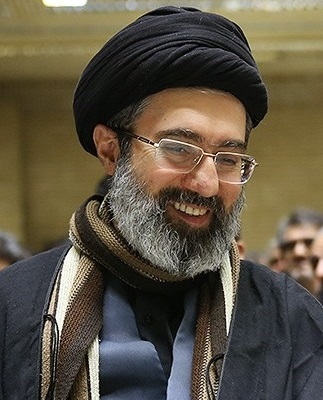
Mojtaba Khamenei
Iranian politician and cleric (born 1969)
Mojtaba Hosseini Khamenei (born 8 September 1969) is an Iranian politician and Muslim cleric. The second eldest child of Ali Khamenei, the former supreme leader of Iran, Mojtaba Khamenei served in the Iran–Iraq War from 1987 to 1988, and also reportedly took control of the Basij that was used to sup...

Supreme Leader of Iran
Head of state of Iran
The supreme leader of the Islamic Republic of Iran, also referred to as the supreme leader of the Islamic Revolution, but officially called the supreme leadership authority, is the de facto head of state and the highest political and religious authority of Iran (above the president). The armed force...
Entity Intersection Graph
Connections for Ali Khamenei:
View full profileMentioned Entities
Deep Analysis
Why It Matters
This news marks a historic transition of power in Iran, with authority passing from father to son for the first time in the Islamic Republic's nearly five decades of existence. The succession comes amid heightened regional tensions following the assassination of Ayatollah Ali Khamenei in an Israeli airstrike, which could escalate Middle East conflicts. This power transfer affects not only Iran's domestic politics but also international relations, particularly with Israel, the US, and other Middle Eastern nations, potentially reshaping the geopolitical landscape of the region.
Context & Background
- Ayatollah Ali Khamenei served as Iran's Supreme Leader for nearly 34 years (since 1989) after succeeding Ayatollah Ruhollah Khomeini, the founder of the Islamic Republic.
- The Iranian political system is structured with the Supreme Leader holding ultimate authority over the military, judiciary, and state media, while the President handles day-to-day affairs.
- Previous succession planning in Iran has been marked by internal power struggles and debates over who would succeed Khamenei, with potential candidates including President Ebrahim Raisi, Judiciary chief Gholam-Hossein Mohseni-Ejei, and others.
- Iran has maintained a policy of 'resistance' against Israel and the US, with its nuclear program and regional proxy forces being central to its foreign policy.
- The assassination of Ayatollah Ali Khamenei by an Israeli airstrike represents a significant escalation in the long-standing shadow conflict between Iran and Israel.
- The Islamic Republic was established in 1979 following the Iranian Revolution, which overthrew the US-backed monarchy of Shah Mohammad Reza Pahlavi.
What Happens Next
Mojtaba Khamenei is expected to consolidate power quickly, potentially appointing loyalists to key positions within the military and security apparatus. The new leadership may respond to his father's assassination with increased support for Iran's proxy groups in Lebanon, Syria, Iraq, Yemen, and the Palestinian territories, potentially leading to heightened regional tensions. International reactions, particularly from the US, Israel, and European powers, will likely shape Iran's foreign policy approach in the coming weeks. There may be internal power struggles as other factions within the Iranian establishment adjust to the new leadership structure, and the succession process will need formal approval from the Assembly of Experts, which oversees the Supreme Leader.
Frequently Asked Questions
Mojtaba Khamenei is the son of the late Ayatollah Ali Khamenei and has maintained a relatively low profile within Iranian politics. Unlike other prominent figures, he has held no official government positions but has been known to wield significant influence behind the scenes, particularly during his father's illness.
This is the first time in Iran's nearly five decades of existence that power has been passed directly from father to son. Previous transitions, such as from Ayatollah Khomeini to Ayatollah Khamenei in 1989, involved broader consensus among the ruling elite rather than direct hereditary succession.
International reactions will likely be mixed, with Western powers potentially expressing concerns about continuity of Iran's nuclear program and regional policies. Israel may view this as an opportunity to test the new leadership's resolve, while regional allies like Syria and Hezbollah may seek reassurances about continued support.
Mojtaba faces significant challenges including managing Iran's economy under international sanctions, navigating complex regional relationships, maintaining unity within the ruling elite, and addressing domestic discontent while upholding the Islamic Republic's ideological foundations.
The continuity in leadership suggests Iran's nuclear program will likely continue on its current trajectory, though the new Supreme Leader may adjust tactics based on international pressure. The succession could either strengthen Iran's resolve to develop nuclear capabilities or create opportunities for diplomatic engagement depending on regional and global dynamics.