
Netanyahu boasts about ‘breaking boundaries in every sense of the word’
📖 Full Retelling
📚 Related People & Topics
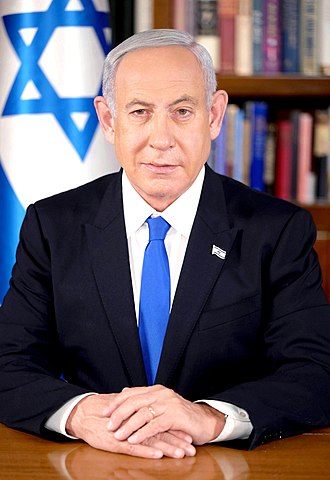
Benjamin Netanyahu
Prime Minister of Israel (1996–1999; 2009–2021; since 2022)
Benjamin "Bibi" Netanyahu (born 21 October 1949) is an Israeli politician and diplomat who has served as Prime Minister of Israel since 2022. Having previously held office from 1996 to 1999 and from 2009 to 2021, Netanyahu is Israel's longest-serving prime minister. Born in Tel Aviv, Netanyahu was r...

Israel
Country in West Asia
Israel, officially the State of Israel, is a country in the Southern Levant region of West Asia. It is bordered by Lebanon to the north, Syria to the northeast, Jordan to the east, and Egypt to the southwest. Israel occupies the West Bank and the Gaza Strip of the Palestinian territories, as well as...
Entity Intersection Graph
Connections for Benjamin Netanyahu:
Mentioned Entities
Deep Analysis
Why It Matters
This statement matters because it signals a potential escalation in Israeli policies that could affect regional stability and international relations. It impacts Palestinian communities living near boundaries, neighboring countries concerned about territorial integrity, and international stakeholders invested in Middle East peace processes. The rhetoric suggests a more assertive approach that could complicate diplomatic efforts and potentially trigger new conflicts in an already volatile region.
Context & Background
- Israel has maintained various boundaries including the Green Line (1949 armistice line), separation barrier in the West Bank, and borders with neighboring states since its establishment in 1948
- The Oslo Accords in the 1990s established Palestinian Authority control in parts of the West Bank but left final status issues including borders unresolved
- Recent years have seen increased Israeli settlement expansion in the West Bank, considered illegal under international law by most countries
- Previous Israeli governments have pursued different approaches to boundaries, from unilateral disengagement from Gaza in 2005 to settlement expansion under various administrations
What Happens Next
Increased scrutiny from international bodies including the UN and ICC regarding potential boundary changes, possible escalation of tensions with Palestinian groups, potential diplomatic responses from Arab states and European partners, and continued debate within Israeli politics about the direction of settlement and boundary policies.
Frequently Asked Questions
He's likely referring to both physical boundaries like the separation barrier and West Bank settlements, and diplomatic boundaries regarding international consensus on Israeli territorial claims. This could include expanding Israeli control into areas previously considered part of future Palestinian territory.
This rhetoric undermines the two-state solution framework that has guided peace efforts for decades. By suggesting boundary changes, it makes negotiated territorial compromises more difficult and could lead to increased Palestinian frustration with diplomatic channels.
Most countries will likely condemn any unilateral boundary changes as violations of international law. The US response will be particularly important, as it has historically influenced Israeli policy through diplomatic and military support.
Palestinians near potential boundary changes face uncertainty about land ownership, freedom of movement, and access to resources. Previous boundary expansions have resulted in home demolitions, restricted agricultural access, and separation from family members.
While settlement expansion has continued under various governments, this explicit rhetoric about 'breaking boundaries' represents a more openly assertive approach. Previous administrations have often framed settlement activity as 'natural growth' rather than boundary-breaking.