Trump's Iran strikes contradict his previous anti-interventionist stance
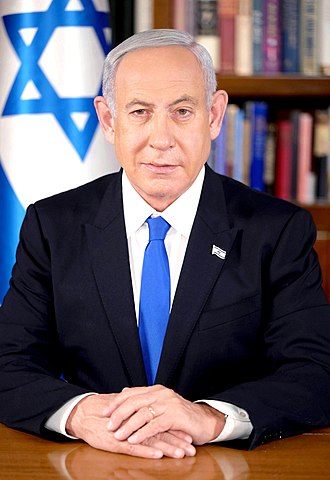
Analysts suggest the war primarily benefits Netanyahu and Israel
Netanyahu has pushed for US action against Iran for two decades
Public opinion polls show majority of Americans oppose war with Iran
📖 Full Retelling
President Donald Trump ordered military strikes against Iran in March 2026, contradicting his previous criticism of interventionist policies in the Middle East, as analysts suggest the primary beneficiaries of the war are Israeli Prime Minister Benjamin Netanyahu and his government. Just ten months earlier, during a May 2025 visit to the region, Trump had declared a new era of US foreign policy, explicitly rejecting attempts to reshape Middle Eastern governments, stating that 'so-called nation-builders wrecked far more nations than they built.' Despite this apparent ideological shift, Trump launched an all-out assault on Iran with the stated goal of bringing 'freedom' to the country, borrowing language from the interventionist playbook of former President George W. Bush, whom he had previously criticized throughout his political career.
Analysts interviewed by Al Jazeera argue that Trump's decision to wage war with Iran does not align with his stated political ideology, policy goals, or campaign promises. 'This is, once again, a war of choice launched by the US with push from Israel,' said Negar Mortazavi, a senior fellow at the Center for International Policy in Washington, DC. 'This is another Israeli war that the US is launching. Israel has pushed the US to attack Iran for two decades, and they finally got it.' Mortazavi highlighted the irony of Trump, who called himself the 'president of peace,' now embracing the very regime-change policies he once condemned.
Netanyahu, who promoted the 2003 US invasion of Iraq, has long warned that Iran is on the verge of acquiring nuclear weapons, despite Iran's denial of seeking nuclear weapons and even Trump administration officials acknowledging no evidence of weaponization. After the US bombed Iran's main enrichment facilities in a 12-day war in June 2025, Netanyahu shifted focus to Iran's ballistic missiles, claiming they could threaten American cities—a claim repeated by Trump but vehemently denied by Tehran and unsupported by public evidence. Despite Trump's National Security Strategy calling for de-prioritizing the Middle East and polls showing only 21% of Americans support war with Iran, the president has continued building the case for wider conflict, plunging the region into chaos with Iran's retaliatory strikes against bases hosting US troops across the Middle East.
🏷️ Themes
US foreign policy, Middle East conflict, Israel-Iran relations
# Iran
**Iran**, officially the **Islamic Republic of Iran** and historically known as **Persia**, is a sovereign country situated in West Asia. It is a major regional power, ranking as the 17th-largest country in the world by both land area and population. Combining a rich historical legacy with a...
The Middle East is a geopolitical region encompassing the Arabian Peninsula, Egypt, Iran, Iraq, the Levant, and Turkey.
The term came into widespread usage by Western European nations in the early 20th century as a replacement of the term Near East (both were in contrast to the Far East). The term ...
Prime Minister of Israel (1996–1999; 2009–2021; since 2022)
Benjamin "Bibi" Netanyahu (born 21 October 1949) is an Israeli politician and diplomat who has served as Prime Minister of Israel since 2022. Having previously held office from 1996 to 1999 and from 2009 to 2021, Netanyahu is Israel's longest-serving prime minister.
Born in Tel Aviv, Netanyahu was r...
President of the United States (2017–2021; since 2025)
Donald John Trump (born June 14, 1946) is an American politician, media personality, and businessman who is the 47th president of the United States. A member of the Republican Party, he served as the 45th president from 2017 to 2021.
Born into a wealthy New York City family, Trump graduated from the...
News | Donald Trump Netanyahu’s war? Analysts say Trump’s Iran strikes benefit Israel, not US War with Iran contradicts the US president’s own criticism of regime change policies in the Middle East, analysts say. Listen to this article | 6 mins By Ali Harb Published On 1 Mar 2026 1 Mar 2026 Click here to share on social media Share Save Add Al Jazeera on Google President Donald Trump stood in front of regional leaders during a visit to the Middle East in May and declared a new era of US foreign policy in the region, one that is not guided by trying to reshape it or change its governing systems. “In the end, the so-called nation-builders wrecked far more nations than they built, and the interventionists were intervening in complex societies that they did not even understand themselves,” the US president said in rebuke of his hawkish predecessors. Recommended Stories list of 3 items list 1 of 3 Iran confirms Supreme Leader Ali Khamenei dead after US-Israeli attacks list 2 of 3 Iran’s Foreign Ministry defends retaliatory strikes, slams US betrayal list 3 of 3 What US military actions has Trump taken since returning to office? end of list Less than a year later, Trump ordered an all-out assault on Iran with the stated goal of bringing “freedom” to the country, borrowing language from the playbook of interventionist neoconservatives, like former President George W Bush, whom he spent his political career criticising. Analysts say the war with Iran does not fit with Trump’s stated political ideology, policy goals or campaign promises . Instead, several Iran experts told Al Jazeera that Trump is waging a war, together with Israel, that only benefits Israel and its prime minister, Benjamin Netanyahu. “This is, once again, a war of choice launched by the US with push from Israel,” said Negar Mortazavi, a senior fellow at the Center for International Policy in Washington, DC. “This is another Israeli war that the US is launching. Israel has pushed the US to attack Iran for tw...