
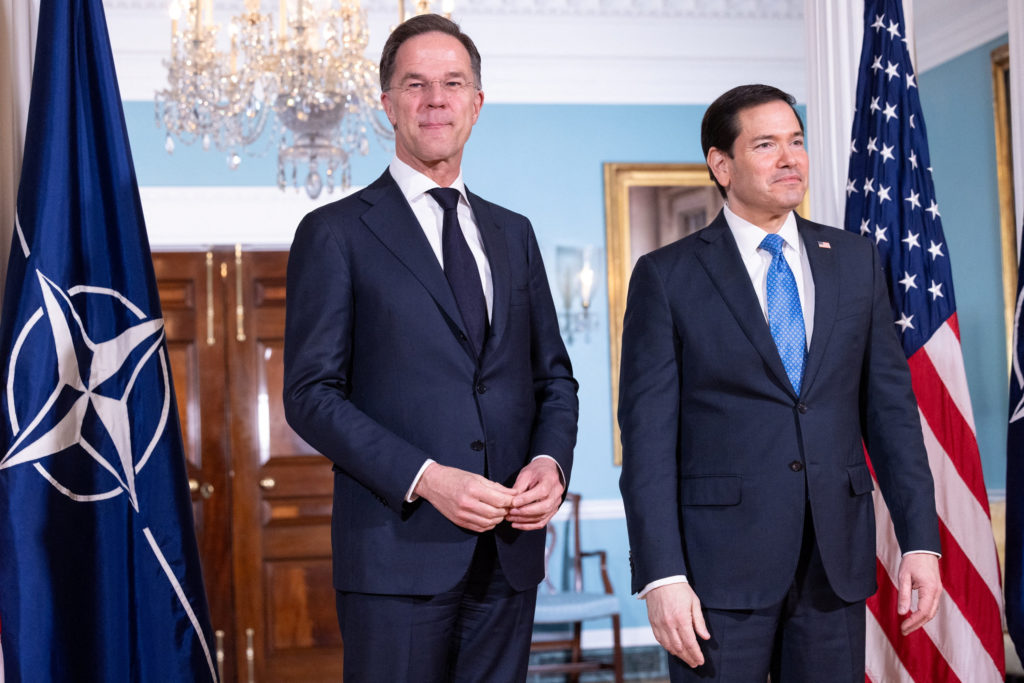
News Wrap: NATO chief meets with Trump in bid to ease tensions
#NATO #Mark Rutte #Donald Trump #baggage fees #oil prices #ceasefire #climate record
📌 Key Takeaways
- NATO chief Mark Rutte met with former President Trump to ease tensions over alliance funding and strategy.
- The diplomatic meeting aimed to address Trump's criticisms and preserve transatlantic unity.
- Southwest Airlines raised baggage fees due to higher fuel costs linked to Middle East conflict.
- Stock markets surged and oil prices fell on hopes for Iran ceasefire talks.
- Last month was officially the warmest March on record globally.
📖 Full Retelling
🏷️ Themes
Diplomacy, Economics, Climate
📚 Related People & Topics

Mark Rutte
Dutch politician (born 1967)
Mark Rutte (Dutch: [ˈmɑr(ə)k ˈrʏtə] ; born 14 February 1967) is a Dutch politician who has served as the 14th secretary general of NATO since October 2024. He previously served as prime minister of the Netherlands from 2010 to 2024 and leader of the People's Party for Freedom and Democracy (VVD) fro...

NATO
Intergovernmental military alliance
# North Atlantic Treaty Organization (NATO) The **North Atlantic Treaty Organization (NATO)** is a prominent intergovernmental military alliance consisting of 32 member states across Europe and North America. Established as a cornerstone of post-World War II international relations, the organizatio...

Donald Trump
President of the United States (2017–2021; since 2025)
Donald John Trump (born June 14, 1946) is an American politician, media personality, and businessman who is the 47th president of the United States. A member of the Republican Party, he served as the 45th president from 2017 to 2021. Born into a wealthy New York City family, Trump graduated from the...
Entity Intersection Graph
Connections for Mark Rutte:
Mentioned Entities
Deep Analysis
Why It Matters
The meeting between Rutte and Trump is critical for the future stability of NATO, as Trump's potential return to power could reshape U.S. foreign policy and weaken the alliance's support for Ukraine. Economic shifts, such as rising airline fees and fluctuating oil prices, directly impact consumers and reflect the broader financial instability caused by geopolitical conflicts. Additionally, the record-breaking temperatures reported by NOAA underscore the escalating urgency of the climate crisis, which poses severe long-term risks to global security and infrastructure.
Context & Background
- Donald Trump has frequently criticized NATO allies for failing to meet the target of spending 2% of their GDP on defense, a stance that caused significant strain during his presidency.
- Mark Rutte, the former Prime Minister of the Netherlands, recently assumed the role of NATO Secretary General, succeeding Jens Stoltenberg.
- The ongoing war in Ukraine has created a volatile geopolitical environment, making NATO unity essential for countering Russian aggression.
- Global oil markets are highly sensitive to instability in the Middle East, particularly regarding Iran, which is a major player in regional energy supplies.
- Climate agencies have documented a consistent pattern of rising global temperatures over the last decade, with recent years frequently setting new heat records.
What Happens Next
Diplomatic efforts will likely continue to gauge Trump's stance on NATO should he win the upcoming election. Markets will remain sensitive to any updates regarding the status of ceasefire talks in the Middle East. Climate organizations will continue monitoring temperature data to assess the severity of the ongoing warming trend.
Frequently Asked Questions
Mark Rutte met with Trump to ease tensions and address Trump's criticisms regarding NATO funding and strategic priorities, aiming to preserve alliance unity.
The airline raised fees to cover increased operational costs, specifically attributing the rise to higher global fuel prices driven by the conflict involving Iran.
U.S. markets experienced a significant rally and oil prices dropped as investors reacted positively to news of potential ceasefire talks in the Middle East.
The National Oceanic and Atmospheric Administration confirmed that March was the warmest March on record globally, continuing a long-term warming trend.