
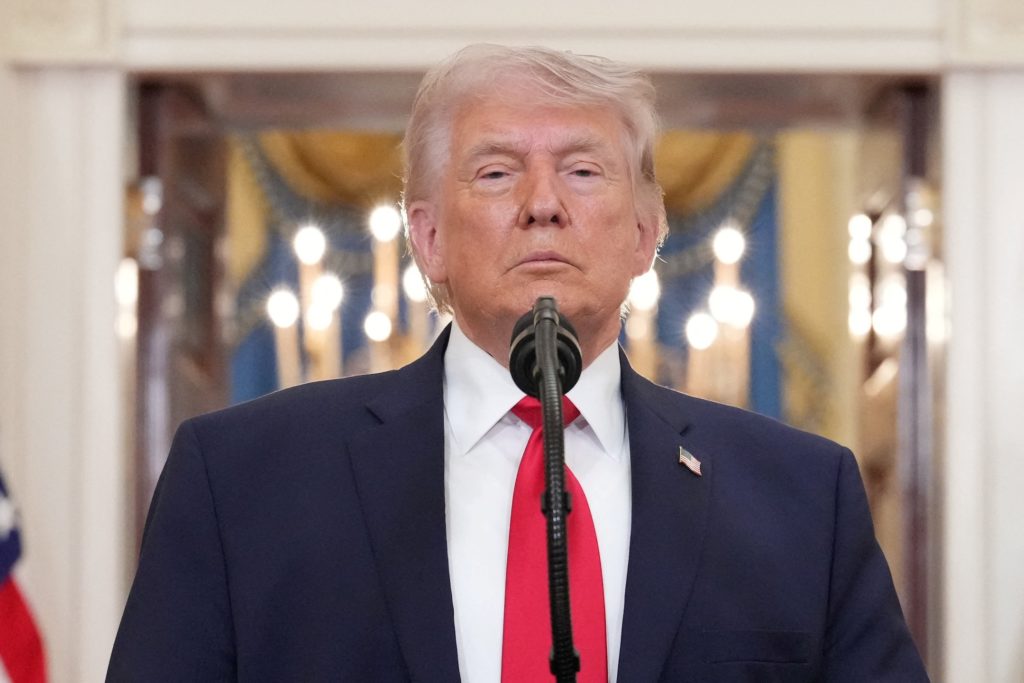
News Wrap: Trump seeking $1.5 trillion for military spending in new budget
📖 Full Retelling
📚 Related People & Topics

Donald Trump
President of the United States (2017–2021; since 2025)
Donald John Trump (born June 14, 1946) is an American politician, media personality, and businessman who is the 47th president of the United States. A member of the Republican Party, he served as the 45th president from 2017 to 2021. Born into a wealthy New York City family, Trump graduated from the...
Entity Intersection Graph
Connections for Donald Trump:
Mentioned Entities
Deep Analysis
Why It Matters
This news is important because a $1.5 trillion military budget request represents a significant increase in defense spending, potentially reshaping U.S. fiscal priorities and global military posture. It affects taxpayers through potential impacts on the national debt and funding for domestic programs like healthcare, education, and infrastructure. The proposal also influences international relations, signaling U.S. military commitments and potentially escalating global defense spending trends.
Context & Background
- The U.S. defense budget has historically been the largest in the world, exceeding the combined military spending of the next several countries.
- Recent budgets have seen increases under both Democratic and Republican administrations, with debates often centering on balancing defense needs with domestic spending.
- The Biden administration's previous defense budgets were around $800 billion annually, making this $1.5 trillion request a substantial proposed increase.
- Military spending often correlates with geopolitical tensions, such as those involving Russia, China, and conflicts in the Middle East.
What Happens Next
Congress will review and negotiate the budget request, likely leading to debates and potential modifications before any final approval. The process may extend over several months, with possible hearings involving military and budget officials. If approved, the increased funding would impact military contracts, personnel, and equipment procurement starting in the next fiscal year.
Frequently Asked Questions
This request is nearly double recent annual defense budgets, which were around $800 billion, representing one of the largest proposed increases in modern history. It would significantly exceed spending levels seen under previous administrations.
Funding could go toward modernizing nuclear arsenals, expanding naval and air forces, cybersecurity, and military personnel benefits. It may also support advanced technologies like AI and hypersonic weapons development.
A large increase in military spending could lead to cuts or reduced growth in domestic programs such as healthcare, education, and social services to manage budget constraints. It may also impact national debt levels if not offset by revenue increases.
Approval depends on bipartisan negotiations, with potential resistance from lawmakers concerned about fiscal responsibility or prioritizing domestic needs. The final budget may be modified through congressional oversight and compromise.