

Newsom: Idea that he and Harris don't like each other 'preposterous'
#Gavin Newsom #Kamala Harris #political feud #Democratic Party #2024 election #unity #speculation
📌 Key Takeaways
- Governor Gavin Newsom dismissed rumors of a feud with Vice President Kamala Harris as 'preposterous'.
- Newsom emphasized his strong working relationship and personal respect for Harris.
- The statement aims to counter speculation about Democratic Party unity ahead of the 2024 election.
- The denial highlights efforts to present a cohesive front within the party leadership.
📖 Full Retelling
🏷️ Themes
Political Unity, Democratic Party
📚 Related People & Topics

Gavin Newsom
Governor of California since 2019
Gavin Christopher Newsom (born October 10, 1967) is an American politician and businessman serving as the 40th governor of California since 2019. A member of the Democratic Party, he served as the 49th lieutenant governor of California from 2011 to 2019 and as the 42nd mayor of San Francisco from 20...

Kamala Harris
Vice President of the United States from 2021 to 2025
Kamala Devi Harris ( KAH-mə-lə DAY-vee; born October 20, 1964) is an American politician and attorney who served as the 49th vice president of the United States from 2021 to 2025 under President Joe Biden. She is the first female, first African American, and first Asian American vice president, and...
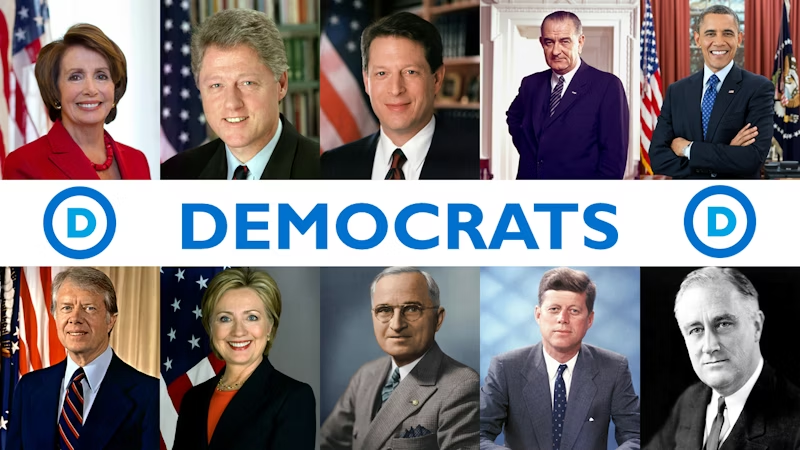
Democratic Party
Topics referred to by the same term
Democratic Party and similar terms may refer to:
Entity Intersection Graph
Connections for Gavin Newsom:
Mentioned Entities
Deep Analysis
Why It Matters
This statement matters because it addresses persistent rumors about Democratic leadership unity ahead of the 2024 election. As California Governor Gavin Newsom and Vice President Kamala Harris are both prominent figures who could potentially be future presidential candidates, their relationship affects Democratic Party cohesion and messaging. The denial of friction is important for maintaining party unity and preventing internal divisions from becoming public distractions during a critical election cycle.
Context & Background
- Gavin Newsom and Kamala Harris both rose through California politics, with Harris serving as San Francisco District Attorney and California Attorney General before becoming U.S. Senator and Vice President.
- There have been longstanding media reports and political speculation about tension between the two ambitious politicians who represent overlapping California political networks.
- Newsom has been mentioned as a potential presidential candidate for 2028 or beyond, while Harris is the current Vice President and potential 2024 presidential candidate if President Biden doesn't run for re-election.
- Both figures are considered part of the Democratic Party's progressive wing and have worked together on California-specific issues including criminal justice reform and climate policy.
What Happens Next
Political observers will watch for joint appearances or coordinated policy announcements between Newsom and Harris to demonstrate unity. The relationship will continue to be scrutinized through the 2024 Democratic National Convention and election cycle. If President Biden wins re-election, attention will shift to potential 2028 presidential ambitions for both figures and whether they might compete against each other.
Frequently Asked Questions
Speculation stems from their overlapping political careers in California, where both have been ambitious politicians competing for similar support networks. Some reports suggest professional rivalry exists between their teams, though both have consistently denied personal animosity.
Unity between prominent Democrats like Newsom and Harris helps present a cohesive party front against Republican challengers. Any public friction could distract from campaign messaging and fuel narratives about Democratic division, particularly regarding the party's future leadership.
Both politicians have publicly supported each other's campaigns and policies over the years. They've appeared together at California events and have aligned on key Democratic priorities including climate action, reproductive rights, and gun safety legislation.
While possible in theory, most political analysts believe they would likely coordinate to avoid direct competition given their shared California base and party unity considerations. The Democratic establishment typically works to prevent such conflicts between high-profile party members.