
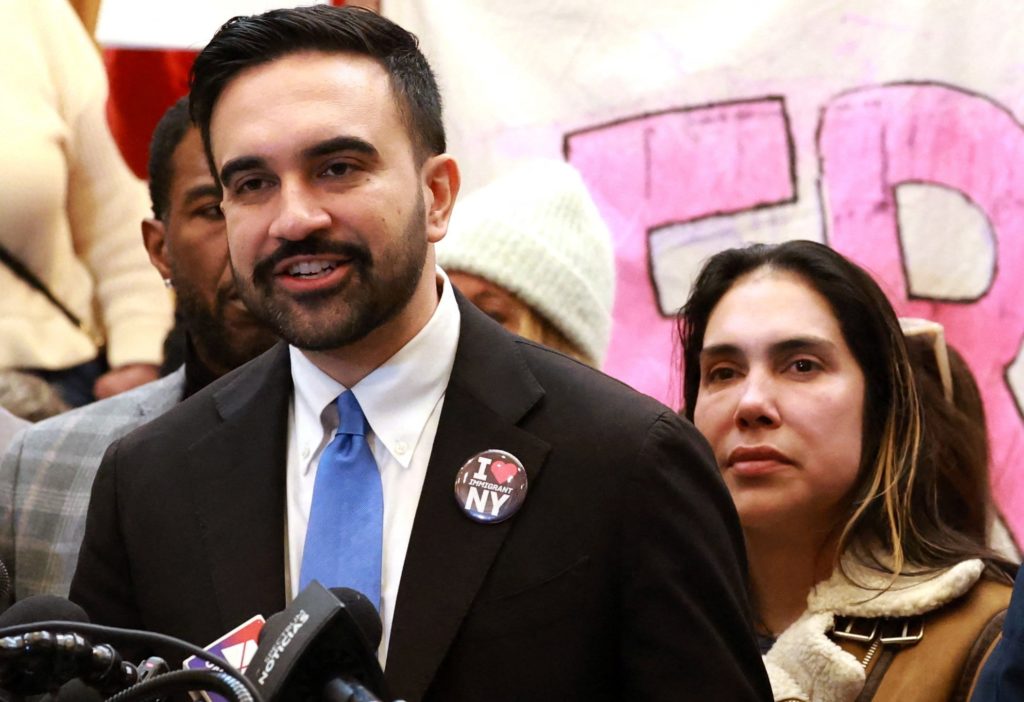
NYC Mayor Mamdani launches community safety office
#NYC #Mayor Mamdani #community safety #public safety #office launch #New York City #safety reform
📌 Key Takeaways
- NYC Mayor Mamdani has launched a new community safety office.
- The office aims to address public safety concerns through community-based approaches.
- It represents a shift toward localized, collaborative safety initiatives.
- The launch is part of broader efforts to reform public safety strategies in New York City.
📖 Full Retelling
🏷️ Themes
Public Safety, Local Government
📚 Related People & Topics

New York City
Most populous city in the United States
New York, often called New York City (NYC), is the most populous city in the United States. It is located at the southern tip of New York State on New York Harbor, one of the world's largest natural harbors. The city comprises five boroughs, each coextensive with its respective county.

Zohran Mamdani
Mayor of New York City since January 2026
Zohran Kwame Mamdani (born October 18, 1991) is an American politician who has served as the 112th mayor of New York City since January 2026. A member of the Democratic Party and the Democratic Socialists of America, Mamdani served from 2021 to 2025 as a member of the New York State Assembly for the...
Entity Intersection Graph
Connections for New York City:
Mentioned Entities
Deep Analysis
Why It Matters
This announcement matters because it represents a significant shift in New York City's approach to public safety, moving beyond traditional policing models. It directly affects NYC residents, particularly communities that have experienced strained police relations, by creating alternative safety structures. The initiative could influence national conversations about police reform and community-based safety solutions. If successful, it may serve as a model for other major cities grappling with similar challenges.
Context & Background
- New York City has been at the center of national debates about police reform following the 2020 protests over police brutality and racial justice.
- Mayor Mamdani was elected on a platform that included promises to reimagine public safety and address systemic issues in policing.
- Many cities across the U.S. have experimented with alternative public safety models, including mental health crisis response teams and violence interruption programs.
- NYC's police department has faced criticism for racial disparities in stops and use of force, leading to calls for structural changes.
- Previous administrations have implemented various police reform measures with mixed results and ongoing community concerns.
What Happens Next
The community safety office will begin hiring staff and developing protocols over the next 3-6 months. Initial pilot programs will likely launch in select neighborhoods within 6-9 months, with city council oversight hearings expected within the year. Key developments to watch include budget allocations in the next fiscal cycle, partnerships with community organizations, and potential legislative changes to support the office's authority.
Frequently Asked Questions
The office will coordinate non-police responses to certain emergency calls, particularly those involving mental health crises, homelessness, and quality-of-life issues. It will develop and manage community-based safety programs and serve as an alternative to traditional police intervention in appropriate situations.
The NYPD will continue handling criminal investigations and violent emergencies, but the community safety office will take over certain non-violent calls. This represents a reallocation of responsibilities rather than a reduction in overall public safety resources, though it may eventually impact police staffing and budget priorities.
Initial focus will likely be on neighborhoods with historically high rates of police interactions for non-violent incidents and communities that have advocated most strongly for police alternatives. The office will need to develop criteria for expansion based on pilot program outcomes and community input.
Success metrics will include response times for non-police emergencies, reduction in unnecessary police encounters, community satisfaction surveys, and comparative data on outcomes for similar incidents handled by different response systems. Crime rates and public perception of safety will also be monitored.
Initial funding will come from the city's general budget, potentially reallocating some police department resources. The office may also seek state and federal grants for community safety initiatives, and could eventually develop partnerships with private organizations and foundations.