
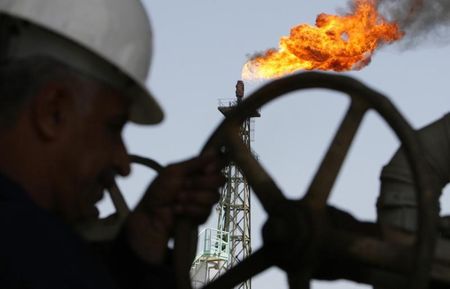
Oil steady around $104/bbl as Trump eyes Iran war exit without Hormuz reopening
📚 Related People & Topics
List of wars involving Iran
This is a list of wars involving the Islamic Republic of Iran and its predecessor states. It is an unfinished historical overview.

Strait of Hormuz
Strait between the Gulf of Oman and the Persian Gulf
The Strait of Hormuz ( Persian: تنگهٔ هُرمُز Tangeh-ye Hormoz , Arabic: مَضيق هُرمُز Maḍīq Hurmuz) is a strait between the Persian Gulf and the Gulf of Oman. It provides the only sea passage from the Persian Gulf to the open ocean and is one of the world's most strategically important choke points. ...

Donald Trump
President of the United States (2017–2021; since 2025)
Donald John Trump (born June 14, 1946) is an American politician, media personality, and businessman who is the 47th president of the United States. A member of the Republican Party, he served as the 45th president from 2017 to 2021. Born into a wealthy New York City family, Trump graduated from the...
Entity Intersection Graph
Connections for List of wars involving Iran:
Mentioned Entities
Deep Analysis
Why It Matters
This news is important because it highlights the delicate balance in global oil markets, where geopolitical tensions in the Middle East directly impact energy prices and economic stability worldwide. It affects oil-dependent industries, consumers facing fuel costs, and countries reliant on imports through the Strait of Hormuz, a critical chokepoint for about 20% of global oil trade. The situation underscores the risks of supply disruptions and the influence of U.S. foreign policy on international energy security.
Context & Background
- The Strait of Hormuz is a narrow waterway between Iran and Oman, through which approximately 21 million barrels of oil pass daily, making it one of the world's most vital maritime routes.
- Tensions between the U.S. and Iran have escalated in recent years, including after the U.S. withdrawal from the 2015 Iran nuclear deal (JCPOA) in 2018 and subsequent sanctions on Iranian oil exports.
- Iran has previously threatened to close the Strait of Hormuz in response to sanctions or military conflicts, which could severely disrupt global oil supplies and spike prices.
- Oil prices are sensitive to geopolitical events; for example, they surged during past Middle East conflicts, such as the Iran-Iraq war in the 1980s and more recent attacks on tankers in the region.
What Happens Next
If the U.S. proceeds with an exit from conflict without reopening the Strait of Hormuz, oil prices may remain volatile, with potential spikes if supply disruptions occur. Upcoming developments could include diplomatic negotiations between involved nations, increased naval patrols in the region, and OPEC+ meetings to adjust production in response to market conditions. Monitoring for any military escalations or sanctions relief will be crucial in the coming weeks.
Frequently Asked Questions
The Strait of Hormuz is a critical maritime chokepoint through which about 20% of the world's oil supply passes daily, linking major producers like Saudi Arabia and Iran to global markets. Any closure or disruption there can lead to significant supply shortages and price increases, impacting economies worldwide.
U.S. foreign policy decisions, such as sanctions on Iran or military actions in the Middle East, influence oil prices by affecting supply stability and geopolitical risk perceptions. In this case, Trump's approach to Iran could either ease tensions or escalate them, directly impacting market volatility and energy costs.
Sustained high oil prices around $104 per barrel can increase costs for transportation, manufacturing, and heating, leading to higher inflation and reduced consumer spending. This affects global economic growth, particularly in oil-importing countries, while benefiting oil-exporting nations through increased revenue.
Iran has the military capability to disrupt traffic in the Strait of Hormuz through mines, missiles, or naval blockades, though a full closure would be challenging due to international opposition and U.S. naval presence. Such an action would likely trigger a severe global crisis and military response.
Oil markets often react to geopolitical tensions with price volatility, as traders anticipate supply risks. Prices may spike on news of conflicts or threats, but can stabilize if alternative supplies or diplomatic resolutions emerge, highlighting the market's sensitivity to uncertainty in key regions.