
Pairwise is Not Enough: Hypergraph Neural Networks for Multi-Agent Pathfinding
#Multi-Agent Path Finding #Hypergraph Neural Networks #Collision Avoidance #Graph Neural Networks #Deep Learning #Robotic Coordination #arXiv
📌 Key Takeaways
- Multi-Agent Path Finding (MAPF) remains an NP-hard problem difficult for traditional computers to solve optimally in real-time.
- Current learning-based models using standard Graph Neural Networks are limited by simple pairwise message passing.
- The new research proposes Hypergraph Neural Networks as a superior method for capturing complex multi-robot interactions.
- This technology has significant implications for improving efficiency in automated warehouses and autonomous traffic management.
📖 Full Retelling
🏷️ Themes
Artificial Intelligence, Robotics, Pathfinding
📚 Related People & Topics
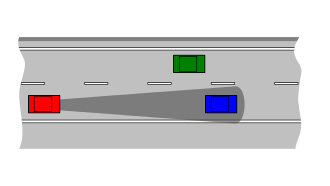
Collision avoidance system
Motorcar safety system
A collision avoidance system (CAS), also known as a pre-crash system, forward collision warning system (FCW), or collision mitigation system, is an advanced driver-assistance system designed to prevent or reduce the severity of a collision. In its basic form, a forward collision warning system monit...

Deep learning
Branch of machine learning
In machine learning, deep learning focuses on utilizing multilayered neural networks to perform tasks such as classification, regression, and representation learning. The field takes inspiration from biological neuroscience and revolves around stacking artificial neurons into layers and "training" t...
Graph neural network
Class of artificial neural networks
Graph neural networks (GNN) are specialized artificial neural networks that are designed for tasks whose inputs are graphs. One prominent example is molecular drug design. Each input sample is a graph representation of a molecule, where atoms form the nodes and chemical bonds between atoms form the...
📄 Original Source Content
arXiv:2602.06733v1 Announce Type: cross Abstract: Multi-Agent Path Finding (MAPF) is a representative multi-agent coordination problem, where multiple agents are required to navigate to their respective goals without collisions. Solving MAPF optimally is known to be NP-hard, leading to the adoption of learning-based approaches to alleviate the online computational burden. Prevailing approaches, such as Graph Neural Networks (GNNs), are typically constrained to pairwise message passing between a