
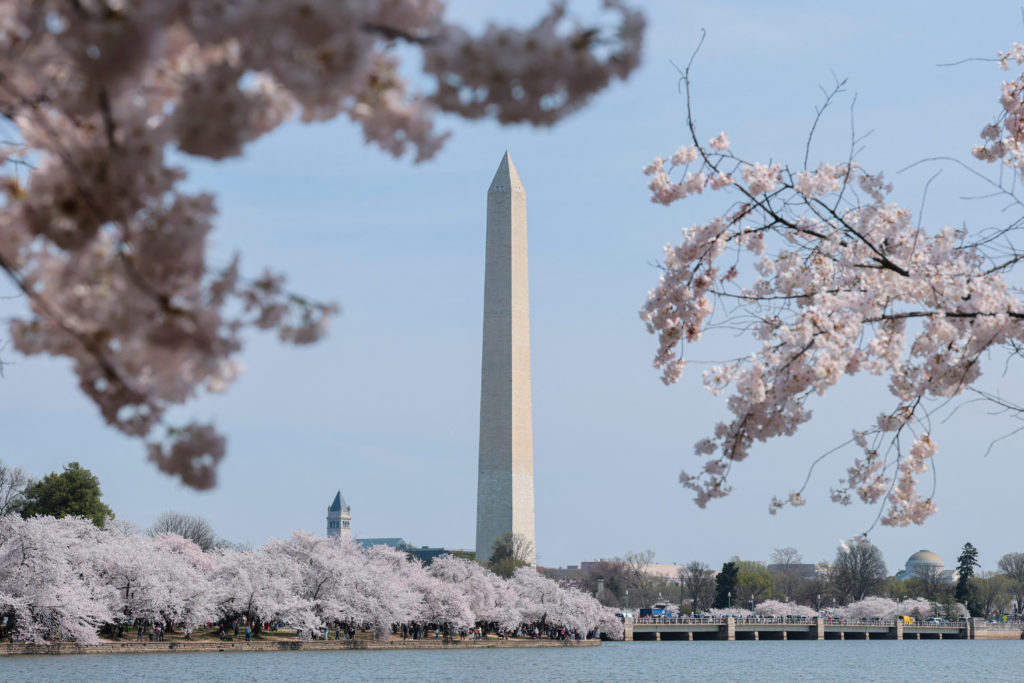
PHOTOS: It's peek bloom for Washington's iconic cherry blossoms
📖 Full Retelling
📚 Related People & Topics

National Mall
Landscaped park in Washington, D.C.
The National Mall is a landscaped park near the downtown area of Washington, D.C., the capital city of the United States. It contains and borders a number of museums of the Smithsonian Institution, art galleries, cultural institutions, and memorials, sculptures, and statues. It is administered by th...

Washington, D.C.
Federal capital district of the United States
Washington, D.C., officially the District of Columbia and commonly known as simply Washington or D.C., is the capital city and federal district of the United States. The city is on the Potomac River across from Virginia and shares land borders with Maryland to its north and east. It was named after ...
Entity Intersection Graph
Connections for National Mall:
Mentioned Entities
Deep Analysis
Why It Matters
The peak bloom of Washington's cherry blossoms is a significant cultural and economic event that attracts over 1.5 million visitors annually, generating substantial tourism revenue for the region. This natural spectacle symbolizes international friendship between the U.S. and Japan while serving as an important indicator of climate patterns and seasonal changes. The event affects local businesses, tourism operators, city planners managing crowds, and environmental researchers studying phenology and climate impacts on urban ecosystems.
Context & Background
- The original cherry trees were a gift from Japan in 1912 as a symbol of friendship between the two nations
- The National Cherry Blossom Festival has been held annually since 1935, except during World War II
- Peak bloom typically occurs between late March and early April, though timing has shifted earlier due to climate change
- The trees are primarily Yoshino cherry trees around the Tidal Basin, with some surviving original 1912 trees still blooming
- The event inspired similar cherry blossom festivals in cities worldwide, promoting cultural exchange and spring celebrations
What Happens Next
The National Cherry Blossom Festival will continue through April 14 with events including the Blossom Kite Festival, parade, and fireworks. Tourism will remain high for approximately 4-7 days as blossoms remain at peak before petals begin to fall. City officials will monitor crowd sizes and implement traffic controls while environmental groups may conduct studies on this year's bloom timing compared to historical averages.
Frequently Asked Questions
Peak bloom conditions usually last 4-7 days depending on weather conditions. Cool, calm weather can extend the peak period, while rain, wind, or warm temperatures can shorten it significantly by causing petals to fall more quickly.
The earlier bloom times are primarily attributed to climate change and urban heat island effects. Warmer winter and spring temperatures cause trees to break dormancy sooner, with peak bloom advancing approximately 5 days earlier compared to a century ago.
After peak bloom, petals begin to fall within days, creating the 'sakura snow' effect. The trees then develop leaves and enter their normal growing season, with the fallen petals being naturally decomposed or sometimes collected for composting by park services.
Yes, while Yoshino cherry trees are most famous around the Tidal Basin, Washington has multiple varieties including Kwanzan cherry trees that bloom about two weeks later. Different varieties provide staggered blooming periods extending the viewing season.
Weather critically impacts both bloom timing and duration. Warm spells in late winter/early spring accelerate blooming, while late frosts can damage buds. Rain and wind during peak bloom shorten viewing time by knocking petals off trees prematurely.