
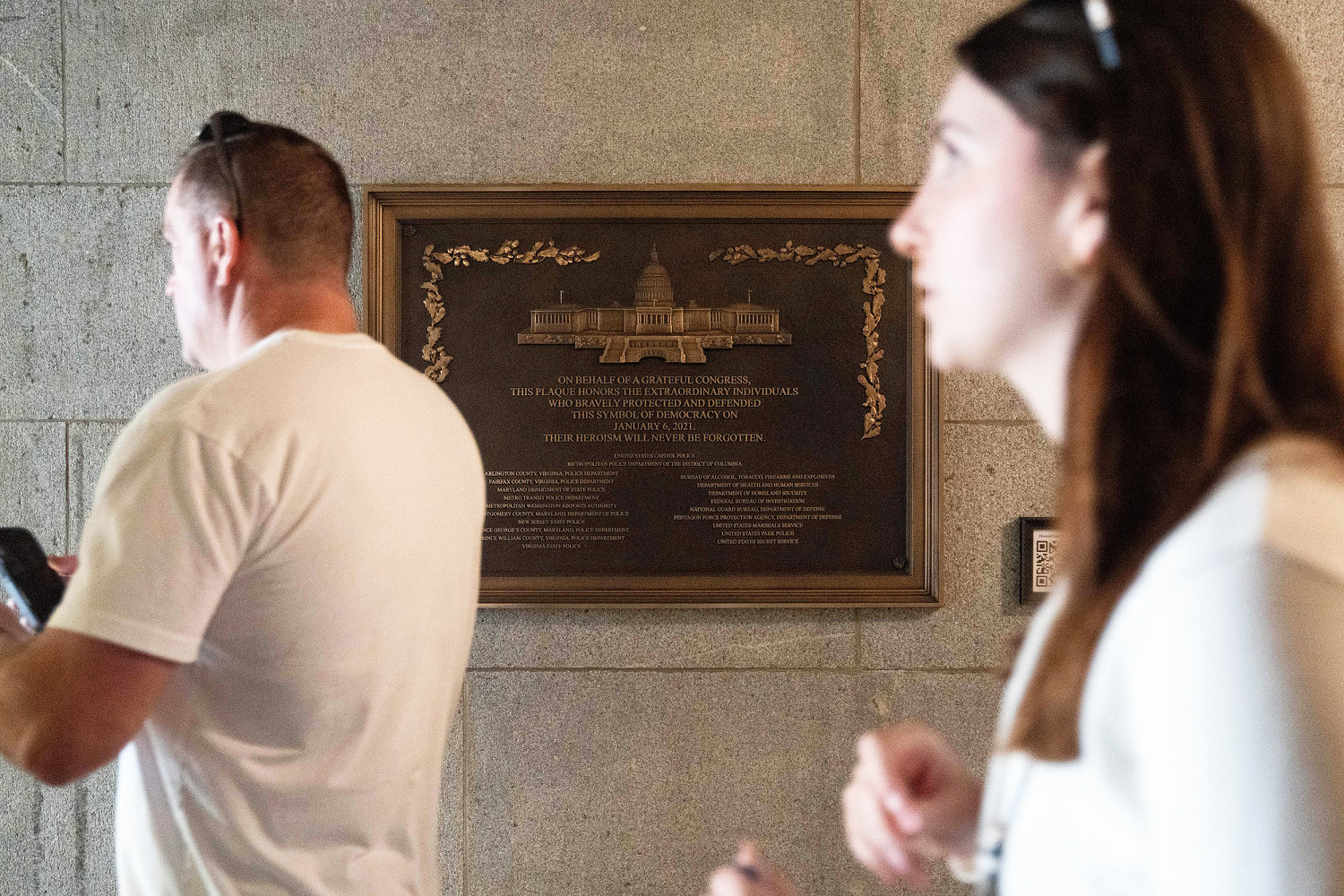
Police officers say Jan. 6 plaque is hidden from the public's view
#Jan. 6 #police officers #memorial plaque #Capitol attack #public access #transparency #law enforcement
📌 Key Takeaways
- Police officers claim a Jan. 6 memorial plaque is not publicly accessible.
- The plaque commemorates officers who responded to the Capitol attack.
- Its location is described as hidden or restricted from general view.
- This has sparked criticism over transparency and recognition of officers.
📖 Full Retelling
🏷️ Themes
Capitol Attack, Police Recognition
📚 Related People & Topics

Timeline of violent incidents at the United States Capitol
The United States Capitol in Washington, D.C., became the meeting place of the United States Congress when the building was initially completed in 1800. Since that time, there have been many violent and dangerous incidents, including shootings, fistfights, bombings, poisonings and a major riot. The ...
Entity Intersection Graph
Connections for Timeline of violent incidents at the United States Capitol:
Mentioned Entities
Deep Analysis
Why It Matters
This news matters because it involves the public commemoration of the January 6 Capitol attack, which was a significant event in U.S. political history. It affects police officers who responded to the attack, historians and educators seeking to preserve its memory, and the general public's access to historical markers. The placement of such plaques can influence how historical events are remembered and taught, making transparency about their location important for democratic accountability and public education.
Context & Background
- The January 6, 2021, attack on the U.S. Capitol was an attempt to disrupt the certification of the 2020 presidential election results, resulting in multiple deaths, injuries, and widespread political fallout.
- Law enforcement officers, including Capitol Police and D.C. Metropolitan Police, faced violence during the attack, with over 140 officers injured and some later dying by suicide or from injuries sustained.
- Commemorative plaques or markers for historical events are often placed in public spaces to honor participants or victims, but their visibility and accessibility can become points of contention, especially for politically charged events.
- Previous controversies have arisen over how January 6 is memorialized, including debates over calling it an 'insurrection,' 'riot,' or 'protest,' reflecting ongoing political divisions in the U.S.
What Happens Next
If the plaque remains hidden, there may be calls for its relocation to a more accessible area, potentially leading to public demonstrations or legal actions. Government officials or oversight committees could investigate the placement decision, with hearings or reports expected in the coming months. Advocacy groups may launch campaigns to ensure similar memorials are publicly visible, influencing future commemorations of January 6 or other historical events.
Frequently Asked Questions
It might be hidden due to political sensitivities or security concerns, as the event remains divisive, and some officials may fear it could incite further unrest or vandalism. Alternatively, it could be an oversight in planning or placement, but police officers' claims suggest intentional concealment.
Typically, government agencies, historical commissions, or legislative bodies oversee plaque placements, often with input from affected groups like law enforcement. In this case, Capitol authorities or congressional committees likely had a role, but the process may lack transparency.
Hiding the plaque could obscure the sacrifices of officers and dilute public awareness, potentially shaping how future generations perceive the event. It may fuel debates over whether the attack is being downplayed or improperly memorialized in official spaces.
The public can contact elected representatives, petition relevant agencies, or support advocacy groups pushing for relocation. Media attention and public pressure often influence such decisions, especially if transparency and accessibility are framed as democratic principles.