

Presidential power tested again in birthright case
📖 Full Retelling
📚 Related People & Topics
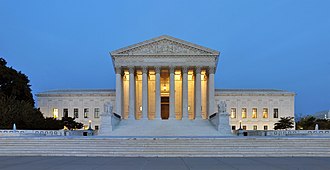
Supreme court
Highest court in a jurisdiction
In most legal jurisdictions, a supreme court, also known as a court of last resort, apex court, high (or final) court of appeal, and court of final appeal, is the highest court within the hierarchy of courts. Broadly speaking, the decisions of a supreme court are binding on all other courts in a nat...
Entity Intersection Graph
Connections for Supreme court:
Mentioned Entities
Deep Analysis
Why It Matters
This case tests the limits of presidential authority over constitutional interpretation, potentially affecting millions of U.S.-born children of undocumented immigrants. It challenges the long-standing principle of birthright citizenship established by the 14th Amendment, which could reshape immigration policy and family rights. The outcome will influence future executive actions on immigration and set precedents for how presidents can reinterpret constitutional provisions without congressional approval.
Context & Background
- The 14th Amendment's Citizenship Clause (1868) states 'all persons born or naturalized in the United States... are citizens,' establishing birthright citizenship
- Birthright citizenship has been upheld for over 150 years, including for children of immigrants regardless of parents' status
- Previous presidential challenges to birthright citizenship have been rejected by courts as unconstitutional executive overreach
- The current case likely involves executive orders or policies attempting to reinterpret or limit birthright citizenship provisions
What Happens Next
The case will proceed through federal courts, potentially reaching the Supreme Court within 1-2 years. Lower court rulings in the coming months will indicate whether the challenge has legal merit. Congressional responses may include proposed constitutional amendments or legislation clarifying citizenship rules. The outcome could trigger new immigration enforcement policies depending on the ruling.
Frequently Asked Questions
Birthright citizenship is the legal principle that anyone born within a country's territory automatically gains citizenship, regardless of their parents' immigration status. In the U.S., this is established by the 14th Amendment to the Constitution and has been consistently upheld by courts for over a century.
The case tests whether a president can unilaterally reinterpret or limit constitutional provisions through executive action without congressional approval. It examines the separation of powers between the executive branch's enforcement authority and the judiciary's role in constitutional interpretation.
Children born in the U.S. to undocumented immigrants would be most directly affected, potentially losing automatic citizenship. This could create a class of stateless individuals and significantly impact family unification policies and immigration enforcement approaches.
Yes, various political movements and legal challenges have attempted to limit birthright citizenship throughout U.S. history, particularly during periods of high immigration. All significant challenges have been rejected by courts as unconstitutional interpretations of the 14th Amendment.
The 14th Amendment's Citizenship Clause is the primary constitutional provision, along with separation of powers principles. The case also involves questions about executive authority under Article II and congressional power over naturalization under Article I of the Constitution.