
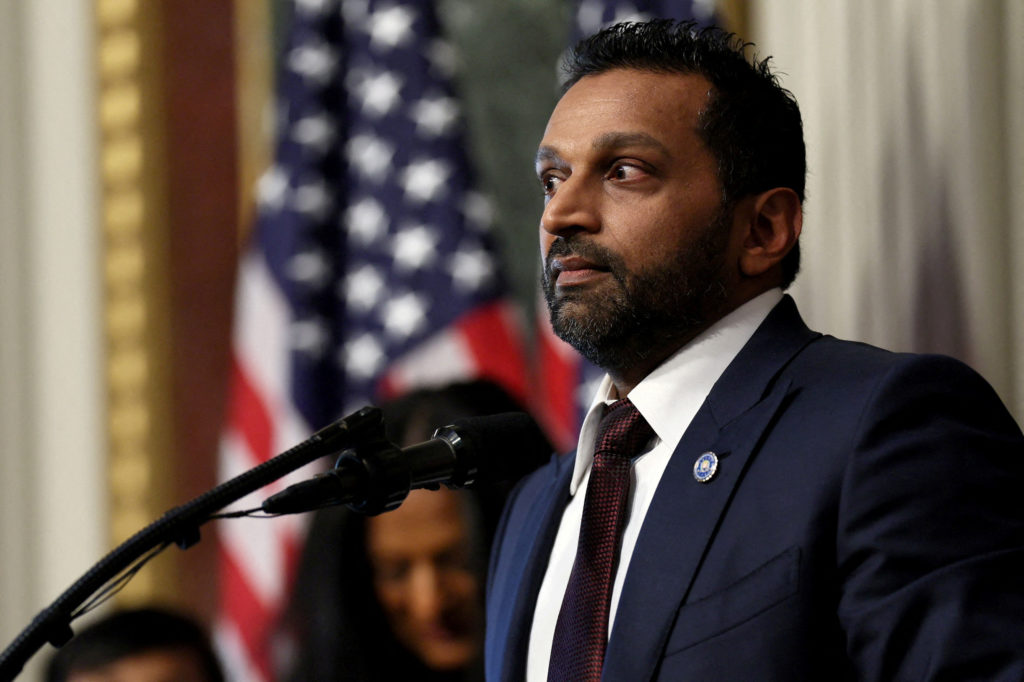
Pro-Iranian group claims credit for hacking into FBI Director Patel's personal account
#hacking #FBI #Iran #cybersecurity #data breach #Patel #pro-Iranian group
📌 Key Takeaways
- A pro-Iranian group claims responsibility for hacking FBI Director Patel's personal account.
- The breach targeted personal rather than official FBI systems.
- The incident highlights ongoing cybersecurity threats from state-affiliated actors.
- Authorities are investigating the claim and assessing potential data exposure.
📖 Full Retelling
🏷️ Themes
Cybersecurity, Geopolitical Tensions
📚 Related People & Topics

Iran
Country in West Asia
# Iran **Iran**, officially the **Islamic Republic of Iran** and historically known as **Persia**, is a sovereign country situated in West Asia. It is a major regional power, ranking as the 17th-largest country in the world by both land area and population. Combining a rich historical legacy with a...

Federal Bureau of Investigation
U.S. federal law enforcement agency
The Federal Bureau of Investigation (FBI) is the domestic intelligence and security service of the United States and its principal federal law enforcement agency. An agency of the United States Department of Justice, the FBI is a member of the U.S. Intelligence Community and reports to both the atto...
Patel
Indian surname
Patel is an Indian surname or title, predominantly found in the state of Gujarat, representing the community of land-owning farmers and later (with the British East India Company) businessmen, agriculturalists and merchants. Traditionally the title is a status name referring to the village chieftain...
Entity Intersection Graph
Connections for Iran:
Mentioned Entities
Deep Analysis
Why It Matters
This cybersecurity breach targeting the FBI Director's personal account represents a significant national security threat and demonstrates the growing sophistication of state-sponsored hacking groups. It compromises sensitive information that could be used for blackmail, intelligence gathering, or disinformation campaigns against U.S. law enforcement leadership. The incident affects national security agencies, diplomatic relations with Iran, and public confidence in government officials' digital security protocols. It also signals an escalation in cyber warfare tactics where adversaries target high-ranking officials' personal accounts to bypass government security systems.
Context & Background
- Iran has been engaged in cyber operations against U.S. targets for over a decade, with groups like APT33 and APT34 conducting espionage and disruptive attacks
- The FBI has previously attributed multiple cyber attacks to Iranian state-sponsored groups, including ransomware attacks on U.S. municipalities and critical infrastructure
- Personal accounts of government officials have become increasing targets as they often have weaker security than official government systems
- Director Patel has been involved in multiple high-profile national security cases involving Iran, making them a likely target for retaliation
- Previous Iranian cyber operations have included data theft, disinformation campaigns, and destructive attacks like the 2012 Saudi Aramco incident
What Happens Next
The FBI will conduct a forensic investigation to determine the extent of the breach and what information was accessed. Expect increased cybersecurity measures for all senior government officials' personal accounts and potential diplomatic repercussions through official channels. The U.S. may consider retaliatory cyber measures or sanctions against Iranian entities, with possible developments within the next 2-4 weeks as the investigation progresses.
Frequently Asked Questions
Personal accounts often contain sensitive communications, contact lists, financial information, and personal details that could be used for blackmail or intelligence gathering. Even seemingly innocuous information like travel plans, family details, or personal correspondence could be exploited by foreign intelligence services.
This is particularly serious because it targets the personal account of the FBI Director, who oversees national security investigations. While government systems have robust protections, personal accounts represent a vulnerability that adversaries are increasingly exploiting to bypass official security measures.
Iranian hacking groups typically seek intelligence collection, retaliation for perceived offenses, disruption of adversaries' operations, and demonstration of cyber capabilities. They often combine espionage with disruptive attacks to maximize political impact and signal their capabilities to regional rivals.
This incident will likely further strain already tense relations and may lead to diplomatic protests, additional sanctions, or retaliatory cyber measures. It could impact ongoing negotiations regarding Iran's nuclear program and regional activities, as cybersecurity has become a major point of contention.
Officials should use multi-factor authentication, separate devices for personal and official use, regular security audits, and avoid mixing sensitive information across accounts. Many agencies now provide cybersecurity training specifically for protecting personal digital footprints against state-sponsored threats.