
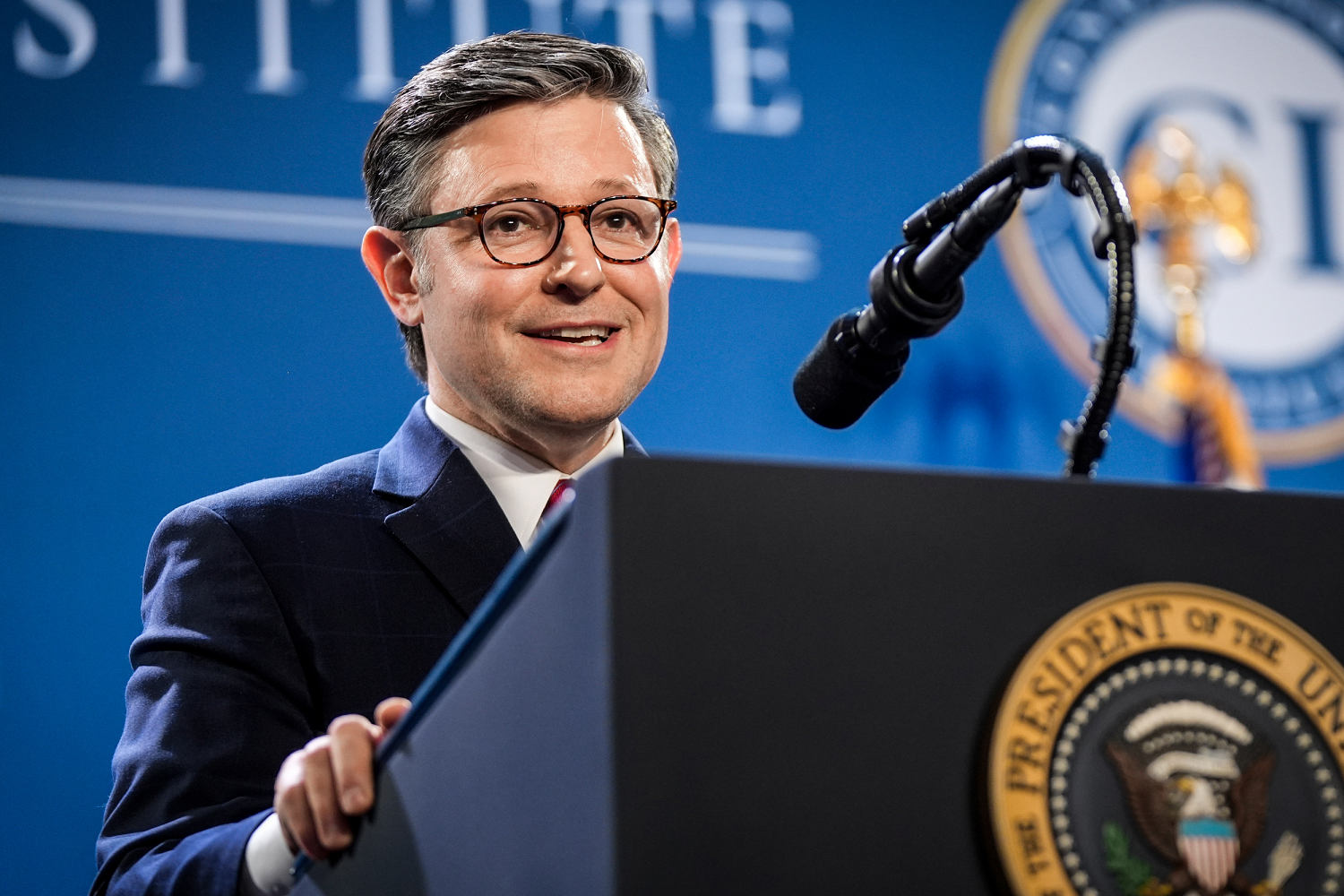
Republican Speaker Mike Johnson says he doesn't support nation-building in Iran
#Mike Johnson #Republican #nation-building #Iran #foreign policy #Speaker #Congress
📌 Key Takeaways
- Republican Speaker Mike Johnson opposes nation-building efforts in Iran
- Johnson's stance reflects a broader Republican foreign policy approach
- The statement signals a potential shift in U.S. policy toward Iran
- The position may influence congressional debates on Iran-related legislation
📖 Full Retelling
🏷️ Themes
Foreign Policy, Iran Relations
📚 Related People & Topics

Mike Johnson
Speaker of the US House of Representatives since 2023
James Michael Johnson (born January 30, 1972) is an American lawyer and politician serving as the 56th speaker of the United States House of Representatives since 2023. A member of the Republican Party, he is in his fifth House term, having represented Louisiana's 4th congressional district since 20...

Congress
Formal meeting of representatives
A congress is a formal meeting of the representatives of different countries, constituent states, organizations, trade unions, political parties, or other groups. The term originated in Late Middle English to denote an encounter (meeting of adversaries) during battle, from the Latin congressus.

Iran
Country in West Asia
# Iran **Iran**, officially the **Islamic Republic of Iran** and historically known as **Persia**, is a sovereign country situated in West Asia. It is a major regional power, ranking as the 17th-largest country in the world by both land area and population. Combining a rich historical legacy with a...
Entity Intersection Graph
Connections for Mike Johnson:
Mentioned Entities
Deep Analysis
Why It Matters
This statement matters because it signals a significant shift in U.S. foreign policy approach toward Iran, moving away from interventionist strategies that have defined decades of engagement. It directly affects U.S. diplomatic and military planners, Iranian citizens and opposition groups, and international allies who coordinate Middle East policy. The stance could reshape regional stability calculations and influence ongoing nuclear negotiations, while also reflecting broader Republican Party priorities ahead of elections.
Context & Background
- The U.S. has had no formal diplomatic relations with Iran since the 1979 Islamic Revolution and hostage crisis.
- Previous U.S. administrations have pursued varying approaches, including sanctions, the 2015 nuclear deal (JCPOA), and targeted military actions.
- The concept of 'nation-building' gained prominence after U.S. interventions in Afghanistan and Iraq post-9/11, with mixed results and high costs.
- Iran has faced internal protests in recent years over economic conditions and social restrictions, raising questions about external support for opposition movements.
What Happens Next
Congress may see debates over Iran-related legislation, including sanctions or aid packages, aligning with or contrasting Johnson's position. The Biden administration will likely clarify its own Iran strategy, potentially leading to policy tensions. Upcoming international events, such as UN meetings or nuclear deal talks, will test the practical impact of this declared non-interventionist stance.
Frequently Asked Questions
It refers to efforts by external powers to fundamentally reshape a country's political, economic, and social institutions, often through regime change or massive intervention. In Iran's case, it could imply supporting opposition groups to overthrow the Islamic Republic.
While the U.S. has historically used sanctions and diplomacy, some neoconservative voices have advocated for regime change. Johnson's statement rejects that approach, favoring containment over reconstruction.
Not necessarily; it rules out large-scale nation-building but leaves room for sanctions, cyber operations, or support for human rights, as seen in past administrations.
Iran could view it as a reduction in existential threat, possibly easing tensions, or as a propaganda tool to claim resilience against U.S. pressure.
It may embolden Iran's government, disappoint opposition groups, and create uncertainty among allies about U.S. commitment to regional democracy promotion.