

Retail customers file lawsuits over tariffs against FedEx and Ray-Bans maker
#tariffs #FedEx #Ray-Ban #lawsuit #class action #refund #Supreme Court #IEEPA #international trade #consumer protection
📌 Key Takeaways
- Retail customers have filed class-action lawsuits against FedEx and EssilorLuxottica (Ray-Ban).
- The lawsuits seek a share of any tariff refunds the companies obtain due to a Supreme Court ruling.
- The Supreme Court invalidated tariffs imposed by President Trump under the IEEPA on February 20, 2026.
- Companies are filing lawsuits proactively to secure refunds from the tariffs.
- The tariffs were estimated to be worth $130-$175 billion.
- Consumers paid tariffs on goods shipped by FedEx and purchased from Ray-Ban, and these customers want a refund.
📖 Full Retelling
🏷️ Themes
Tariffs, Consumer Rights, Legal Action, Supreme Court, International Trade, Refunds
📚 Related People & Topics
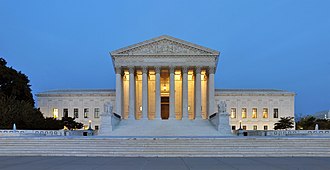
Supreme court
Highest court in a jurisdiction
In most legal jurisdictions, a supreme court, also known as a court of last resort, apex court, high (or final) court of appeal, and court of final appeal, is the highest court within the hierarchy of courts. Broadly speaking, the decisions of a supreme court are binding on all other courts in a nat...

FedEx
American freight and package delivery company
FedEx Corporation, originally known as Federal Express Corporation, is an American multinational conglomerate holding company specializing in transportation, e-commerce, and business services. The company is headquartered in Memphis, Tennessee. The name "FedEx" is a syllabic abbreviation of its orig...

International Emergency Economic Powers Act
United States federal law
The International Emergency Economic Powers Act (IEEPA), Title II of Pub. L. 95–223, 91 Stat. 1626, enacted December 28, 1977, is a United States federal law authorizing the president to regulate international commerce after declaring a national emergency in response to any unusual and extraordinary...
Entity Intersection Graph
Connections for Supreme court:
Mentioned Entities
Deep Analysis
Why It Matters
The Supreme Court's ruling that tariffs imposed by President Trump were illegal has opened the door for companies to seek refunds. These lawsuits aim to ensure that consumers who were charged for those illegal tariffs also receive a share of any refunds the companies obtain, addressing a financial impact on ordinary citizens.
Context & Background
- President Trump imposed tariffs under the International Emergency Economic Powers Act (IEEPA).
- Over 1,000 companies filed lawsuits to recoup costs from these tariffs.
- The Supreme Court invalidated the tariffs on February 20, 2026.
What Happens Next
Refund processes are being developed through the U.S. Court of International Trade and U.S. Customs and Border Protection. More consumer lawsuits are expected, particularly against companies that itemized tariff charges on invoices. The legal outcomes of these cases are uncertain but will likely influence how refunds are distributed.
Frequently Asked Questions
The lawsuits relate to tariffs imposed by President Trump under the International Emergency Economic Powers Act (IEEPA), which the Supreme Court has since ruled illegal.
FedEx and EssilorLuxottica (maker of Ray-Ban sunglasses) are specifically named in the proposed class-action lawsuits. Other companies may be targeted as the process expands.
Consumers who paid tariffs on goods shipped by FedEx or purchased from EssilorLuxottica may receive a refund of those tariffs, depending on the outcome of the legal proceedings.
The lawsuits are based on the Supreme Court's ruling that President Trump's tariffs were implemented illegally under the IEEPA and that consumers were unjustly charged for them.