
Retrieval Augmented (Knowledge Graph), and Large Language Model-Driven Design Structure Matrix (DSM) Generation of Cyber-Physical Systems
#Large Language Models #Retrieval-Augmented Generation #Design Structure Matrix #Cyber-Physical Systems #Automation #Engineering Design #Knowledge Graph
📌 Key Takeaways
- Researchers developed AI methods to automate Design Structure Matrix generation
- The approach combines LLMs, RAG, and Graph-based RAG techniques
- Testing was conducted on a power screwdriver and a CubeSat satellite
- All code is publicly available for reproducibility and expert feedback
📖 Full Retelling
🏷️ Themes
Artificial Intelligence, Engineering Design, Cyber-Physical Systems
📚 Related People & Topics
Engineering design process
Factors that influence engineering design process
The engineering design process refers to how engineers create and validate designs for products, processes and systems---including their lifecycle processes such as manufacture, maintenance and end-of-life considerations such as recycling, remanufacture or disposal. A range of descriptions of the pr...
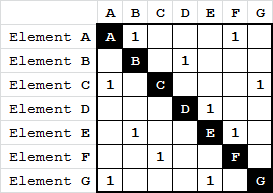
Design structure matrix
Decision tracking and managing method
The design structure matrix (DSM; also referred to as dependency structure matrix, dependency structure method, dependency source matrix, problem solving matrix, incidence matrix, N2 matrix, interaction matrix, dependency map or design precedence matrix) is a simple, compact and visual representatio...
Knowledge Graph
Topics referred to by the same term
A knowledge graph is a knowledge base that uses a graph-structured data model.
Large language model
Type of machine learning model
A large language model (LLM) is a language model trained with self-supervised machine learning on a vast amount of text, designed for natural language processing tasks, especially language generation. The largest and most capable LLMs are generative pre-trained transformers (GPTs) that provide the c...

Automation
Use of various control systems for operating equipment
Automation describes a wide range of technologies that reduce human intervention in processes, mainly by predetermining decision criteria, subprocess relationships, and related actions, as well as embodying those predeterminations in machines. Automation has been achieved by various means including ...
Entity Intersection Graph
Connections for Engineering design process:
Mentioned Entities
Deep Analysis
Why It Matters
The paper demonstrates how large language models and retrieval-augmented generation can automate the creation of Design Structure Matrices for cyber-physical systems, potentially speeding up engineering design cycles. By validating the approach on a power screwdriver and a CubeSat, the authors show that automated DSM generation can capture component relationships accurately, offering a reproducible tool for designers.
Context & Background
- Design Structure Matrices are critical for modeling component interactions in complex systems.
- Large language models have recently shown capability in generating structured technical artifacts.
- Retrieval-augmented generation incorporates external knowledge graphs to improve accuracy.
What Happens Next
Future work will likely focus on scaling the method to larger system architectures and integrating it into existing CAD workflows. The publicly available code will enable domain experts to refine the models and extend the approach to other engineering domains.
Frequently Asked Questions
A DSM is a matrix that represents relationships between components of a system, helping engineers analyze dependencies.
It supplements the language model with a knowledge graph, providing factual context that reduces errors in component relationships.