

Roberts tasked with trying to tame Supreme Court
📖 Full Retelling
📚 Related People & Topics
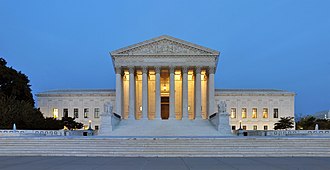
Supreme court
Highest court in a jurisdiction
In most legal jurisdictions, a supreme court, also known as a court of last resort, apex court, high (or final) court of appeal, and court of final appeal, is the highest court within the hierarchy of courts. Broadly speaking, the decisions of a supreme court are binding on all other courts in a nat...

John Roberts
Chief Justice of the United States since 2005
John Glover Roberts Jr. (born January 27, 1955) is an American jurist who has served since 2005 as the 17th chief justice of the United States. Though primarily an institutionalist, he has been described as having a moderate conservative judicial philosophy.
Entity Intersection Graph
Connections for Supreme court:
Mentioned Entities
Deep Analysis
Why It Matters
This news matters because it highlights the internal dynamics and leadership challenges within the U.S. Supreme Court, which directly impacts judicial decisions affecting all Americans. Chief Justice John Roberts' ability to 'tame' the Court influences its public legitimacy, ideological balance, and the consistency of constitutional interpretation. This affects everyone from policymakers and legal professionals to ordinary citizens whose rights and liberties are determined by Court rulings.
Context & Background
- John Roberts became the 17th Chief Justice of the United States in 2005, appointed by President George W. Bush.
- The Supreme Court has faced increasing public scrutiny over perceived politicization, particularly following controversial decisions on issues like abortion (Dobbs v. Jackson, 2022) and affirmative action.
- Roberts has historically positioned himself as an institutionalist, emphasizing the Court's non-partisan role, though he often votes with the conservative bloc.
- Recent terms have seen heightened tensions among justices, with public disagreements and leaked drafts highlighting internal divisions.
- The Court's approval ratings have declined significantly in recent years, reflecting growing concerns about its independence and fairness.
What Happens Next
Roberts may attempt to broker compromises in upcoming cases to present a more unified front, potentially in areas like administrative law or social issues. The Court's next term (starting October 2024) will be closely watched for signs of reduced dissension or procedural reforms. Long-term, Roberts' success could influence retirement timing of older justices and the Court's legacy through future nominations.
Frequently Asked Questions
It refers to Chief Justice Roberts' efforts to reduce public dissension, foster greater consensus among justices, and restore the Court's image as an impartial institution rather than a politically divided body. This involves managing internal conflicts and potentially moderating extreme positions.
The Court's cohesion affects the stability and predictability of U.S. law, influencing everything from civil rights to economic regulations. Public trust in the judiciary depends on perceptions of fairness and non-partisanship, which are undermined by visible infighting.
Roberts has occasionally brokered compromises, such as in the Affordable Care Act cases, but has struggled recently with a solid conservative majority. His influence appears limited when justices are ideologically entrenched, as seen in the overturning of Roe v. Wade.
As Chief Justice, Roberts controls the discussion order during conferences, assigns opinions when in the majority, and can advocate for procedural norms. However, he cannot force consensus, as each justice has independent authority and lifetime tenure.
If Roberts fosters more collaboration, we may see narrower rulings or more unanimous decisions in less polarized cases. However, deeply divisive issues like gun rights or election law may still produce sharp splits, testing his leadership.