
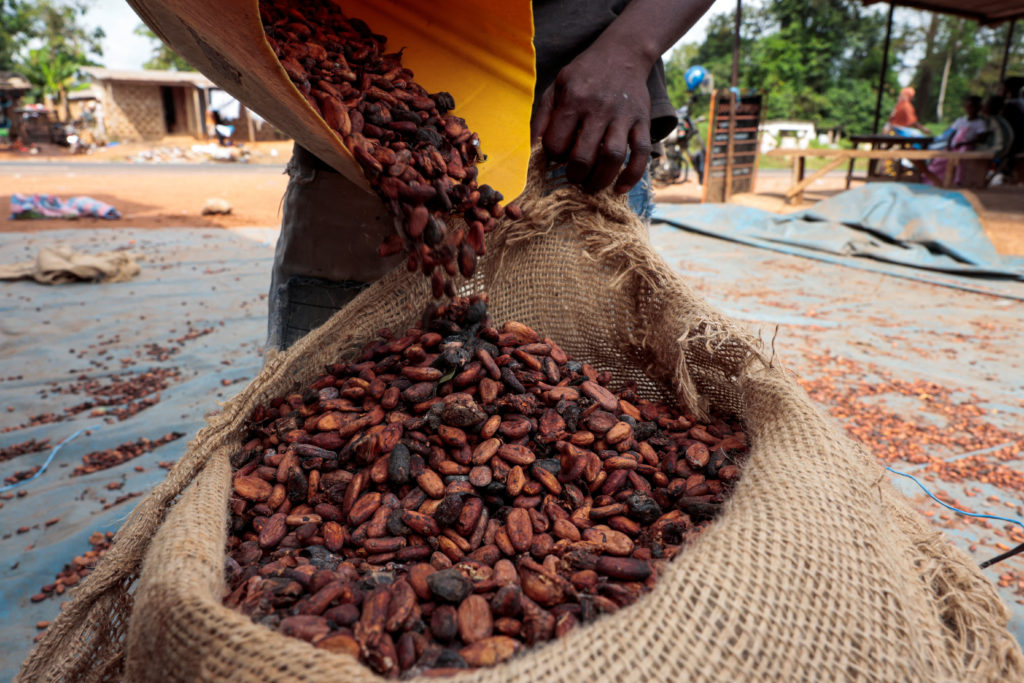
Rotting cocoa and a commodity crash push West African farmers to seek other options
#cocoa #West Africa #farmers #commodity crash #alternative crops #oversupply #income loss
📌 Key Takeaways
- West African farmers face rotting cocoa due to oversupply and poor storage.
- A commodity price crash has drastically reduced farmers' incomes.
- Farmers are exploring alternative crops and livelihoods to survive.
- The crisis highlights vulnerabilities in the global cocoa supply chain.
📖 Full Retelling
🏷️ Themes
Agriculture Crisis, Economic Diversification
📚 Related People & Topics

West Africa
Westernmost region of Africa
West Africa, also known as Western Africa, is the westernmost region of Africa. The United Nations defines Western Africa as the 16 countries of Benin, Burkina Faso, Cape Verde, The Gambia, Ghana, Guinea, Guinea-Bissau, Ivory Coast, Liberia, Mali, Mauritania, Niger, Nigeria, Senegal, Sierra Leone, a...
Entity Intersection Graph
Connections for West Africa:
Mentioned Entities
Deep Analysis
Why It Matters
This news is important because it highlights a crisis in the global cocoa supply chain, directly impacting the livelihoods of millions of smallholder farmers in West Africa, who produce over 70% of the world's cocoa. It affects global chocolate manufacturers and consumers by threatening supply stability and potentially driving up prices. The situation underscores vulnerabilities in agricultural commodity markets and food security in developing regions, with broader implications for rural economies and migration patterns.
Context & Background
- West Africa, particularly Ivory Coast and Ghana, dominates global cocoa production, supplying over two-thirds of the world's beans.
- Cocoa prices have historically been volatile, with farmers often receiving a small share of the final product value, leading to persistent poverty in cocoa-growing communities.
- Climate change, including irregular rainfall and disease outbreaks like swollen shoot virus, has increasingly threatened cocoa yields in the region.
- Past efforts to stabilize prices, such as international agreements and sustainability certifications, have had limited success in improving farmer resilience.
What Happens Next
Farmers are likely to accelerate diversification into alternative crops like rubber, palm oil, or food staples, potentially reducing cocoa output and tightening global supply. Governments and industry groups may introduce emergency support measures, such as subsidies or crop insurance, in the coming months. Long-term, this could spur investment in climate-resilient cocoa varieties or shift production to other regions, with market adjustments expected within the next 1-2 years.
Frequently Asked Questions
The rotting is likely due to post-harvest issues like inadequate storage or transportation delays, exacerbated by weather or infrastructure gaps. The crash may stem from oversupply, demand fluctuations, or speculative trading in global markets.
In the short term, prices may rise if supply decreases due to farmer diversification, but a crash could temporarily lower costs. Long-term, reduced production could lead to sustained higher prices for consumers.
Farmers are exploring crops like rubber, palm oil, cassava, or maize, which may offer better income stability or lower climate risks. Some may also shift to non-agricultural livelihoods, such as small-scale trade or migration.
The region's tropical climate and large-scale smallholder farming make it ideal for cocoa, with Ivory Coast and Ghana alone accounting for over 60% of global production. This concentration creates supply chain vulnerabilities.