
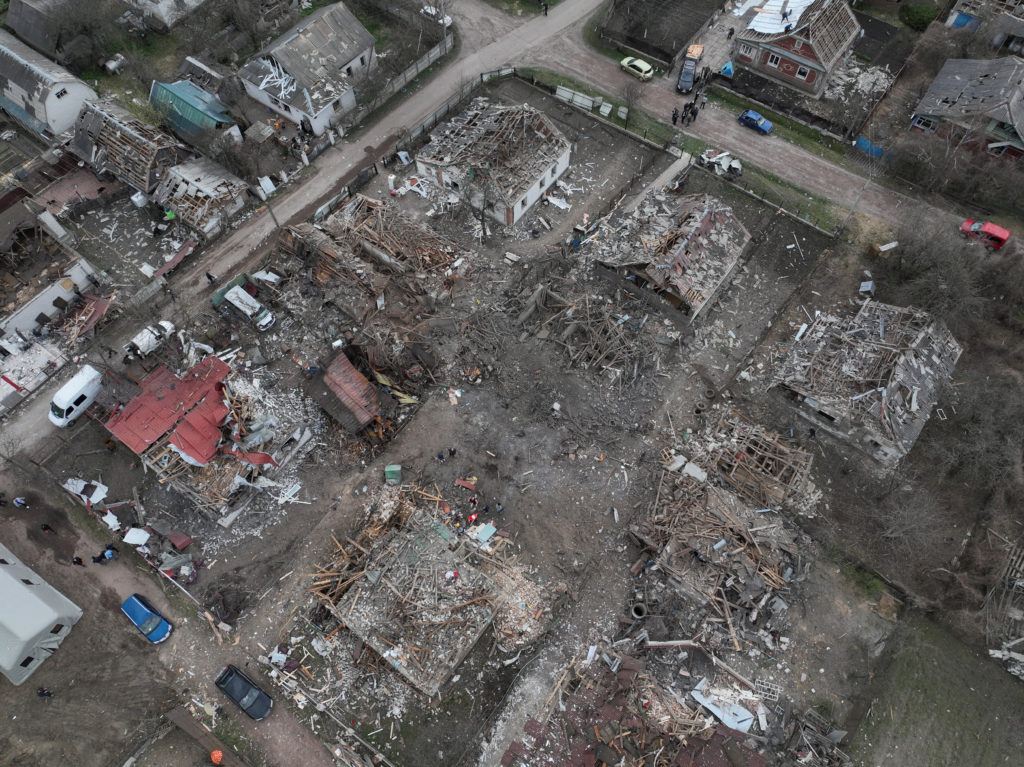
Russian strikes on Ukraine kill 8 as Kyiv holds door open for Easter truce
📖 Full Retelling
📚 Related People & Topics

Russia
Country in Eastern Europe and North Asia
Russia, or the Russian Federation, is a country in Eastern Europe and North Asia. It is the largest country in the world, spanning eleven time zones and sharing land borders with fourteen countries. With a population of over 140 million, Russia is the most populous country in Europe and the ninth-mo...
2022 Russo-Ukrainian Easter truce proposal
Proposed ceasefire in the Russian invasion of Ukraine
The 2022 Easter truce proposal (Russian: Предлагаемое Пасхальное Перемирие; Ukrainian: Запропоноване Великоднє Перемир’я) was a proposed ceasefire between Russian and Ukrainian forces during Russian invasion of Ukraine. It was to take place during Christian Easter – from 21 to 25 April 2022, however...

Kyiv
Capital of Ukraine
Kyiv, also Kiev, is the capital and most populous city of Ukraine. Located in the north-central part of the country, it straddles both banks of the Dnieper River. As of January 2022, the population of Kyiv was 2,952,301, making it the seventh-most populous city in Europe.

Ukraine
Country in Eastern Europe
# Ukraine **Ukraine** is a country located in Eastern Europe. It is the second-largest country in Europe by area, after Russia. Known for its extensive fertile plains, the nation serves as a critical global exporter of grain and is considered a middle power in international affairs. ## Geography a...
Entity Intersection Graph
Connections for Russia:
Mentioned Entities
Deep Analysis
Why It Matters
This news highlights the ongoing human cost of the Russia-Ukraine war during a religious holiday period, demonstrating how military aggression continues despite symbolic diplomatic gestures. It affects Ukrainian civilians facing daily violence, international observers monitoring ceasefire possibilities, and global leaders navigating complex wartime diplomacy. The juxtaposition of deadly strikes with truce discussions reveals the challenges of achieving meaningful de-escalation in this protracted conflict.
Context & Background
- The Russia-Ukraine war began with Russia's full-scale invasion in February 2022, though conflict in eastern Ukraine dates back to 2014
- Easter is celebrated by both Orthodox and Catholic Christians in Ukraine, with Orthodox Easter typically following the Julian calendar
- Previous temporary ceasefires have been attempted during religious holidays with mixed success, often failing to hold completely
- Ukraine has repeatedly called for complete Russian withdrawal from all occupied territories as a precondition for lasting peace
What Happens Next
International mediators may intensify diplomatic efforts around the Easter period to test ceasefire possibilities. Ukraine will likely continue defensive operations while monitoring Russian troop movements. The UN Security Council may convene emergency discussions about the civilian casualties. Humanitarian organizations will attempt to negotiate safe corridors for Easter observances and civilian evacuations.
Frequently Asked Questions
Russia may use military pressure to gain negotiating leverage or test Ukrainian defenses during holiday periods when vigilance might decrease. Simultaneous strikes and diplomacy represent a common wartime strategy to maintain multiple pressure points.
While symbolic, holiday ceasefires rarely lead to lasting peace but can provide temporary humanitarian relief. They serve as diplomatic testing grounds and opportunities for prisoner exchanges or civilian evacuations when successfully implemented.
Attacks during religious holiday preparations suggest deliberate timing to maximize psychological impact on civilian populations. The casualty count indicates continued use of indiscriminate weapons in populated areas despite international condemnation.
Civilian casualties during religious periods often galvanize humanitarian aid and diplomatic support. However, some nations may push harder for negotiated settlements during symbolic moments like Easter, creating potential divisions in the international response.