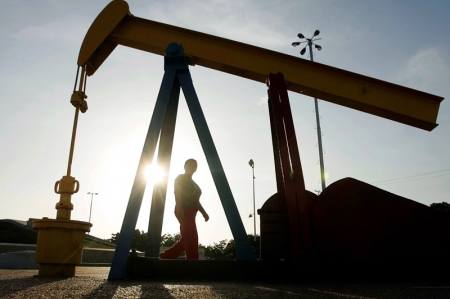
Houthi attacks on Saudi oil facilities cut production by ~600,000 barrels per day.
The strikes caused significant volatility, with oil prices surging over 8%.
The incident marks a major escalation in the Yemen conflict, targeting critical energy infrastructure.
Saudi Aramco expects the disruption to be temporary due to its emergency response systems.
The attacks highlight ongoing regional security risks to global energy supplies.
📖 Full Retelling
Yemen's Houthi rebels launched drone and missile attacks on Saudi Arabian oil facilities in the Eastern Province and at the port of Yanbu on the Red Sea in late March 2025, causing significant damage that temporarily reduced the kingdom's crude oil production by approximately 600,000 barrels per day. The coordinated strikes targeted key infrastructure, including a major oil distribution terminal and a processing plant, marking one of the most serious disruptions to Saudi energy exports in recent years. The attacks triggered immediate volatility in global oil markets, with Brent crude futures surging over 8% in early trading as traders assessed the impact on supply from the world's largest oil exporter.
The incident represents a significant escalation in the long-running conflict between the Saudi-led coalition and the Iran-aligned Houthi movement in Yemen. Saudi Arabia has been leading a military campaign in Yemen since 2015 to restore the internationally recognized government, which the Houthis ousted from the capital, Sanaa. In response, the Houthis have increasingly targeted Saudi energy and economic infrastructure, framing their attacks as retaliation for the coalition's airstrikes in Yemen and the ongoing blockade. The group has stated that Saudi Arabia will remain a target as long as the war and siege on Yemen continue.
The production disruption, while substantial, is not expected to be prolonged, according to initial assessments by Saudi Aramco and industry analysts. The state-owned oil giant has extensive redundancy and emergency response systems, and repairs are reportedly already underway. However, the attack underscores the persistent vulnerability of critical energy infrastructure in the region to asymmetric warfare. It also raises renewed concerns about the security of transit through the Bab el-Mandeb Strait, a vital chokepoint for global oil shipments located near Yemen, and adds pressure on ongoing but fragile diplomatic efforts to secure a lasting ceasefire in the Yemen conflict.
🏷️ Themes
Energy Security, Geopolitical Conflict, Market Volatility
Saudi Aramco (Arabic: أرامكو السعودية ʾArāmkū as-Suʿūdiyyah) or Aramco (formerly Arabian-American Oil Company), officially the Saudi Arabian Oil Company, is a majority state-owned petroleum and natural gas company that is the national oil company of Saudi Arabia. As of 2024, it is the fourth-largest...
The Houthis, officially known as Ansar Allah, is a Zaydi revivalist and Islamist political and military organization that emerged from Yemen in the 1990s. It is predominantly made up of Zaydis, whose namesake leadership is drawn largely from the al-Houthi family. The group has been a central player ...
Saudi Arabia, officially the Kingdom of Saudi Arabia (KSA) and also known simply as the Saudi, is a country in West Asia. Located in the centre of the Middle East, it covers the bulk of the Arabian Peninsula and has a land area of about 2,150,000 km2 (830,000 sq mi), making it the fifth-largest coun...