
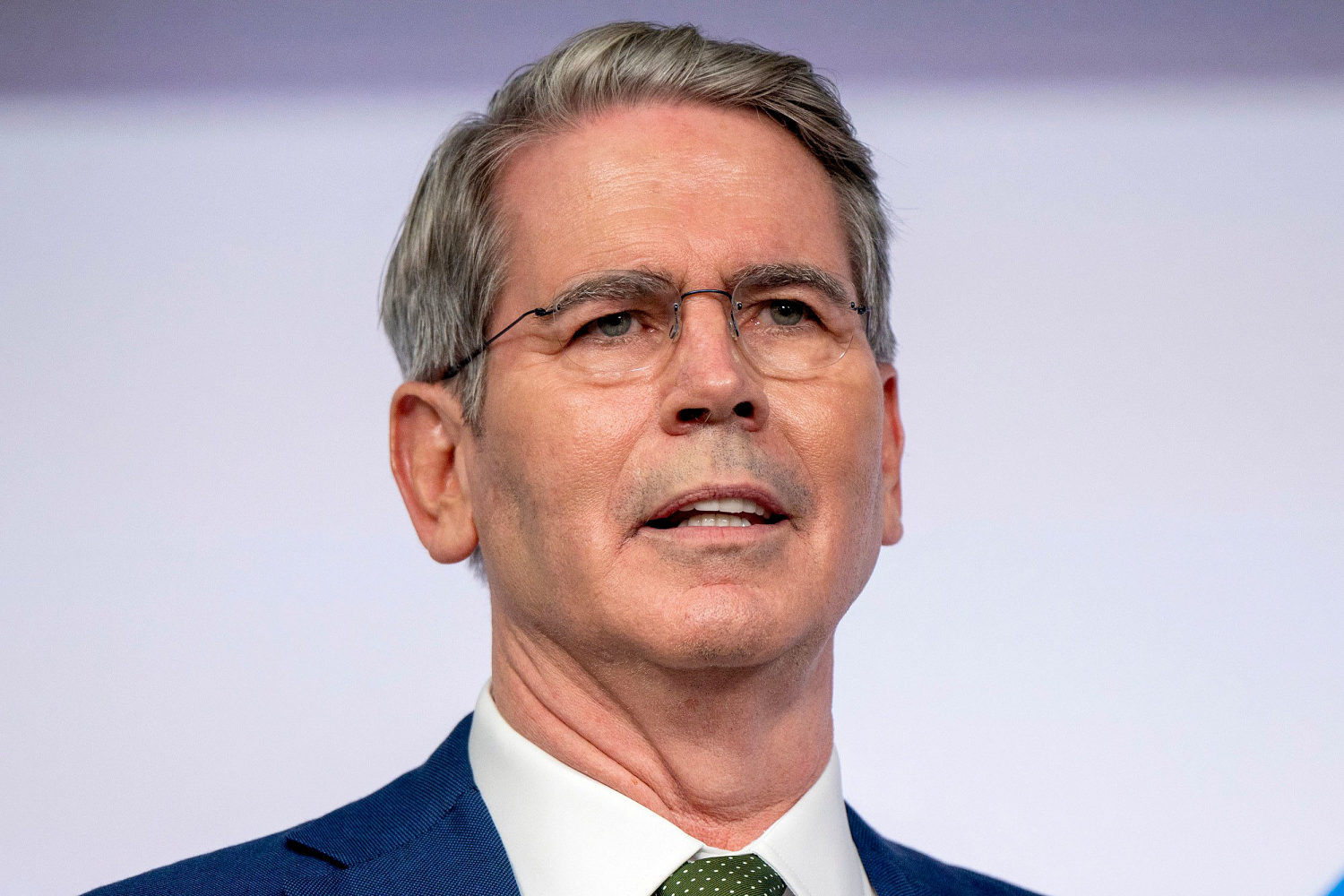
Scott Bessent defends U.S. action in Iran: 'Sometimes you have to escalate to de-escalate'
#Scott Bessent #Iran #U.S. military #escalation #de-escalation #foreign policy #defense
📌 Key Takeaways
- Scott Bessent defends U.S. military action in Iran as a strategic move.
- He argues that escalating tensions can be necessary to achieve long-term de-escalation.
- The statement reflects a hawkish perspective on U.S. foreign policy in the region.
- The comment likely responds to recent U.S. military engagements or threats in Iran.
📖 Full Retelling
🏷️ Themes
Foreign Policy, Military Strategy
📚 Related People & Topics

Scott Bessent
American businessman and government official (born 1962)
Scott Kenneth Homer Bessent ( BESS-ənt; born August 21, 1962) is an American businessman and government official serving since 2025 as the 79th United States secretary of the treasury. Bessent was a partner at Soros Fund Management (SFM) and founded Key Square Group, a global macro investment firm. ...

Iran
Country in West Asia
# Iran **Iran**, officially the **Islamic Republic of Iran** and historically known as **Persia**, is a sovereign country situated in West Asia. It is a major regional power, ranking as the 17th-largest country in the world by both land area and population. Combining a rich historical legacy with a...
Entity Intersection Graph
Connections for Scott Bessent:
Mentioned Entities
Deep Analysis
Why It Matters
This statement matters because it reveals the strategic thinking behind U.S. military actions in Iran, potentially justifying preemptive strikes or escalatory measures as a path to stability. It affects U.S.-Iran relations, regional security in the Middle East, and global perceptions of American foreign policy. Investors and diplomats must consider how such an approach could trigger unintended consequences or further destabilize an already volatile region.
Context & Background
- The U.S. and Iran have had tense relations since the 1979 Iranian Revolution and subsequent hostage crisis.
- Recent years have seen conflicts over Iran's nuclear program, with the U.S. withdrawing from the JCPOA nuclear deal in 2018.
- Iran has been accused of supporting proxy militias across the Middle East, leading to periodic clashes with U.S. forces.
- The concept of 'escalate to de-escalate' has roots in Cold War nuclear strategy but is now applied to conventional conflicts.
What Happens Next
Increased monitoring of U.S. military movements in the Middle East; potential for retaliatory actions by Iran or its proxies; possible diplomatic efforts to prevent further escalation; scrutiny of this strategy in upcoming U.S. foreign policy debates.
Frequently Asked Questions
It refers to a tactic where one side intentionally increases military pressure or actions to force an adversary to back down, ultimately aiming to reduce overall conflict. This approach assumes that showing strength can prevent longer, larger-scale confrontations by demonstrating resolve early.
Scott Bessent is a prominent investor and former George Soros protégé who now runs his own hedge fund. His views carry weight in financial and policy circles, suggesting that influential figures outside government are endorsing this aggressive stance toward Iran.
Iran could respond through asymmetric warfare using proxy forces in Iraq, Syria, or Yemen, cyberattacks on U.S. infrastructure, or accelerated nuclear program development. Alternatively, they might seek diplomatic channels through intermediaries to avoid direct military confrontation.
While Bessent is not a government official, his statement reflects a viewpoint shared by some policymakers and analysts. The actual U.S. approach would depend on administration decisions, but such public statements can influence policy debates and international perceptions.
Key risks include miscalculation where escalation leads to unintended full-scale conflict, damage to diplomatic relationships with allies, humanitarian consequences in conflict zones, and economic disruption through oil price volatility or sanctions escalation.