
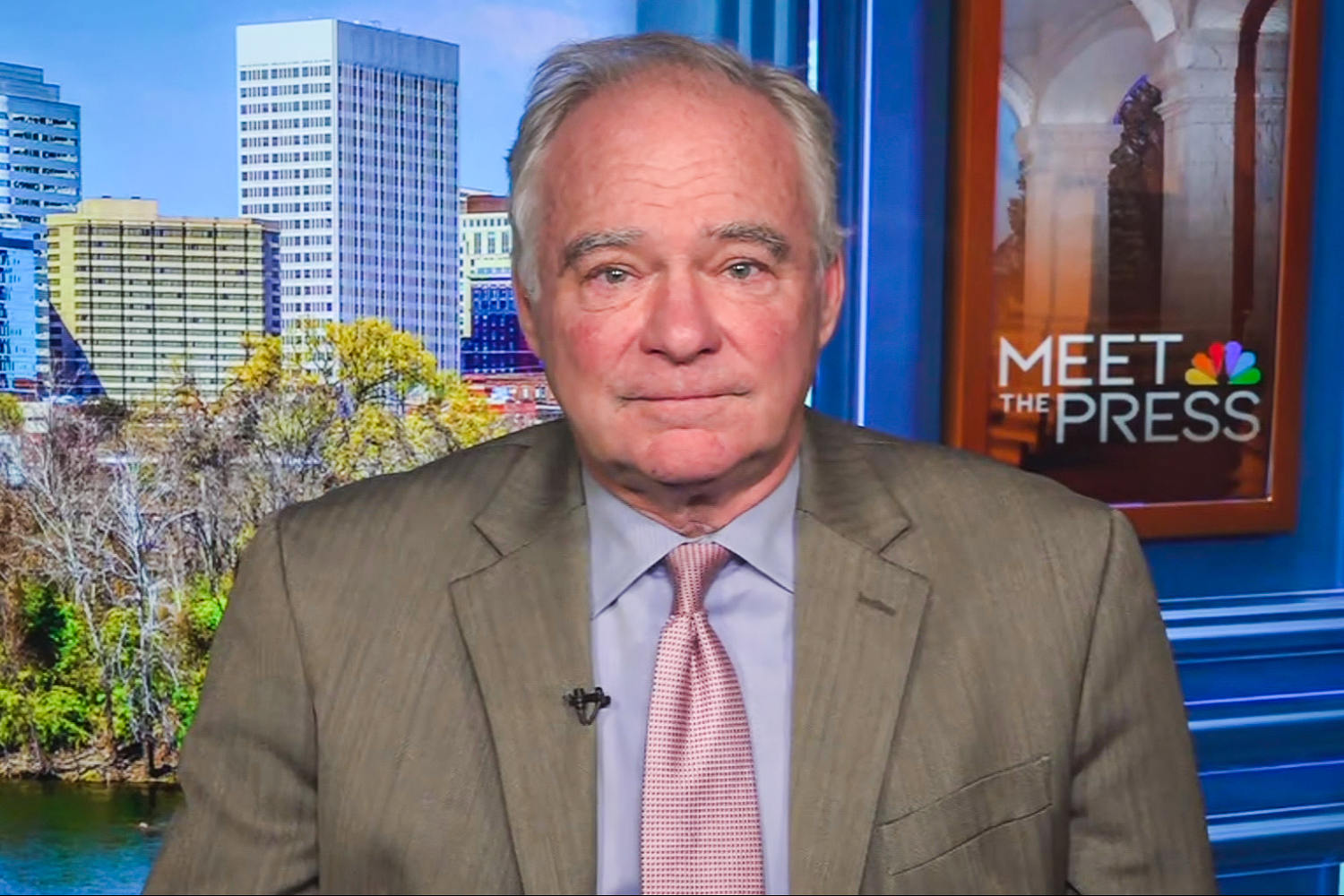
Sen. Tim Kaine says Congress will 'have a hard time' reviewing Trump's military budget request
📖 Full Retelling
📚 Related People & Topics

Congress
Formal meeting of representatives
A congress is a formal meeting of the representatives of different countries, constituent states, organizations, trade unions, political parties, or other groups. The term originated in Late Middle English to denote an encounter (meeting of adversaries) during battle, from the Latin congressus.

Tim Kaine
American lawyer and politician (born 1958)
Timothy Michael Kaine ( KAYN; born February 26, 1958) is an American lawyer and politician serving as the junior United States senator from Virginia since 2013. A member of the Democratic Party, he served as the 70th governor of Virginia from 2006 to 2010, and as the 38th lieutenant governor of Virg...

Donald Trump
President of the United States (2017–2021; since 2025)
Donald John Trump (born June 14, 1946) is an American politician, media personality, and businessman who is the 47th president of the United States. A member of the Republican Party, he served as the 45th president from 2017 to 2021. Born into a wealthy New York City family, Trump graduated from the...
Entity Intersection Graph
Connections for Congress:
Mentioned Entities
Deep Analysis
Why It Matters
This news matters because it signals potential congressional resistance to President Trump's military budget request, which could impact national defense funding and military operations. It affects military personnel, defense contractors, and taxpayers who fund the $750 billion proposal. The statement from Senator Kaine, a senior member of the Armed Services Committee, suggests bipartisan scrutiny of defense spending priorities amid competing domestic needs.
Context & Background
- The U.S. military budget has grown significantly under the Trump administration, reaching $738 billion in FY2020.
- Congress has constitutional authority over appropriations through the 'power of the purse' outlined in Article I.
- Senator Tim Kaine (D-VA) serves on both the Armed Services and Foreign Relations committees, giving him influence on defense matters.
- The Budget Control Act of 2011 imposed spending caps that have shaped recent defense budget debates.
- Military spending typically represents over half of all discretionary federal spending.
What Happens Next
Congress will begin formal hearings on the defense budget in coming weeks, with the House and Senate Armed Services Committees reviewing specific line items. The administration may need to justify requested increases for new weapons systems and troop levels. A final National Defense Authorization Act (NDAA) typically passes by December, but could face delays if disagreements persist.
Frequently Asked Questions
Congress faces challenges because the $750 billion request represents a significant increase that must be balanced against other priorities like healthcare and infrastructure. Detailed scrutiny of specific programs requires time and expertise, and political divisions may complicate bipartisan agreement on spending levels.
As a senior Democrat on both the Armed Services and Foreign Relations committees, Kaine helps shape defense policy and spending legislation. His Virginia constituency includes major military installations and defense contractors, giving him particular insight into budget impacts.
Budget delays or reductions could postpone equipment upgrades, training exercises, and maintenance programs. However, congressional review also ensures spending aligns with strategic needs rather than political preferences, potentially improving long-term readiness through careful oversight.
If no defense budget is passed, the military would operate under continuing resolutions that freeze spending at previous levels, disrupting new initiatives and procurement. In extreme cases, it could lead to partial government shutdowns affecting defense operations.
The military budget review occurs alongside debates about domestic spending and the national debt, requiring trade-offs between defense and social programs. It also tests congressional willingness to exceed budget caps established in earlier deficit-reduction agreements.