

Sharing a stage, Justices Jackson and Kavanaugh spar over emergency Supreme Court orders favoring Trump
#Supreme Court #emergency orders #Ketanji Brown Jackson #Brett Kavanaugh #Donald Trump #judicial debate #legal controversy
📌 Key Takeaways
- Justices Ketanji Brown Jackson and Brett Kavanaugh publicly debated emergency Supreme Court orders that benefited former President Trump.
- The discussion highlighted ideological divisions within the Court regarding the use of emergency powers.
- The orders in question were related to legal cases involving Trump, though specific cases were not detailed.
- The exchange underscores ongoing tensions over the Court's procedural decisions and their political implications.
📖 Full Retelling
🏷️ Themes
Judicial Conflict, Emergency Powers
📚 Related People & Topics
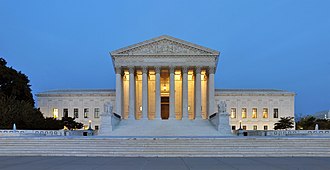
Supreme court
Highest court in a jurisdiction
In most legal jurisdictions, a supreme court, also known as a court of last resort, apex court, high (or final) court of appeal, and court of final appeal, is the highest court within the hierarchy of courts. Broadly speaking, the decisions of a supreme court are binding on all other courts in a nat...
Entity Intersection Graph
Connections for Supreme court:
Mentioned Entities
Deep Analysis
Why It Matters
This public disagreement between Supreme Court justices reveals deep ideological divisions within the Court regarding emergency orders, particularly those affecting former President Trump. It matters because emergency orders (or 'shadow docket' rulings) have become increasingly common and consequential, allowing the Court to make significant decisions without full briefing or oral arguments. This affects all Americans by shaping how quickly controversial policies can be implemented or blocked, and it raises questions about judicial consistency and transparency in high-stakes political cases.
Context & Background
- The Supreme Court's 'shadow docket' refers to emergency orders and decisions made without full briefing, oral arguments, or detailed written opinions, a practice that has expanded significantly in recent years.
- Justices Ketanji Brown Jackson (appointed by Biden) and Brett Kavanaugh (appointed by Trump) represent opposing ideological wings of the Court, with Jackson being part of the liberal minority and Kavanaugh part of the conservative majority.
- The Court has issued several emergency orders related to Trump, including allowing his tax returns to be released to Congress and temporarily blocking the House January 6 committee from accessing certain records.
- Public disagreements between justices are rare but have occurred before, such as when Justice Sotomayor criticized the Court's emergency orders during the COVID-19 pandemic.
What Happens Next
The Court will likely face more emergency requests related to Trump as his legal battles continue, including cases about presidential immunity and election interference. These public disagreements may lead to increased scrutiny of the shadow docket process, potentially prompting calls for reform from Congress or changes to the Court's internal procedures. The justices' comments may influence how lower courts handle emergency requests in politically sensitive cases.
Frequently Asked Questions
Emergency orders, sometimes called the 'shadow docket,' are decisions the Supreme Court makes quickly without full briefing or oral arguments. They often involve time-sensitive matters like stays of lower court rulings or injunctions, and have become more frequent in recent years for high-profile political cases.
They likely disagree on when emergency orders are appropriate and whether the Court should intervene quickly in cases involving Trump. Jackson may believe the Court should be more cautious, while Kavanaugh may see certain situations as requiring immediate action to prevent irreparable harm.
Emergency orders can significantly impact Trump's cases by either speeding up or delaying proceedings. Favorable emergency rulings can give Trump legal advantages or more time to prepare his defense, while unfavorable ones can force quicker disclosures or proceedings.
Yes, public disagreements between justices are relatively rare, especially about Court procedures. Justices typically maintain collegiality in public, so such sparring suggests deep divisions about the Court's role in emergency matters and potentially about Trump-related cases specifically.
The shadow docket refers to the Court's practice of deciding emergency matters without full transparency. It's controversial because these decisions can have major legal impacts without detailed explanations, leading to concerns about consistency, accountability, and whether the Court is becoming too involved in political disputes.