

Some Judges See Risks in Fiery Opinions Warning of Threats to Democracy
#judicial activism #threats to democracy #judicial opinions #Supreme Court #constitutional emergency #rule of law #Trump era #judicial restraint
📌 Key Takeaways
- Federal judges are using increasingly fiery language to express concerns about threats to democracy
- Justice Ketanji Brown Jackson has described certain Supreme Court decisions as 'an existential threat to the rule of law'
- District court judges are incorporating unusual rhetorical elements into their opinions
- This judicial activism represents a departure from traditional norms of judicial restraint
- The situation reflects what judges perceive as a constitutional emergency requiring urgent response
📖 Full Retelling
🏷️ Themes
Judicial Independence, Democratic Threats, Political Polarization, Constitutional Crisis
📚 Related People & Topics
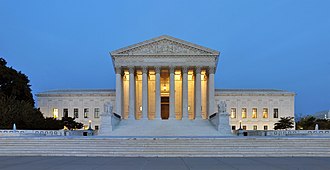
Supreme court
Highest court in a jurisdiction
In most legal jurisdictions, a supreme court, also known as a court of last resort, apex court, high (or final) court of appeal, and court of final appeal, is the highest court within the hierarchy of courts. Broadly speaking, the decisions of a supreme court are binding on all other courts in a nat...
Presidency of Donald Trump
Index of articles associated with the same name
Presidency of Donald Trump may refer to:
Entity Intersection Graph
Connections for Supreme court:
Mentioned Entities
Deep Analysis
Why It Matters
This shift in judicial rhetoric represents a significant departure from traditional judicial restraint and could fundamentally alter the relationship between the judiciary and political branches. It affects the perception of judicial neutrality and independence at a time when these institutions are facing unprecedented political pressure. The concerns expressed by judges like Jackson indicate a growing anxiety about the state of American democracy and the rule of law during politically charged times.
Context & Background
- The tradition of judicial restraint has been a cornerstone of American jurisprudence, with judges typically avoiding overtly political language in their opinions
- The Supreme Court has become increasingly politicized in recent decades, with decisions often following ideological lines rather than strict legal interpretation
- During periods of political polarization, the judiciary has traditionally been seen as a stabilizing institution that rises above partisan politics
- The concept of judicial independence is enshrined in the Constitution but has faced challenges throughout American history, particularly during times of national crisis
- The current political climate marked by Trump's second term follows a period of intense political division and challenges to democratic norms
What Happens Next
We can expect continued tension between the judiciary and political branches, with potentially more outspoken judicial opinions as judges attempt to assert their independence. There may be increased scrutiny of judicial appointments and confirmation processes, with both political parties seeking judges who align with their ideological views. The Supreme Court may face additional challenges to its legitimacy, potentially leading to calls for judicial reform or court-packing measures.
Frequently Asked Questions
Judicial restraint refers to the practice of judges limiting themselves to interpreting laws rather than making policy decisions. It has been important in maintaining the separation of powers and preventing the judiciary from overstepping its constitutional role.
Judges are using more expressive language as a strategic response to what they perceive as unprecedented political pressures and threats to judicial independence, particularly during what they view as a constitutional emergency.
This shift could erode the perception of judicial neutrality and impartiality, potentially undermining the courts' legitimacy in the eyes of the public and political actors who disagree with the judicial positions being expressed.
The rule of law refers to the principle that all individuals and institutions are subject to and accountable under the law. Jackson's concerns suggest she believes certain Supreme Court decisions are undermining this fundamental principle.
These are rhetorical devices and citations that judges are using to make their opinions more engaging and emphasize the urgency of their legal analysis, departing from the traditionally dry and technical style of judicial writing.