
Stakes of Supreme Court case on grace period for mail-in ballots
📖 Full Retelling
📚 Related People & Topics
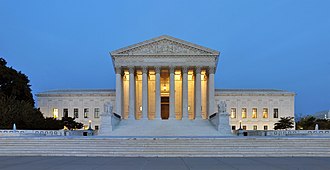
Supreme court
Highest court in a jurisdiction
In most legal jurisdictions, a supreme court, also known as a court of last resort, apex court, high (or final) court of appeal, and court of final appeal, is the highest court within the hierarchy of courts. Broadly speaking, the decisions of a supreme court are binding on all other courts in a nat...
Entity Intersection Graph
Connections for Supreme court:
Mentioned Entities
Deep Analysis
Why It Matters
This Supreme Court case matters because it directly impacts election administration and voter access during a period of intense political polarization. It affects millions of voters who rely on mail-in ballots, particularly elderly, disabled, and rural populations who may face logistical challenges returning ballots by Election Day. The ruling could determine whether ballots postmarked by Election Day but arriving afterward will be counted, potentially deciding close elections in key states. This case also tests the balance between state election authority and federal judicial oversight during federal elections.
Context & Background
- The 2020 election saw unprecedented expansion of mail-in voting due to the COVID-19 pandemic, with 46% of voters casting ballots by mail
- Multiple states established 'grace periods' allowing ballots postmarked by Election Day to be counted if received within several days afterward
- The case likely involves the 'Purcell Principle' - the judicial doctrine that courts should avoid changing election rules close to an election
- Previous Supreme Court cases like Bush v. Gore (2000) established the Court's willingness to intervene in election administration disputes
- The 2022 midterms saw continued high usage of mail voting despite reduced pandemic concerns, indicating a permanent shift in voting behavior
What Happens Next
The Supreme Court will hear oral arguments, likely in the coming months, with a decision expected by June 2024 before the presidential election. Depending on the ruling, states may need to quickly adjust their election procedures and voter education materials. The decision could trigger additional litigation in states with similar grace period provisions, and may influence congressional efforts to establish national mail-in voting standards. Election officials will need to implement any changes before the 2024 general election.
Frequently Asked Questions
A grace period allows mail-in ballots postmarked by Election Day to be counted if they arrive at election offices within a specified number of days after the election. These periods typically range from 3-10 days depending on state law, recognizing that postal delivery times can vary.
Approximately 20 states have some form of grace period, including California, Washington, Illinois, and New York. The specific rules vary by state, with some requiring postmarks and others accepting ballots without postmarks if there's evidence they were mailed on time.
Proponents argue they ensure all legitimate votes are counted despite postal delays, while opponents claim they extend voting beyond Election Day and could enable fraud. The controversy often centers on whether election results should be delayed to count late-arriving ballots.
The ruling could determine whether thousands of mail ballots are counted in swing states, potentially changing election outcomes in close races. States might need different counting procedures, and voters would receive conflicting information about voting deadlines across state lines.
States with grace periods would need to require all mail ballots to arrive by Election Day, potentially disenfranchising voters who mail ballots close to the deadline. Election officials would need to update voter education campaigns and possibly expand in-person voting options to compensate.