

Starmer to bring forward EU rules legislation in King’s Speech
#Starmer #EU rules #King's Speech #legislation #Brexit #regulations #UK government
📌 Key Takeaways
- Keir Starmer plans to introduce EU rules legislation in the upcoming King's Speech
- The legislation aims to align UK regulations more closely with EU standards
- This move signals a shift in the UK's post-Brexit regulatory approach
- The King's Speech will outline the government's legislative priorities for the session
🏷️ Themes
Brexit Policy, Legislative Agenda
📚 Related People & Topics
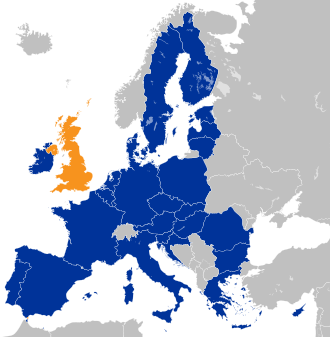
Brexit
Withdrawal of the UK from the EU
Brexit (; a portmanteau of "Britain" and "Exit") was the withdrawal of the United Kingdom (UK) from the European Union (EU). Brexit took place at 23:00 GMT on 31 January 2020 (00:00 1 February 2020 CET). The UK, which joined the EU precursor, the European Communities (EC), on 1 January 1973, is the ...

Government of the United Kingdom
His Majesty's Government, abbreviated to HM Government or otherwise the UK Government, is the central executive authority of the United Kingdom of Great Britain and Northern Ireland. The government is led by the prime minister (Sir Keir Starmer since 5 July 2024) who advises the monarch on the appoi...

Keir Starmer
Prime Minister of the United Kingdom since 2024
# Sir Keir Starmer **Sir Keir Rodney Starmer** (born 2 September 1962) is a British politician and lawyer serving as Prime Minister of the United Kingdom since July 2024. A member of the Labour Party, he has served as Leader of the Labour Party since 2020 and has been the Member of Parliament (MP) ...
Entity Intersection Graph
Connections for Brexit:
Mentioned Entities
Deep Analysis
Why It Matters
This legislation represents a significant shift in the UK's post-Brexit regulatory framework, potentially affecting businesses that trade with the EU and consumers who purchase EU-regulated goods. It matters because it signals the new government's intention to align more closely with European standards, which could reduce trade barriers but also limit regulatory independence. The move will impact industries from pharmaceuticals to agriculture that must comply with changing standards, and it raises constitutional questions about parliamentary sovereignty after Brexit.
Context & Background
- The UK left the European Union on January 31, 2020, following the 2016 Brexit referendum
- Since Brexit, the UK has been gradually replacing EU laws with domestic legislation through the Retained EU Law Act 2023
- Previous Conservative governments pursued a 'divergence' strategy aiming to create distinct UK regulatory standards
- The King's Speech outlines the government's legislative agenda for the upcoming parliamentary session
- EU rules cover areas including product safety, environmental standards, employment rights, and financial services regulations
What Happens Next
The legislation will be formally introduced in Parliament following the King's Speech in October 2024. Parliamentary debates and committee scrutiny will likely occur through late 2024 and early 2025, with potential amendments from opposition parties. Implementation would begin in 2025, with different sectors facing phased adoption timelines based on complexity and existing alignment.
Frequently Asked Questions
The legislation is expected to focus on harmonizing standards in key trade areas like product safety, food standards, and environmental regulations. It will likely prioritize rules that facilitate smoother trade with EU markets while maintaining consumer protections.
Businesses exporting to the EU should face reduced compliance costs and paperwork as standards converge. However, companies may need to adjust operations if they had already adapted to post-Brexit UK-specific regulations.
No, this legislation represents regulatory alignment rather than political reintegration. The UK remains outside EU institutions and maintains control over immigration, fisheries, and other key Brexit issues.
The legislation will likely create mechanisms for automatic or streamlined adoption of certain EU updates, though Parliament may retain oversight for major changes. This balance between efficiency and sovereignty will be a key debate.
The Conservative government actively sought regulatory divergence, while Starmer's approach prioritizes alignment to reduce trade friction. This represents a fundamental policy shift in post-Brexit strategy.