

Supreme Court appears skeptical of mail-in ballots that arrive after Election Day
📖 Full Retelling
📚 Related People & Topics
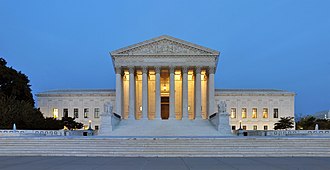
Supreme court
Highest court in a jurisdiction
In most legal jurisdictions, a supreme court, also known as a court of last resort, apex court, high (or final) court of appeal, and court of final appeal, is the highest court within the hierarchy of courts. Broadly speaking, the decisions of a supreme court are binding on all other courts in a nat...

Election day
Day when elections are held
Election Day or Polling Day is the day on which general elections are held. In many countries, general elections are always held on a Saturday or Sunday, to enable as many voters as possible to participate; while in other countries elections are always held on a weekday. However, some countries, or ...
Entity Intersection Graph
Connections for Supreme court:
Mentioned Entities
Deep Analysis
Why It Matters
This case could determine whether millions of mail-in ballots that arrive after Election Day will be counted in future elections, potentially disenfranchising voters who follow instructions but face postal delays. It affects all voters who rely on mail-in voting, particularly elderly, disabled, military overseas, and rural residents. The ruling could influence election outcomes in close races and reshape voting procedures nationwide ahead of the 2024 presidential election.
Context & Background
- The case likely involves the 'mail ballot receipt deadline' issue that emerged prominently during the 2020 election when COVID-19 prompted massive expansion of mail voting
- Multiple states have different deadlines - some require receipt by Election Day, others allow grace periods if ballots are postmarked by Election Day
- The Supreme Court previously addressed similar issues in 2020 but avoided a definitive ruling on the constitutional questions
- Partisan divisions exist with Democrats generally supporting extended deadlines and Republicans advocating for stricter Election Day receipt requirements
- The 2020 election saw record mail voting with over 65 million Americans voting by mail
What Happens Next
The Supreme Court will issue its ruling by late June 2024, potentially establishing a national precedent before the November elections. State legislatures may need to revise voting laws depending on the outcome. Election officials will need to update procedures and voter education materials. Legal challenges in other states with similar policies may follow based on this ruling.
Frequently Asked Questions
Some argue ballots must be received by Election Day to preserve election integrity and prevent fraud, while others contend voters shouldn't be penalized for postal service delays beyond their control, especially when ballots are postmarked by the deadline.
Approximately 20 states accept ballots after Election Day if postmarked by that date, with grace periods ranging from 1-14 days. Other states require receipt by Election Day regardless of postmark.
A ruling against late-arriving ballots could disqualify hundreds of thousands of votes in close states, potentially changing outcomes. It would also force voters to mail ballots much earlier or use alternative voting methods.
The case involves the Elections Clause, Equal Protection Clause, and states' rights to set election procedures versus federal oversight. It also touches on voter access versus election security balances.
In 2020, hundreds of thousands arrived after Election Day in states allowing them. Exact numbers vary by state, but they often represent 1-3% of mail ballots in jurisdictions with extended deadlines.