

Supreme Court considers Trump's birthright citizenship order: Join the live discussion
#Supreme Court #Trump #birthright citizenship #14th Amendment #executive order #constitutionality #immigration #legal debate
📌 Key Takeaways
- The Supreme Court is reviewing an executive order by former President Trump regarding birthright citizenship.
- The order aims to reinterpret the 14th Amendment's citizenship clause.
- Legal experts are debating the constitutionality of the proposed changes.
- A live discussion is being held to analyze the implications of the case.
📖 Full Retelling
🏷️ Themes
Immigration Law, Constitutional Rights
📚 Related People & Topics
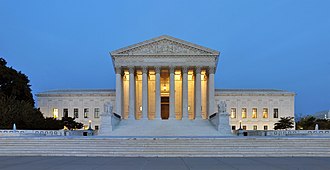
Supreme court
Highest court in a jurisdiction
In most legal jurisdictions, a supreme court, also known as a court of last resort, apex court, high (or final) court of appeal, and court of final appeal, is the highest court within the hierarchy of courts. Broadly speaking, the decisions of a supreme court are binding on all other courts in a nat...

Donald Trump
President of the United States (2017–2021; since 2025)
Donald John Trump (born June 14, 1946) is an American politician, media personality, and businessman who is the 47th president of the United States. A member of the Republican Party, he served as the 45th president from 2017 to 2021. Born into a wealthy New York City family, Trump graduated from the...
Entity Intersection Graph
Connections for Supreme court:
Mentioned Entities
Deep Analysis
Why It Matters
This news matters because it involves a fundamental constitutional principle that could redefine American citizenship for millions. Birthright citizenship, established by the 14th Amendment, has been a cornerstone of U.S. immigration policy for over 150 years. A Supreme Court review could affect future children born to undocumented immigrants, potentially creating a class of stateless individuals. The decision would have profound implications for immigration policy, constitutional interpretation, and the balance of power between the executive and judicial branches.
Context & Background
- The 14th Amendment's Citizenship Clause, ratified in 1868, states 'All persons born or naturalized in the United States, and subject to the jurisdiction thereof, are citizens of the United States.'
- Birthright citizenship has been consistently upheld by courts since the 1898 Supreme Court case United States v. Wong Kim Ark, which affirmed citizenship for children born to Chinese immigrants.
- Previous attempts to challenge birthright citizenship through executive action have been rejected by legal scholars who argue it requires a constitutional amendment, not just an executive order.
- The current debate centers on whether 'subject to the jurisdiction thereof' excludes children of undocumented immigrants, a position most constitutional scholars reject based on historical interpretation.
What Happens Next
The Supreme Court will likely schedule oral arguments within the next 3-6 months, with a decision expected by June 2025. If the Court agrees to hear the case, numerous states and advocacy groups will file amicus briefs supporting both sides. Regardless of the outcome, the decision will likely trigger legislative proposals in Congress either to codify or restrict birthright citizenship through constitutional amendment procedures.
Frequently Asked Questions
Most constitutional scholars argue no—birthright citizenship is protected by the 14th Amendment, which can only be changed through a constitutional amendment requiring two-thirds congressional approval and ratification by three-fourths of states. Executive orders cannot override constitutional provisions.
Approximately 300,000-400,000 children are born to undocumented immigrants annually in the U.S. These children would potentially become stateless if birthright citizenship were removed, as they wouldn't automatically qualify for their parents' home country citizenship either.
The United States is one of about 30 countries with unconditional birthright citizenship, including Canada and Mexico. Most developed nations, including European countries, Australia, and Japan, have abandoned or never had such policies, requiring at least one parent to be a citizen or legal resident.
Legal experts believe any change would apply prospectively only, meaning children already born would retain their citizenship. Retroactively stripping citizenship would likely violate constitutional due process protections and create massive legal challenges.