SP
BravenNow
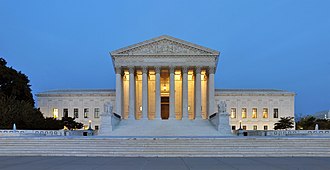
Supreme Court decision against Trump's tariffs raises uncertainty, but markets stay calm
| USA | economy | ✓ Verified - abcnews.com

Supreme Court decision against Trump's tariffs raises uncertainty, but markets stay calm

📌 Key Takeaways

  • {"type":"skipped","reason":"older_than_3_days"}
China has urged the United States to stop imposing one-sided tariffs

📚 Related People & Topics

Supreme court

Supreme court

Highest court in a jurisdiction

In most legal jurisdictions, a supreme court, also known as a court of last resort, apex court, high (or final) court of appeal, and court of final appeal, is the highest court within the hierarchy of courts. Broadly speaking, the decisions of a supreme court are binding on all other courts in a nat...

View Profile → Wikipedia ↗

Entity Intersection Graph

Connections for Supreme court:

🌐 Tariffs in the Trump administration 25 shared
👤 Donald Trump 19 shared
🌐 Tariff 16 shared
🌐 Commercial policy 12 shared
🌐 International Emergency Economic Powers Act 9 shared
View full profile

Mentioned Entities

Supreme court

Supreme court

Highest court in a jurisdiction

Deep Analysis

Why It Matters

The Supreme Court's ruling against Trump's tariffs creates significant legal and trade policy uncertainty, potentially unraveling existing international agreements. Despite the initial market calm, the decision challenges the executive's authority to impose trade measures unilaterally and could lead to retaliatory actions from trading partners.

Context & Background

  • Trump imposed sweeping tariffs in April 2025 using the International Emergency Economic Powers Act
  • China and South Korea are among the countries affected by the tariffs
  • The Supreme Court ruled the tariffs unlawful, prompting a reassessment by affected nations

What Happens Next

The Trump administration plans to impose new global tariffs under Section 122 of the 1974 Trade Act, potentially at 15%. Trading partners like South Korea will engage in discussions with U.S. officials to mitigate impacts, while the courts will decide on refunds for tariffs already collected.

Frequently Asked Questions

What was the Supreme Court's ruling about?

The Supreme Court ruled against tariffs imposed by President Trump under the International Emergency Economic Powers Act, declaring them unlawful.

How did markets react to the decision?

U.S. futures fell slightly, but Asian markets mostly advanced, indicating a mixed but generally calm initial response.

What is the new tariff proposal from President Trump?

Trump proposed a new 10% global tariff under the 1974 Trade Act, later increasing it to 15%, as an alternative to the struck-down measures.

}
Original Source
Supreme Court decision against Trump's tariffs raises uncertainty, but markets stay calm China has urged the United States to stop imposing one-sided tariffs By ELAINE KURTENBACH AP business writer February 23, 2026, 2:58 AM BANGKOK -- The Supreme Court's ruling against U.S. President Donald Trump's tariffs has countries like China and South Korea watching for Washington's next steps, while financial markets took the news in stride. The decision announced Friday could potentially disrupt arrangements worked out in trade negotiations since Trump announced sweeping tariffs on dozens of countries in April 2025. China's Commerce Ministry said it was conducting a “comprehensive assessment of ” the ruling against the tariffs Trump imposed under the International Emergency Economic Powers Act, or IEEPA. “China urges the United States to lift the unilateral tariffs imposed on trading partners,” an unnamed ministry spokesman said in a statement. The statement reiterated Beijing's stance that there are no winners in a trade war and that the measures Trump had announced “not only violate international economic and trade rules but also contravene domestic laws of the United States, and are not in the interests of any party," the official Xinhua News Agency cited the spokesperson as saying. Trump responded to the Supreme Court decision by proposing a new 10% global tariff under an alternative law, Section 122 of the 1974 Trade Act, and later increased it to 15%. For China and some other countries in Asia that were subject to higher import duties on their exports, that could potentially bring some relief. But for others such as Japan, the United Kingdom and other U.S. allies, tariffs could rise. The U.S. plans to stand by its trade deals and expects its partners to do the same, U.S. Trade Representative Jamieson Greer said in a CBS News interview Sunday. “The deals were not premised on whether or not the emergency tariff litigation would rise or fall,” said Greer, Trump’s top tra...
Read full article at source

Source

abcnews.com

More from USA

News from Other Countries

🇬🇧 United Kingdom

🇺🇦 Ukraine