
Supreme Court expresses skepticism over Trump order to end birthright citizenship
📖 Full Retelling
📚 Related People & Topics
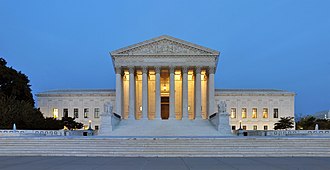
Supreme court
Highest court in a jurisdiction
In most legal jurisdictions, a supreme court, also known as a court of last resort, apex court, high (or final) court of appeal, and court of final appeal, is the highest court within the hierarchy of courts. Broadly speaking, the decisions of a supreme court are binding on all other courts in a nat...

Donald Trump
President of the United States (2017–2021; since 2025)
Donald John Trump (born June 14, 1946) is an American politician, media personality, and businessman who is the 47th president of the United States. A member of the Republican Party, he served as the 45th president from 2017 to 2021. Born into a wealthy New York City family, Trump graduated from the...
Entity Intersection Graph
Connections for Supreme court:
Mentioned Entities
Deep Analysis
Why It Matters
This news matters because it challenges a fundamental constitutional principle that has defined American citizenship for over 130 years. The outcome could affect millions of children born to undocumented immigrants, potentially creating a permanent underclass without citizenship rights. It also tests the balance of power between presidential authority and constitutional interpretation, with implications for future immigration policy. The decision will have significant political ramifications during an election year when immigration remains a polarizing issue.
Context & Background
- The 14th Amendment's Citizenship Clause, ratified in 1868, states 'All persons born or naturalized in the United States, and subject to the jurisdiction thereof, are citizens of the United States.'
- Birthright citizenship has been interpreted by courts since the 1898 United States v. Wong Kim Ark Supreme Court decision to apply to nearly all children born on U.S. soil.
- Previous attempts to challenge birthright citizenship have failed, including legislative proposals in Congress and executive actions by prior administrations.
- The current case represents the first time the Supreme Court has seriously considered whether a president can unilaterally reinterpret this constitutional provision through executive order.
- Approximately 300,000-400,000 children are born to undocumented immigrants in the U.S. annually, representing about 7-8% of all U.S. births.
What Happens Next
The Supreme Court will likely issue its ruling by late June or early July 2024, before the end of its current term. If the Court rules against the executive order, birthright citizenship will remain intact. If the Court upholds the order, implementation would face immediate legal challenges regarding enforcement mechanisms and retroactive application. The decision will likely influence immigration policy debates in the 2024 presidential election regardless of outcome.
Frequently Asked Questions
Birthright citizenship, also called jus soli, is the legal principle that anyone born within a country's territory automatically gains citizenship of that country. In the U.S., this has been established through the 14th Amendment since 1868 and applies regardless of parents' immigration status.
No, presidents cannot unilaterally change the Constitution. Executive orders must operate within existing constitutional and statutory frameworks. This case tests whether the president's interpretation of the 14th Amendment through executive action can effectively alter long-standing constitutional understanding.
The United States and Canada are the only major developed nations with unrestricted birthright citizenship. Most European countries have abandoned or restricted the practice, while many Latin American and Caribbean nations maintain some form of birthright citizenship.
This remains legally uncertain. The executive order would likely only apply prospectively, but legal challenges would certainly question whether it could affect citizenship status retroactively. Existing citizens would probably need separate legal proceedings to challenge their status.
Experts suggest it could reduce 'birth tourism' where pregnant women travel to give birth in the U.S., but might increase undocumented immigration as parents stay to avoid separation from citizen children. It could also create complex bureaucratic challenges for documenting a growing population of non-citizen residents.