

Supreme Court Hears Trump Request to Block Asylum Seekers
📖 Full Retelling
📚 Related People & Topics
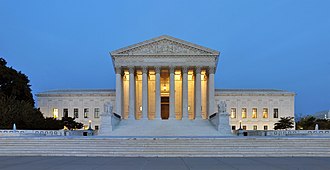
Supreme court
Highest court in a jurisdiction
In most legal jurisdictions, a supreme court, also known as a court of last resort, apex court, high (or final) court of appeal, and court of final appeal, is the highest court within the hierarchy of courts. Broadly speaking, the decisions of a supreme court are binding on all other courts in a nat...

Donald Trump
President of the United States (2017–2021; since 2025)
Donald John Trump (born June 14, 1946) is an American politician, media personality, and businessman who is the 47th president of the United States. A member of the Republican Party, he served as the 45th president from 2017 to 2021. Born into a wealthy New York City family, Trump graduated from the...
Entity Intersection Graph
Connections for Supreme court:
Mentioned Entities
Deep Analysis
Why It Matters
This case directly impacts thousands of asylum seekers fleeing violence and persecution who seek protection in the United States. It tests the balance between presidential authority over immigration and humanitarian obligations under both domestic and international law. The outcome will affect border enforcement policies and could set precedents for how future administrations handle asylum claims. This matters to immigrant communities, border states, humanitarian organizations, and anyone concerned with the separation of powers in American government.
Context & Background
- The Trump administration has implemented multiple policies restricting asylum eligibility since 2018, including the 'Remain in Mexico' program and third-country transit bans.
- U.S. asylum law stems from the Refugee Act of 1980, which implemented international obligations under the 1951 Refugee Convention and its 1967 Protocol.
- Previous Supreme Court decisions have granted presidents broad authority over immigration matters while also recognizing certain statutory protections for asylum seekers.
- The number of asylum applications at the U.S.-Mexico border has increased significantly in recent years, with over 800,000 pending cases in immigration courts as of 2023.
- Lower courts have repeatedly blocked various Trump administration asylum restrictions, creating legal uncertainty and policy inconsistency.
What Happens Next
The Supreme Court will likely issue its decision by June 2024, before the end of the current term. If the Court rules in Trump's favor, the administration could immediately implement the asylum restrictions. If the Court rules against Trump, the case may return to lower courts for further proceedings. The decision could influence ongoing negotiations in Congress about broader immigration reform. Regardless of outcome, the ruling will shape asylum policy through at least the next presidential administration.
Frequently Asked Questions
The administration seeks to implement rules that would deny asylum to most migrants who pass through another country without seeking protection there first, and to those who enter between official ports of entry. These restrictions would dramatically narrow eligibility for asylum compared to current standards.
This continues a pattern of the Court deciding major immigration cases during the Trump administration, including the travel ban and census citizenship questions. The Court has generally deferred to executive authority on immigration matters but has occasionally limited presidential power when statutory rights are clearly established.
Most continue to be processed under existing rules, though some may be subject to 'Remain in Mexico' or other interim policies. The Court may issue a temporary stay that either blocks or allows the restrictions during the appeals process, creating immediate practical consequences.
Yes, immigration policies established through executive action can typically be reversed by subsequent administrations. However, Supreme Court rulings interpreting statutory authority would constrain what any president could do without congressional action to change the underlying laws.
The Court's reasoning could influence pending cases about DACA, public charge rules, and border wall funding. A broad ruling about presidential authority could strengthen the administration's position in other immigration litigation, while a narrow ruling might preserve more opportunities for legal challenges.