

Supreme Court rules against state conversion therapy ban
📚 Related People & Topics

LGBTQ people
Sexual and gender minorities
LGBTQ people are individuals who are lesbian, gay, bisexual, transgender, or queer. Many variants of the initialism are used, such as those incorporating questioning, intersex, asexual, aromantic, agender, and other individuals. The group is generally conceived as broadly encompassing all individual...
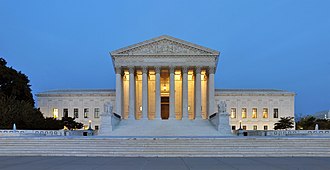
Supreme court
Highest court in a jurisdiction
In most legal jurisdictions, a supreme court, also known as a court of last resort, apex court, high (or final) court of appeal, and court of final appeal, is the highest court within the hierarchy of courts. Broadly speaking, the decisions of a supreme court are binding on all other courts in a nat...

First Amendment to the United States Constitution
1791 amendment limiting government restriction of civil liberties
The First Amendment (Amendment I) to the United States Constitution prevents Congress from making laws respecting an establishment of religion; prohibiting the free exercise of religion; or abridging the freedom of speech, the freedom of the press, the freedom of assembly, or the right to petition t...
Entity Intersection Graph
Connections for LGBTQ people:
Mentioned Entities
Deep Analysis
Why It Matters
This Supreme Court ruling is significant because it potentially invalidates state-level bans on conversion therapy, a practice widely condemned by major medical and mental health organizations. The decision affects LGBTQ+ youth who may now face increased exposure to harmful practices that attempt to change sexual orientation or gender identity. It also impacts state legislatures' ability to regulate healthcare practices and creates uncertainty about existing protections in numerous states that had implemented such bans.
Context & Background
- Conversion therapy refers to practices that attempt to change an individual's sexual orientation or gender identity, which major medical associations including the American Psychological Association and American Medical Association have denounced as harmful and ineffective.
- At least 20 states and numerous municipalities had implemented bans on conversion therapy for minors prior to this ruling, with the first state ban enacted in California in 2012.
- The Supreme Court has been increasingly involved in LGBTQ+ rights cases in recent years, including landmark decisions on marriage equality (Obergefell v. Hodges, 2015) and employment discrimination (Bostock v. Clayton County, 2020).
What Happens Next
State legislatures that had conversion therapy bans may need to reconsider their laws or face legal challenges. Advocacy groups on both sides will likely intensify lobbying efforts at state and federal levels. Additional court challenges to similar laws in other states are probable, potentially leading to further Supreme Court clarification on this issue.
Frequently Asked Questions
Conversion therapy encompasses various practices that attempt to change a person's sexual orientation or gender identity. These include talk therapy, behavioral interventions, and sometimes more extreme methods, all of which major medical organizations have rejected as ineffective and potentially harmful.
Prior to this ruling, at least 20 states including California, New York, Illinois, and Massachusetts had banned conversion therapy for minors. Many major cities like New York City, Seattle, and Miami had also implemented local bans.
The ruling specifically addresses the state ban in question, but it establishes precedent that could challenge similar laws in other states. The exact scope will depend on how lower courts interpret this Supreme Court decision in future cases.
Medical organizations argue conversion therapy is ineffective and harmful, linking it to increased depression, anxiety, and suicide risk. Critics also contend it's based on the false premise that LGBTQ+ identities are disorders needing correction.
While the article doesn't specify, similar cases often involve First Amendment arguments about free speech rights of therapists or religious freedom claims. The Court may have found the ban overly restrictive of professional speech or religious practice.