

Supreme Court Secrecy Includes Reasons for Recusal
#Supreme Court #judicial recusal #ethics #transparency #shadow docket #conflict of interest #judicial legitimacy
📌 Key Takeaways
- Supreme Court justices routinely do not disclose reasons for recusing themselves from cases.
- This practice is part of a broader pattern of procedural secrecy, including unexplained emergency orders.
- Justices self-regulate recusals due to the lack of a binding, formal ethics code for the Supreme Court.
- The opacity surrounding recusals and decisions fuels criticism about the court's transparency and public legitimacy.
📖 Full Retelling
U.S. Supreme Court justices frequently decline to publicly explain their reasons for recusing themselves from cases, according to recent reporting and analysis of court practices. This pattern of judicial silence, observed in Washington D.C., mirrors the court's broader approach of issuing significant emergency orders and procedural decisions without detailed public justification, raising persistent questions about transparency and accountability within the nation's highest judicial body.
The practice of undisclosed recusal is not governed by a formal, binding code of conduct for the Supreme Court, unlike the strict rules that apply to lower federal judges. Justices are largely left to police their own ethical boundaries, deciding for themselves when a potential conflict of interest—such as a financial stake, a familial connection, or prior involvement in a case—requires them to step aside. While some justices occasionally offer brief, generic explanations, the vast majority of recusals are noted on the court's docket without any accompanying rationale, leaving lawyers, litigants, and the public to speculate about the underlying reasons.
This opacity is part of a larger trend of procedural secrecy that has drawn increased scrutiny in recent years, particularly concerning the court's 'shadow docket'—a term for orders issued without full briefing or signed opinions, often on emergency applications. Critics, including legal scholars and transparency advocates, argue that the combination of unexplained recusals and unsigned, consequential orders undermines public confidence in the court's impartiality and its role as a co-equal branch of government. They contend that greater disclosure, especially for recusals which are fundamental to ensuring fair proceedings, is essential for maintaining judicial legitimacy in an era of heightened political polarization.
🏷️ Themes
Judicial Ethics, Government Transparency, Supreme Court
📚 Related People & Topics
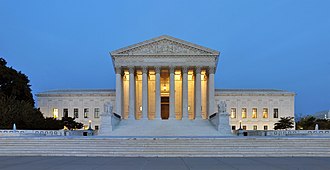
Supreme court
Highest court in a jurisdiction
In most legal jurisdictions, a supreme court, also known as a court of last resort, apex court, high (or final) court of appeal, and court of final appeal, is the highest court within the hierarchy of courts. Broadly speaking, the decisions of a supreme court are binding on all other courts in a nat...
Entity Intersection Graph
Connections for Supreme court:
🌐
Tariffs in the Trump administration
25 shared
👤
Donald Trump
19 shared
🌐
Tariff
16 shared
🌐
Commercial policy
12 shared
Mentioned Entities
Original Source
Justices often don’t disclose why they disqualify themselves from hearing cases. Their silence echoes the court’s unexplained emergency orders.
Read full article at source