
Supreme Court sides with Colorado counselor in conversion therapy case
📖 Full Retelling
📚 Related People & Topics
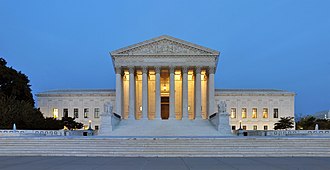
Supreme court
Highest court in a jurisdiction
In most legal jurisdictions, a supreme court, also known as a court of last resort, apex court, high (or final) court of appeal, and court of final appeal, is the highest court within the hierarchy of courts. Broadly speaking, the decisions of a supreme court are binding on all other courts in a nat...

Colorado
U.S. state
Colorado is a landlocked state in the Western United States. It is one of the Mountain states, and part of the Southwestern United States, sharing the Four Corners region with Arizona, New Mexico, and Utah. It is also bordered by Wyoming to the north, Nebraska to the northeast, Kansas to the east, a...
Entity Intersection Graph
Connections for Supreme court:
Mentioned Entities
Deep Analysis
Why It Matters
This Supreme Court decision has significant implications for LGBTQ+ rights, religious freedom, and professional ethics. It affects LGBTQ+ youth who may be subjected to harmful conversion therapy practices, mental health professionals navigating ethical guidelines, and states attempting to regulate therapeutic practices. The ruling creates tension between protecting vulnerable populations and safeguarding religious expression and professional speech rights.
Context & Background
- Conversion therapy refers to practices attempting to change a person's sexual orientation or gender identity, widely condemned by major medical associations including the American Psychological Association and American Medical Association
- Colorado passed a law in 2019 banning licensed professionals from providing conversion therapy to minors, joining 20+ other states with similar restrictions
- The case involved a Christian counselor who argued the law violated her First Amendment rights to free speech and religious exercise
- Lower courts had previously upheld Colorado's law, finding it regulated professional conduct rather than speech
What Happens Next
The ruling will likely trigger similar legal challenges in other states with conversion therapy bans, potentially reaching the Supreme Court again. Mental health licensing boards will need to revise enforcement approaches to comply with the decision. State legislatures may attempt to craft new legislation that addresses the Court's concerns while maintaining protections for LGBTQ+ youth.
Frequently Asked Questions
Conversion therapy encompasses various practices aimed at changing a person's sexual orientation or gender identity. These include talk therapy, behavioral interventions, and sometimes more extreme measures, all widely discredited by mainstream medical and mental health organizations.
Major medical associations oppose conversion therapy because research shows it's ineffective and causes significant harm including depression, anxiety, and increased suicide risk. These organizations affirm that diverse sexual orientations and gender identities are normal variations of human experience.
This Supreme Court decision creates uncertainty for similar laws in over 20 states. While not automatically invalidating them, it establishes legal principles that challengers will use to contest these bans, potentially requiring states to modify their approaches to regulation.
The counselor argued that Colorado's law violated her First Amendment rights by restricting her professional speech and religious expression. She contended she was providing counseling consistent with her clients' religious beliefs about sexuality, not engaging in harmful practices.
No, state laws banning conversion therapy remain in effect unless successfully challenged in court. However, this ruling makes those laws more vulnerable to legal challenges based on free speech and religious freedom arguments.