
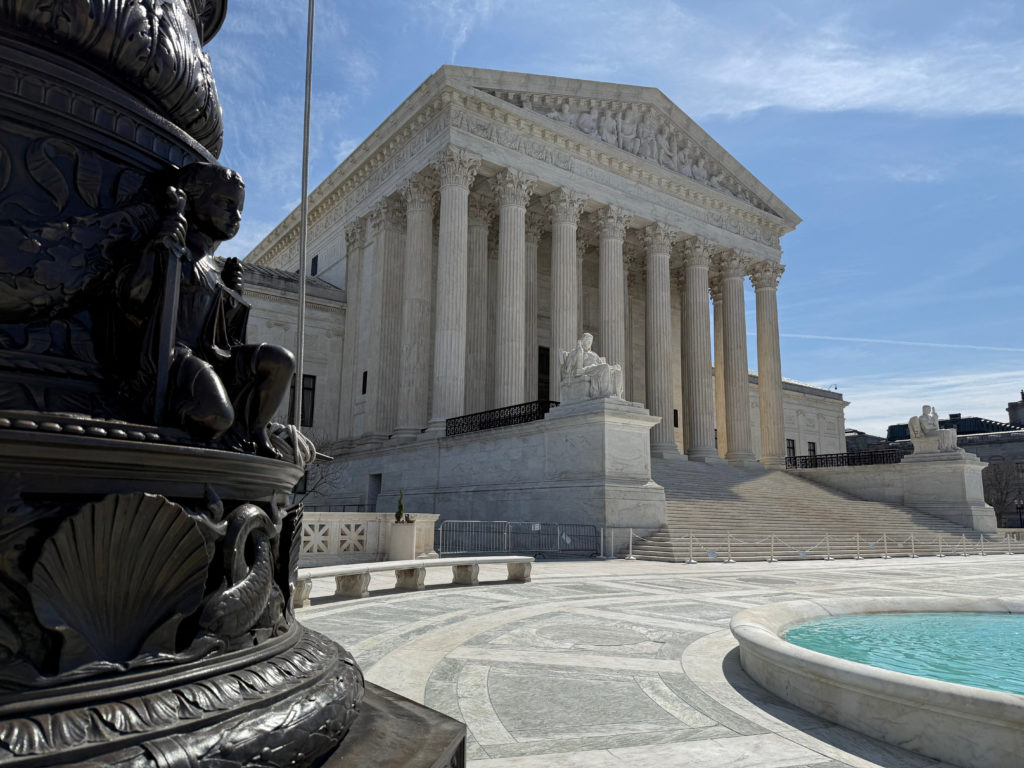
Supreme Court sides with Cox in copyright battle with record labels
📖 Full Retelling
📚 Related People & Topics
Supreme court
Highest court in a jurisdiction
In most legal jurisdictions, a supreme court, also known as a court of last resort, apex court, high (or final) court of appeal, and court of final appeal, is the highest court within the hierarchy of courts. Broadly speaking, the decisions of a supreme court are binding on all other courts in a nat...
Cox Communications
American cable provider
Cox Communications, Inc. (also known as Cox Cable and formerly Cox Broadcasting Corporation, Dimension Cable Services and Times-Mirror Cable), is an American digital cable television provider, telecommunications and home automation services company. It is the third-largest cable television provider ...
Entity Intersection Graph
Connections for Supreme court:
Mentioned Entities
Deep Analysis
Why It Matters
This Supreme Court decision has significant implications for internet service providers and copyright enforcement. It affects how ISPs handle copyright infringement claims from their users, potentially limiting their liability for user actions. The ruling impacts record labels and content creators who rely on copyright protections for revenue. It also shapes the legal landscape for digital platforms balancing free expression with intellectual property rights.
Context & Background
- Cox Communications was sued by major record labels including Sony, Universal, and Warner for allegedly failing to address repeat copyright infringers on its network
- The case centered on whether Cox qualified for 'safe harbor' protections under the Digital Millennium Copyright Act (DMCA)
- Lower courts had previously awarded record labels $1 billion in damages against Cox for copyright infringement
- The DMCA's safe harbor provisions protect online service providers from liability if they follow certain procedures when notified of infringement
- This case represents a broader tension between content industries and internet service providers over piracy enforcement
What Happens Next
The Supreme Court's decision will likely lead to further litigation about the boundaries of ISP liability. Record labels may pursue alternative legal strategies or lobby for legislative changes to copyright law. Other ISPs will adjust their copyright enforcement policies based on this precedent. Future cases may test how this ruling applies to different types of online platforms and services.
Frequently Asked Questions
The Court sided with Cox, finding that the ISP qualified for DMCA safe harbor protections and was not liable for users' copyright infringement. This overturned lower court rulings that had held Cox responsible.
Users may see fewer aggressive copyright enforcement actions from their ISPs, but content creators may increase direct enforcement against individual infringers. The ruling maintains current ISP practices regarding copyright notices.
These are legal protections that shield online service providers from liability for user-generated content if they promptly remove infringing material when notified. Providers must also implement a policy for terminating repeat infringers.
While record labels argue it weakens copyright enforcement, the ruling doesn't prevent other anti-piracy measures. The decision focuses on ISP liability rather than changing what constitutes infringement.
Other ISPs and online platforms will benefit from clearer safe harbor protections. The ruling provides guidance on what constitutes adequate repeat infringer policies, helping companies avoid similar lawsuits.