

Supreme Court sides with therapist challenging Colorado ban on conversion therapy
📖 Full Retelling
📚 Related People & Topics
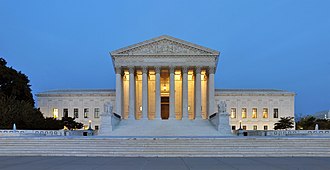
Supreme court
Highest court in a jurisdiction
In most legal jurisdictions, a supreme court, also known as a court of last resort, apex court, high (or final) court of appeal, and court of final appeal, is the highest court within the hierarchy of courts. Broadly speaking, the decisions of a supreme court are binding on all other courts in a nat...

First Amendment to the United States Constitution
1791 amendment limiting government restriction of civil liberties
The First Amendment (Amendment I) to the United States Constitution prevents Congress from making laws respecting an establishment of religion; prohibiting the free exercise of religion; or abridging the freedom of speech, the freedom of the press, the freedom of assembly, or the right to petition t...

Colorado
U.S. state
Colorado is a landlocked state in the Western United States. It is one of the Mountain states, and part of the Southwestern United States, sharing the Four Corners region with Arizona, New Mexico, and Utah. It is also bordered by Wyoming to the north, Nebraska to the northeast, Kansas to the east, a...
Entity Intersection Graph
Connections for Supreme court:
Mentioned Entities
Deep Analysis
Why It Matters
This Supreme Court decision matters because it potentially weakens state-level protections for LGBTQ+ youth by allowing therapists to challenge bans on conversion therapy, a practice widely condemned by major medical associations. It affects LGBTQ+ individuals seeking mental health services, therapists who wish to practice conversion therapy, and state legislatures that have enacted similar bans. The ruling could set a precedent for First Amendment challenges to other professional regulations, creating uncertainty about how far states can go in regulating healthcare practices deemed harmful by medical consensus.
Context & Background
- Conversion therapy refers to practices attempting to change a person's sexual orientation or gender identity, which the American Psychological Association and American Medical Association have condemned as ineffective and harmful.
- Colorado passed its conversion therapy ban in 2019, joining 20 other states and numerous municipalities that have restricted the practice for minors.
- The case centered on whether such bans violate therapists' First Amendment rights to free speech versus states' authority to regulate professional conduct and protect vulnerable populations.
What Happens Next
The ruling will likely lead to similar challenges against conversion therapy bans in other states, potentially creating a patchwork of regulations across the country. State legislatures may need to reconsider how they craft such bans to withstand First Amendment scrutiny. The decision could also influence ongoing debates about professional speech regulations in other healthcare contexts beyond conversion therapy.
Frequently Asked Questions
Conversion therapy encompasses various practices aimed at changing a person's sexual orientation or gender identity, including talk therapy, behavioral interventions, and sometimes more extreme measures. Major medical organizations have uniformly condemned these practices as ineffective and potentially harmful, particularly to LGBTQ+ youth.
The Court likely based its decision on First Amendment grounds, viewing the therapist's conversations with clients as protected speech. The ruling suggests that states may face constitutional limitations when regulating professional speech, even when attempting to protect vulnerable populations from harmful practices.
Not necessarily—the ruling specifically addresses Colorado's law and may not invalidate all conversion therapy bans. However, it creates a legal precedent that could make similar bans more vulnerable to constitutional challenges, potentially requiring states to revise their approaches to regulating such practices.
LGBTQ+ youth in states with conversion therapy bans are most directly affected, as they may face reduced protections from these practices. Mental health professionals, state regulators, and advocacy organizations on both sides of the issue will also need to adjust their strategies in response to the changed legal landscape.