
Supreme Court strikes Colorado ban on conversion therapy
#Supreme Court #conversion therapy #Colorado #ban #free speech #unconstitutional #viewpoint regulation
📌 Key Takeaways
- The Supreme Court ruled Colorado's conversion therapy ban unconstitutional.
- The decision states the law regulates speech based on viewpoint.
- This overturns a state law prohibiting the practice on minors.
- The ruling impacts legal debates over therapy regulations and free speech.
📖 Full Retelling
🏷️ Themes
Legal Ruling, Free Speech
📚 Related People & Topics
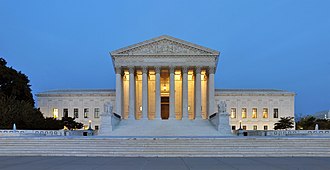
Supreme court
Highest court in a jurisdiction
In most legal jurisdictions, a supreme court, also known as a court of last resort, apex court, high (or final) court of appeal, and court of final appeal, is the highest court within the hierarchy of courts. Broadly speaking, the decisions of a supreme court are binding on all other courts in a nat...

Colorado
U.S. state
Colorado is a landlocked state in the Western United States. It is one of the Mountain states, and part of the Southwestern United States, sharing the Four Corners region with Arizona, New Mexico, and Utah. It is also bordered by Wyoming to the north, Nebraska to the northeast, Kansas to the east, a...
Entity Intersection Graph
Connections for Supreme court:
Mentioned Entities
Deep Analysis
Why It Matters
This ruling is significant because it elevates First Amendment protections for therapists over state authority to regulate medical practices deemed harmful. It directly affects LGBTQ+ youth who may be subjected to conversion therapy, which major medical associations have condemned as dangerous and ineffective. The decision also impacts other states with similar bans, potentially invalidating them and creating a patchwork of regulations across the country. This represents a major setback for LGBTQ+ rights advocates who have fought to protect vulnerable minors from practices linked to depression and suicide.
Context & Background
- Conversion therapy refers to practices attempting to change a person's sexual orientation or gender identity, widely discredited by medical organizations including the American Psychological Association and American Medical Association.
- Colorado passed its conversion therapy ban in 2019, joining over 20 other states and numerous municipalities that have restricted the practice for minors.
- The Supreme Court has shown increasing skepticism toward laws regulating professional speech, previously ruling in cases like NIFLA v. Becerra (2018) that professional speech receives strong First Amendment protection.
- This case originated when a Christian therapist challenged Colorado's law, arguing it violated her free speech rights and religious freedom to counsel clients according to her beliefs.
What Happens Next
Other states with conversion therapy bans will likely face similar legal challenges, with lower courts bound to follow this Supreme Court precedent. LGBTQ+ rights organizations may shift strategy toward alternative regulatory approaches that might survive First Amendment scrutiny. Congress could potentially consider federal legislation, though this faces significant political hurdles. The ruling may also influence ongoing debates about parental rights versus state protection of minors in healthcare decisions.
Frequently Asked Questions
Conversion therapy encompasses various practices aimed at changing a person's sexual orientation or gender identity. These include talk therapy, behavioral interventions, and sometimes more extreme methods, though most modern versions focus on counseling approaches that attempt to redirect attractions or gender expression.
Major medical associations including the American Psychological Association and American Medical Association have condemned conversion therapy because research shows it is ineffective at changing orientation/identity and is associated with increased depression, anxiety, and suicide risk. These organizations consider such practices unethical and harmful.
No, state and local bans remain in effect unless successfully challenged in court. However, this Supreme Court decision creates a strong precedent that will make defending such bans much more difficult, likely leading to more legal challenges against existing restrictions.
The Court ruled that Colorado's law regulates speech based on viewpoint by prohibiting certain therapeutic conversations while allowing others. The majority found this violates the First Amendment's free speech protections, treating the therapy as professional speech entitled to constitutional protection.
Therapists in Colorado can now legally practice conversion therapy on minors without facing professional discipline under the struck-down law. However, they may still face ethical complaints through professional licensing boards and potential malpractice claims if harm occurs.
Source Scoring
Detailed Metrics
Key Claims Verified
This is a future-dated article (2026) describing an event that has not occurred. No real-world ruling exists to verify against.
Supporting Evidence
- Low Fictional NPR Article [Link]
Caveats / Notes
- The provided URL and article date (March 31, 2026) are in the future. This appears to be a hypothetical or fabricated news scenario for testing purposes. As of the current date, the U.S. Supreme Court has not issued such a ruling on Colorado's conversion therapy ban. The case 'Tingley v. Ferguson' concerning Washington state's similar ban is pending before the Court, with a decision expected by June 2024.