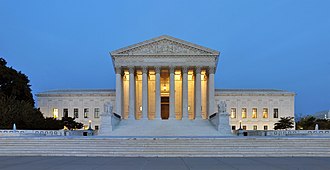
Supreme Court ruled Trump lacks authority to impose tariffs under IEEPA
Decision represents major setback to Trump's economic agenda
Court upheld lower court ruling that declared tariffs illegal
Trump can still impose tariffs under other trade authorities
This is the most significant legal loss of Trump's second term
📖 Full Retelling
The Supreme Court in Washington on Friday, February 20, 2026, ruled that President Trump does not have the authority to unilaterally impose sweeping tariffs on nearly every country under the International Emergency Economic Powers Act, delivering a significant blow to the president's signature economic policy. The high court's decision upholds a lower court ruling from the U.S. Court of Appeals for the Federal Circuit that had declared Trump's tariffs illegal, marking the first Supreme Court evaluation of one of his second-term policies. While the court has allowed Trump to enforce many plans temporarily during legal proceedings, this decision represents the most significant legal setback of his second term thus far. The ruling specifically limits the president's ability to use IEEPA to set sweeping tariff duties, though it does not prevent Trump from imposing tariffs under different trade authorities, which he has already utilized for copper, steel, aluminum, and other product imports. The Supreme Court is currently weighing other significant challenges to Trump's executive authority, including whether to allow him to fire officials at independent federal agencies without cause and a scheduled April hearing on the legality of his plan to end birthright citizenship.
In most legal jurisdictions, a supreme court, also known as a court of last resort, apex court, high (or final) court of appeal, and court of final appeal, is the highest court within the hierarchy of courts. Broadly speaking, the decisions of a supreme court are binding on all other courts in a nat...
The International Emergency Economic Powers Act (IEEPA), Title II of Pub. L. 95–223, 91 Stat. 1626, enacted December 28, 1977, is a United States federal law authorizing the president to regulate international commerce after declaring a national emergency in response to any unusual and extraordinary...
Actions that governments take in the economic field
The economy of governments covers the systems for setting levels of taxation, government budgets, the money supply and interest rates as well as the labour market, national ownership, and many other areas of government interventions into the economy.
Most factors of economic policy can be divided in...
Politics Supreme Court strikes down Trump tariffs in major setback for economic agenda By Melissa Quinn Melissa Quinn Senior Reporter, Politics Melissa Quinn is a senior reporter for CBSNews.com, where she covers U.S. politics, with a focus on the Supreme Court and federal courts. Read Full Bio Melissa Quinn Updated on: February 20, 2026 / 10:10 AM EST / CBS News Add CBS News on Google Washington — The Supreme Court on Friday ruled President Trump does not have the authority to unilaterally impose sweeping tariffs on nearly every country under a federal emergency powers law, delivering a significant blow to the president's signature economic policy. The high court ruled that the International Emergency Economic Powers Act, or IEEPA, does not authorize the president to impose tariffs. It upheld a lower court ruling from the U.S. Court of Appeals for the Federal Circuit that ruled Mr. Trump's tariffs were illegal. The legal battle over Mr. Trump's tariffs marked the first in which the Supreme Court evaluated the legal merits of one of his second-term policies. The high court has allowed the president to enforce many of his plans temporarily while legal proceedings moved forward, but its decision invalidating Mr. Trump's global tariffs is so far the most significant loss of his second term. The Supreme Court is also weighing whether to allow the president to fire officials at independent federal agencies without cause and will hear arguments in April over the legality of Mr. Trump's plan to end birthright citizenship . While the ruling restricts the president's ability to use IEEPA to set his sweeping duties, it does not prevent the president from imposing tariffs under different trade authorities . Mr. Trump has already relied on other laws to slap levies on copper, steel and aluminum imports, as well as other products. This is a breaking news story and will be updated. The U.S. Supreme Court More Supreme Court lets California use new congressional map in midterms