
Supreme Court to consider end to deportation protections for Syrians, Haitians
#Supreme Court #deportation #Temporary Protected Status #TPS #Syria #Haiti #immigration #legal challenge
📌 Key Takeaways
- The Supreme Court will review a case that could end deportation protections for Syrians and Haitians.
- The case centers on Temporary Protected Status (TPS) designations for these countries.
- A ruling could impact thousands of immigrants currently shielded from removal.
- The decision may set a precedent for how the executive branch handles TPS.
📖 Full Retelling
🏷️ Themes
Immigration Policy, Supreme Court
📚 Related People & Topics
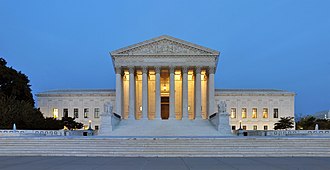
Supreme court
Highest court in a jurisdiction
In most legal jurisdictions, a supreme court, also known as a court of last resort, apex court, high (or final) court of appeal, and court of final appeal, is the highest court within the hierarchy of courts. Broadly speaking, the decisions of a supreme court are binding on all other courts in a nat...
Temporary protected status
Temporary status for eligible nationals who reside in the United States
Temporary protected status (TPS) is given by the United States government to eligible nationals of designated countries, as determined by the Secretary of Homeland Security, who are present in the United States. In general, the Secretary of Homeland Security may grant temporary protected status to p...

Syria
Country in West Asia
Syria, officially the Syrian Arab Republic, is a country in West Asia located in the Eastern Mediterranean and the Levant. It borders the Mediterranean Sea to the west, Turkey to the north and northwest, Iraq to the east and southeast, Jordan to the south, and Israel and Lebanon to the southwest. It...

Haiti
Country in the Caribbean
Haiti, officially the Republic of Haiti, is a country in the Caribbean on the island of Hispaniola in the Caribbean Sea, east of Cuba and Jamaica and south of the Bahamas. It occupies the western side of the island, which it shares with the Dominican Republic. Haiti is the third largest country in t...
Entity Intersection Graph
Connections for Supreme court:
Mentioned Entities
Deep Analysis
Why It Matters
This Supreme Court case could strip deportation protections from thousands of Syrian and Haitian nationals living in the U.S., potentially forcing them to return to countries experiencing severe humanitarian crises. The decision would directly impact families who have built lives in America under temporary protected status (TPS) programs. It also tests the executive branch's authority to grant humanitarian protections and could set precedent for how the U.S. handles immigration from conflict zones. The outcome will affect U.S. foreign relations with Haiti and Syria while determining the fate of vulnerable populations who have contributed to American communities for years.
Context & Background
- Temporary Protected Status (TPS) is a humanitarian program created by Congress in 1990 that allows foreign nationals to remain in the U.S. if returning to their home country would be dangerous due to armed conflict, natural disasters, or other extraordinary conditions.
- Syria was designated for TPS in 2012 due to the ongoing civil war that has killed hundreds of thousands and displaced millions, while Haiti received TPS designation following the devastating 2010 earthquake that killed approximately 250,000 people.
- The Trump administration attempted to terminate TPS for several countries including Syria and Haiti in 2017-2018, but those decisions faced multiple legal challenges that have kept the protections in place through court injunctions.
- Approximately 6,900 Syrians and 46,000 Haitians currently benefit from TPS status in the United States, many of whom have lived in the country for over a decade and have U.S.-born children.
- The case represents a broader legal battle over presidential authority in immigration matters, coming after several Supreme Court decisions that have alternately expanded and limited executive power in this area.
What Happens Next
The Supreme Court will hear oral arguments in the coming months, with a decision expected by June 2024. If the Court rules against TPS protections, the Biden administration would need to develop a phased implementation plan, potentially giving beneficiaries months to prepare for departure or seek alternative immigration status. Congressional action could provide a legislative solution, though immigration reform has been stalled for years. The decision will likely trigger immediate legal challenges regarding implementation timelines and individual hardship cases.
Frequently Asked Questions
If the Supreme Court terminates TPS protections, beneficiaries would lose work authorization and legal status, becoming subject to deportation unless they obtain alternative immigration status. Many would face returning to countries still recovering from disasters or conflict, though implementation would likely include transition periods.
Yes, Congress could pass legislation granting permanent residency or creating a path to citizenship for TPS holders, as proposed in several bills including the American Dream and Promise Act. However, such legislation would require bipartisan support in a divided Congress where immigration remains highly contentious.
Syria and Haiti represent two of the longest-running TPS designations with large beneficiary populations. Syria's designation reflects ongoing civil war and humanitarian crisis, while Haiti's relates to the 2010 earthquake aftermath compounded by political instability, gang violence, and natural disasters that make safe return impossible.
This case tests the limits of executive authority in humanitarian immigration protections and could influence how future administrations handle TPS designations for other countries. The decision may also affect the balance of power between Congress and the executive branch in immigration matters.
TPS holders could apply for asylum if they fear persecution, seek family-based visas if they have qualifying relatives, or apply for other humanitarian protections. Some may qualify for employment-based visas, though options are limited and processing times are often lengthy, creating potential gaps in legal status.