

Supreme Court to decide Trump's attempt to shut down deportation amnesty for Haitians, Syrians
#Supreme Court #Trump #deportation amnesty #Haitians #Syrians #TPS #immigration
📌 Key Takeaways
- The Supreme Court will review Trump's effort to end deportation amnesty for Haitians and Syrians.
- The case involves Temporary Protected Status (TPS) for nationals from these countries.
- The decision could impact thousands of immigrants protected from deportation.
- The ruling will address the scope of presidential authority over immigration policy.
📖 Full Retelling
🏷️ Themes
Immigration Policy, Supreme Court
📚 Related People & Topics

Haitians
Inhabitants of Haiti and their descendants in the Haitian diaspora
Haitians (Haitian Creole: Ayisyen, French: Haïtiens) are the citizens and nationals of Haiti. The Haitian people have their origins in West and Central Africa with the most spoken language being Haitian Creole. The larger Haitian diaspora includes individuals that trace ancestry to Haiti and self-id...
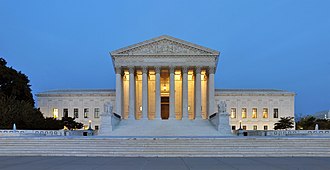
Supreme court
Highest court in a jurisdiction
In most legal jurisdictions, a supreme court, also known as a court of last resort, apex court, high (or final) court of appeal, and court of final appeal, is the highest court within the hierarchy of courts. Broadly speaking, the decisions of a supreme court are binding on all other courts in a nat...

Syrians
Majority inhabitants of Syria
Syrians (Arabic: سوريون) are the majority inhabitants of Syria, indigenous to the Levant, most of whom have Arabic, especially its Levantine and Mesopotamian dialects, as a mother tongue. The cultural and linguistic heritage of the Syrian people is a blend of both indigenous elements and the foreign...

Donald Trump
President of the United States (2017–2021; since 2025)
Donald John Trump (born June 14, 1946) is an American politician, media personality, and businessman who is the 47th president of the United States. A member of the Republican Party, he served as the 45th president from 2017 to 2021. Born into a wealthy New York City family, Trump graduated from the...
Entity Intersection Graph
Connections for Haitians:
Mentioned Entities
Deep Analysis
Why It Matters
This Supreme Court case will determine whether the Trump administration can end Temporary Protected Status (TPS) for approximately 50,000 Haitians and Syrians living legally in the United States. The decision directly impacts these families who have built lives in the U.S. for years, many with American-born children, and could force them to return to countries still recovering from disasters and conflict. The ruling will also establish important precedent about presidential authority over immigration programs and could affect TPS holders from other nations facing similar challenges. This case represents a critical test of executive power versus humanitarian protections in U.S. immigration policy.
Context & Background
- Temporary Protected Status (TPS) was created by Congress in 1990 to protect foreign nationals from deportation when their home countries face armed conflict, natural disasters, or other extraordinary conditions.
- Haiti received TPS designation in 2010 after a devastating earthquake that killed over 200,000 people and caused widespread destruction, while Syria received TPS in 2012 following the outbreak of civil war that has displaced millions.
- The Trump administration announced in 2017-2018 that it would terminate TPS for Haiti, Syria, and several other countries, arguing conditions had improved enough for safe return, though critics argued the decisions were politically motivated.
- Lower courts have blocked the Trump administration's attempts to end TPS programs, finding the decisions were 'arbitrary and capricious' and violated administrative procedures, leading to this Supreme Court appeal.
- There are approximately 300,000 TPS holders from various countries in the U.S., with many having lived in the country for decades, paying taxes, and raising families while their home countries remain unstable.
What Happens Next
The Supreme Court will hear arguments in the coming months with a decision expected by June 2023. If the Court rules for the administration, TPS protections for Haitians and Syrians could end 6-12 months later, though Congress could potentially intervene with legislation. If the Court rules against the administration, TPS holders would maintain their status, but future administrations could still attempt to terminate the programs through different procedures. The decision will likely influence pending cases regarding TPS for Salvadorans, Hondurans, and Nepalis.
Frequently Asked Questions
TPS is a temporary immigration status granted to nationals of designated countries facing dangerous conditions like natural disasters or armed conflict. It allows recipients to live and work legally in the U.S. without fear of deportation while conditions in their home countries remain unsafe.
Approximately 50,000 Haitians and Syrians with TPS status would be directly affected, potentially facing deportation if the Supreme Court allows the terminations. Their families, including U.S.-born children, would also face difficult choices about separation or relocation to potentially dangerous conditions.
The administration argued that conditions in Haiti and Syria had improved sufficiently to allow safe return, stating that TPS was meant to be temporary. Critics contend the decisions were politically motivated to reduce immigration and inconsistent with conditions assessments from experts and government agencies.
If the Court allows termination, TPS holders would lose their legal status and work authorization, becoming subject to deportation unless they obtain other immigration status. They would typically have 6-18 months to prepare for departure or seek alternative legal pathways to remain.
Yes, Congress could pass legislation granting permanent residency or extending TPS protections regardless of the Supreme Court's ruling. Several bills have been proposed but none have passed, making the Court's decision particularly consequential for immediate outcomes.