
Supreme Court to weigh Trump's bid to end birthright citizenship
📖 Full Retelling
📚 Related People & Topics
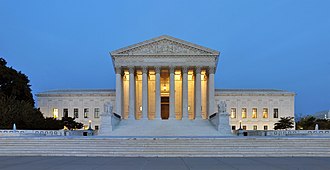
Supreme court
Highest court in a jurisdiction
In most legal jurisdictions, a supreme court, also known as a court of last resort, apex court, high (or final) court of appeal, and court of final appeal, is the highest court within the hierarchy of courts. Broadly speaking, the decisions of a supreme court are binding on all other courts in a nat...

Donald Trump
President of the United States (2017–2021; since 2025)
Donald John Trump (born June 14, 1946) is an American politician, media personality, and businessman who is the 47th president of the United States. A member of the Republican Party, he served as the 45th president from 2017 to 2021. Born into a wealthy New York City family, Trump graduated from the...
Entity Intersection Graph
Connections for Supreme court:
Mentioned Entities
Deep Analysis
Why It Matters
This case challenges the 14th Amendment's guarantee that anyone born in the United States automatically receives citizenship, a principle established after the Civil War to ensure equality. If successful, it could strip citizenship from hundreds of thousands of children born to undocumented immigrants each year, creating a permanent underclass without rights. The decision would fundamentally reshape American identity and immigration policy, affecting future generations' legal status and potentially triggering constitutional crises. This directly impacts immigrant communities, government agencies processing citizenship claims, and could influence other countries' policies on birthright citizenship.
Context & Background
- The 14th Amendment's Citizenship Clause (1868) states 'All persons born or naturalized in the United States... are citizens,' established to guarantee citizenship to formerly enslaved African Americans.
- Birthright citizenship (jus soli) has been upheld for over 150 years, including in the 1898 United States v. Wong Kim Ark Supreme Court case involving a child of Chinese immigrants.
- Previous attempts to end birthright citizenship include failed congressional bills and executive proposals from Presidents Reagan, Clinton, and Trump's 2018 executive order attempt.
- The U.S. is one of approximately 30 countries practicing unconditional birthright citizenship, alongside Canada and Mexico, while most European and Asian nations have restricted versions.
- Approximately 300,000-400,000 children are born to undocumented immigrants annually in the U.S., comprising about 7-8% of all U.S. births according to Pew Research Center data.
What Happens Next
The Supreme Court will hear oral arguments in the coming months, with a decision expected by June 2025. If the Court rules against birthright citizenship, immediate legal challenges will emerge regarding implementation and retroactive application. Congressional battles will intensify over potential constitutional amendments or new immigration legislation. State governments may begin conflicting enforcement approaches, while federal agencies would need to overhaul birth certificate and passport issuance systems.
Frequently Asked Questions
Most constitutional scholars argue no—the 14th Amendment requires congressional action or a constitutional amendment to change birthright citizenship. However, some conservative legal theorists argue executive reinterpretation is possible, creating the current legal dispute before the Court.
This creates major legal uncertainty—the Court could make the ruling prospective only (affecting future births) or potentially retroactive, though retroactive stripping of citizenship would face enormous practical and constitutional challenges.
It would likely reduce 'birth tourism' but might increase undocumented families staying longer since their U.S.-born children wouldn't provide them legal pathways. Family separation issues would intensify as parents of citizen children currently have some deportation protections.
Ireland ended unconditional birthright citizenship in 2005 after a referendum. The UK restricted it in 1983, Australia in 1986, and New Zealand in 2006—all through parliamentary legislation rather than executive action.
Opponents argue the 14th Amendment's 'subject to the jurisdiction thereof' excludes children of undocumented immigrants, and that original intent didn't contemplate modern immigration patterns. They claim Congress has plenary power over immigration to modify citizenship rules.
The legal challenge specifically targets undocumented immigrants, but a broad ruling could potentially affect all non-citizen parents including legal temporary residents, students, and workers—creating complex diplomatic and economic repercussions.