

Supreme Court tries to define where the U.S. border begins for asylum purposes
📖 Full Retelling
📚 Related People & Topics
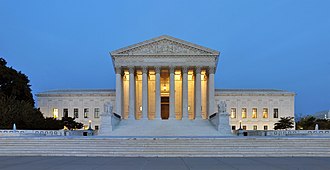
Supreme court
Highest court in a jurisdiction
In most legal jurisdictions, a supreme court, also known as a court of last resort, apex court, high (or final) court of appeal, and court of final appeal, is the highest court within the hierarchy of courts. Broadly speaking, the decisions of a supreme court are binding on all other courts in a nat...
Entity Intersection Graph
Connections for Supreme court:
Mentioned Entities
Deep Analysis
Why It Matters
This Supreme Court case matters because it will determine whether asylum seekers can be turned away at the border without due process, affecting thousands of migrants fleeing violence and persecution. The ruling will define the geographic scope of U.S. immigration enforcement authority, impacting border security operations and humanitarian protections. It directly affects asylum seekers, immigration advocates, border patrol agents, and communities near ports of entry, while setting legal precedents for future immigration cases.
Context & Background
- The U.S. has historically allowed individuals to seek asylum regardless of how they enter the country, under both domestic law (Immigration and Nationality Act) and international obligations (1951 Refugee Convention).
- In recent years, administrations have implemented policies like 'Remain in Mexico' and Title 42 expulsions to limit asylum access at the border, facing multiple legal challenges.
- The current case likely involves conflicting interpretations of statutory language about where U.S. immigration authority begins—whether at the physical border line or within U.S. territory.
- Previous Supreme Court decisions have both expanded and restricted asylum rights, creating legal uncertainty about border enforcement powers.
- Border states like Texas and Arizona have increasingly taken independent enforcement actions, creating tension with federal immigration authority.
What Happens Next
The Supreme Court will hear oral arguments, then issue a ruling by June 2025 that will immediately affect border enforcement practices. Depending on the decision, Congress may consider legislative changes to asylum laws. The ruling may also trigger additional lawsuits challenging its implementation or constitutionality, while border agencies will need to retrain personnel on new procedures.
Frequently Asked Questions
The Court is determining the legal definition of where the U.S. border begins for immigration purposes—specifically whether asylum seekers must physically cross into U.S. territory to claim protection, or if approaching the border is sufficient. This affects whether border agents can turn people away before they technically enter the country.
If the Court rules the border begins only upon physical entry, asylum seekers could be denied the chance to make their case. If it rules the border zone includes approach areas, they would have more opportunity to request protection. Either way, the decision will determine procedural rights for thousands of migrants.
Congress has been gridlocked on immigration reform for decades due to deep political divisions. While Congress could theoretically clarify border definitions in statute, current partisan disagreements make comprehensive immigration legislation unlikely, leaving courts to interpret existing laws.
The ruling will apply uniformly to all U.S. borders—with Mexico, Canada, and coastal entries—but will have the most practical impact on the southern border where most asylum seekers arrive. Enforcement may vary based on resources and infrastructure at different border locations.
Current policies remain in effect until the Supreme Court issues its final ruling. Asylum seekers continue to face existing restrictions and processing delays. Some may be detained, paroled, or required to wait in Mexico depending on their location and circumstances.