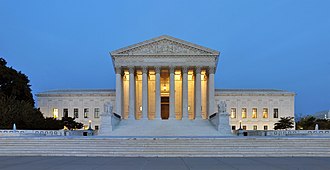
Supreme Court to hear Helms-Burton Act cases involving billions in compensation claims
Title III allows lawsuits against entities trafficking in property confiscated by Cuba after 1959 revolution
President Trump lifted Title III suspension in 2019, leading to numerous lawsuits
Cases involve ExxonMobil seeking over $1 billion and cruise lines sued for using confiscated property
📖 Full Retelling
The U.S. Supreme Court is set to hear arguments on Monday in two significant cases involving the Helms-Burton Act, with oil giant ExxonMobil and major cruise lines including Carnival, Royal Caribbean, Norwegian Cruise Line, and MSC Cruises seeking billions in compensation for property confiscated by Cuba's communist government following the 1959 revolution. The cases center on Title III of the 1996 Helms-Burton Act, a provision that allows U.S. nationals to file lawsuits in American courts against entities that 'traffic' in property seized by Cuba after Fidel Castro's revolution. While previous presidents including Bill Clinton, George W. Bush, and Barack Obama suspended this provision to avoid diplomatic conflicts with allies, President Donald Trump lifted the suspension in 2019, unleashing a wave of approximately 40 lawsuits. The Supreme Court has never before interpreted Title III, which grants the U.S. president authority to suspend it if deemed 'necessary to the national interests of the United States.' One case involves ExxonMobil seeking over $1 billion from Cuban state-owned firm CIMEX for oil and gas assets seized in 1960, challenging a lower court's decision that allows Cuban entities to raise foreign sovereign immunity as a defense. The other case features Havana Docks, a U.S. corporation that built docks in Havana's port before the revolution, suing the cruise lines for using the confiscated property. A federal judge initially found the cruise companies liable for $440 million, but an appeals court overturned that decision, highlighting the difficulties claimants face under the Helms-Burton Act. The legal disputes represent decades of tension between the U.S. and Cuba, with billions of dollars at stake in claims stemming from Cuba's nationalization of U.S. property including factories, sugar mills, oil refineries, and power plants.
🏷️ Themes
International Law, Diplomatic Relations, Property Rights
In most legal jurisdictions, a supreme court, also known as a court of last resort, apex court, high (or final) court of appeal, and court of final appeal, is the highest court within the hierarchy of courts. Broadly speaking, the decisions of a supreme court are binding on all other courts in a nat...
Exxon Mobil Corporation ( EK-son MOH-bəl) is an American multinational oil and gas corporation headquartered in Spring, Texas, a suburb of Houston. Founded as the largest direct successor of John D. Rockefeller's Standard Oil, the company was formed in 1999, with the merger of Exxon and Mobil. It is...
A cruise line is a company that operates cruise ships and markets cruises to the public. Cruise lines are distinct from passenger lines which are primarily concerned with transportation of their passengers. Cruise lines have a dual character; they are partly in the transportation business, and partl...
The Supreme Court's interpretation of the Helms-Burton Act will determine whether billions of dollars in claims against Cuban entities and international companies can proceed, impacting U.S.-Cuba relations and international business operations. The ruling could either remove legal barriers for claimants or reinforce protections for companies doing business in Cuba, setting a significant precedent for future litigation.
Context & Background
The Helms-Burton Act of 1996 allows U.S. nationals to sue over property confiscated by Cuba after the 1959 revolution
Title III of the act was suspended by multiple presidents until Donald Trump lifted the suspension in 2019
ExxonMobil seeks over $1 billion for oil assets seized in 1960
Cruise lines face a $440 million lawsuit for using docks nationalized in the 1960s
Lower courts have created barriers for claimants, including sovereign immunity defenses
What Happens Next
The Supreme Court will hear arguments on Monday and issue a ruling later in the term, which could clarify the scope of Title III and either enable or hinder future lawsuits. The decision will influence diplomatic relations with Cuba and affect how multinational companies assess risks of doing business there.
Frequently Asked Questions
What is the Helms-Burton Act?
It is a 1996 U.S. law that allows American citizens to sue over property confiscated by the Cuban government after the 1959 revolution.
Why are cruise lines being sued?
They are accused of trafficking in confiscated property by using docks in Havana that were nationalized from a U.S. company after the Cuban revolution.
What is at stake in these cases?
Billions of dollars in claims and the future ability of U.S. companies to seek compensation for assets seized by Cuba.
}
Original Source
In this article XOM CCL NCLH RCL Follow your favorite stocks CREATE FREE ACCOUNT A tourist takes a selfie picture as she stands next to a Cuban national flag at half-mast in Havana on January 5, 2026. Havana declared two days of national mourning as of January 5 after a total of 32 Cubans were killed during the US attack on Caracas that culminated in the capture of Venezuela's president Nicolas Maduro. Adalberto Roque | Afp | Getty Images The U.S. Supreme Court is set to explore legal questions arising from the fraught history of U.S.-Cuban relations when it considers the scope of a 1996 law that lets U.S. nationals seek compensation for property confiscated by the communist-led Cuban government. The justices hear arguments on Monday in two cases centered on the federal law called the Helms-Burton Act, one involving U.S. oil major ExxonMobil and the other involving the cruise lines Carnival , Royal Caribbean , Norwegian Cruise Line and MSC Cruises. One of the law's provisions, called Title III, allows for lawsuits in U.S. courts against entities that "traffic" in property confiscated by the Cuban government after the revolution that brought Fidel Castro to power in 1959. While the two cases focus on distinct legal issues, both raise the question of just how powerful a remedy Congress intended Title III to be. In both cases, the Supreme Court has the opportunity to eliminate barriers that claimants face in bringing Helms-Burton Act lawsuits. The justices have never before interpreted Title III, which Congress authorized the U.S. president to suspend if deemed "necessary to the national interests of the United States." Title III was long dormant due to presidential decisions to suspend it. But President Donald Trump, who has taken a hard line toward Cuba, lifted that suspension during his first term in office, unleashing a wave of about 40 lawsuits filed in 2019 and 2020 that have slowly made their way through the courts. Trump's administration has declared Cuba "an u...