
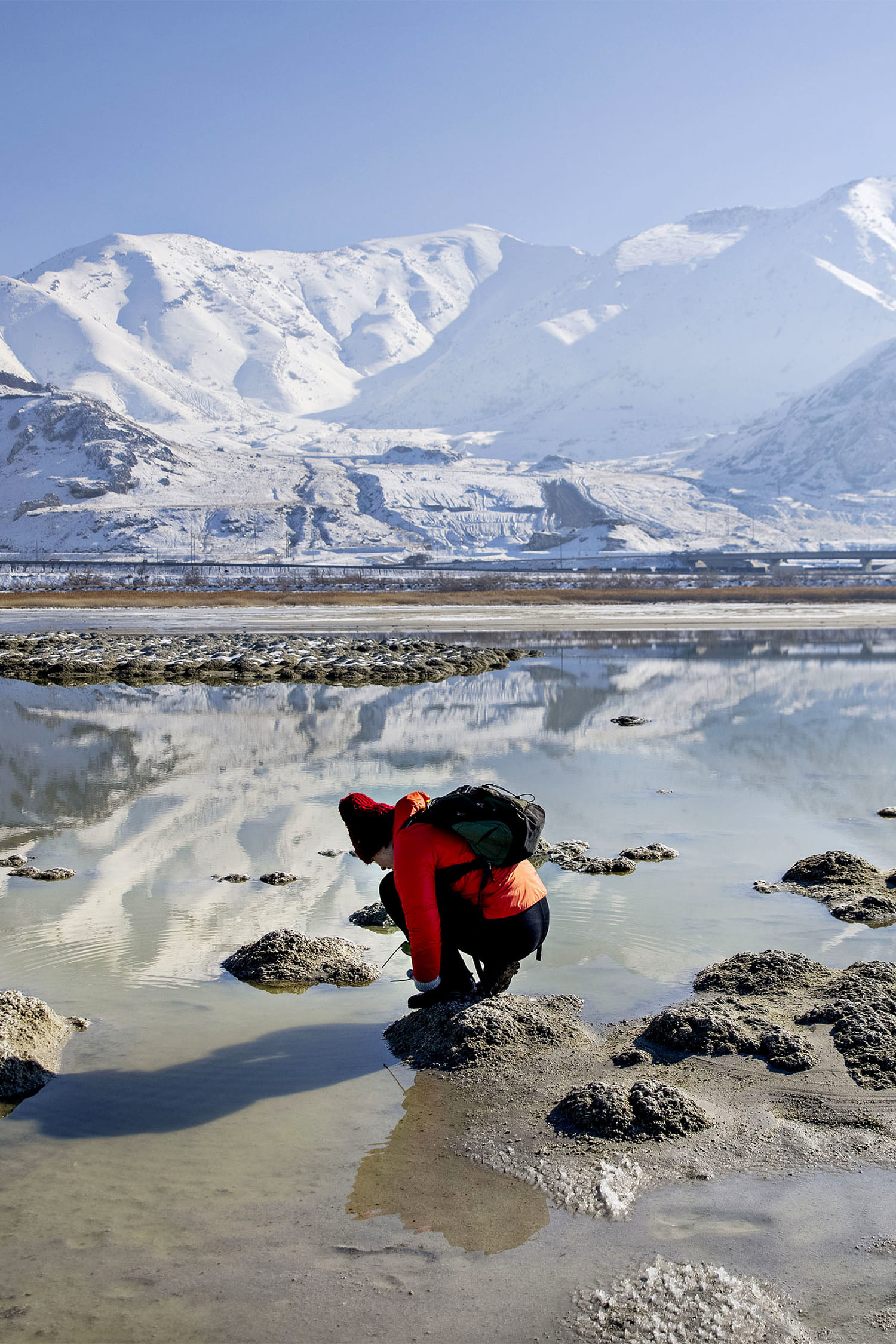
The audacious plan to refill the Great Salt Lake
#Great Salt Lake #water diversion #ecosystem restoration #environmental plan #water crisis #Utah #dust storms #conservation
📌 Key Takeaways
- A bold proposal aims to address the Great Salt Lake's declining water levels by diverting water from other sources.
- The plan involves significant engineering and environmental considerations to restore the lake's ecosystem.
- Stakeholders include government agencies, environmental groups, and local communities, highlighting the complexity of implementation.
- Success could mitigate dust storms, protect wildlife, and support regional economies, but faces challenges like funding and water rights.
📖 Full Retelling
🏷️ Themes
Environmental Restoration, Water Management
📚 Related People & Topics

Great Salt Lake
Salt lake in Utah, United States
The Great Salt Lake is the largest saltwater lake in the Western Hemisphere and the eighth-largest terminal lake in the world. It lies in the northern part of the U.S. state of Utah and has a substantial impact upon the local climate, particularly through lake-effect snow. It is a remnant of Lake Bo...

Utah
U.S. state
Utah is a landlocked state in the Mountain West subregion of the Western United States. It is one of the Four Corners states, sharing a border with Arizona, Colorado, and New Mexico. It also borders Wyoming to the northeast, Idaho to the north, and Nevada to the west.
Entity Intersection Graph
Connections for Great Salt Lake:
Mentioned Entities
Deep Analysis
Why It Matters
This news matters because the Great Salt Lake is facing an ecological crisis with water levels at historic lows, threatening the entire regional ecosystem. The lake's decline endangers millions of migratory birds, exposes toxic dust from the lakebed that affects air quality for 2.5 million residents, and jeopardizes Utah's $1.9 billion mineral extraction and brine shrimp industries. A comprehensive refill plan is crucial for preventing irreversible environmental damage and maintaining the economic and ecological balance of the Intermountain West region.
Context & Background
- The Great Salt Lake has lost 73% of its water volume since 1847 due to water diversions for agriculture and municipal use
- The lake reached its lowest recorded level in November 2022, dropping below 4,190 feet elevation for the first time in recorded history
- Utah's population has grown by 18% since 2010, increasing pressure on water resources in one of the driest states in the U.S.
- The lake supports 10 million migratory birds annually across 338 species, making it a critical stop on the Pacific Flyway
- Previous conservation efforts have included the 2019 Great Salt Lake Watershed Enhancement Trust and various legislative water conservation measures
What Happens Next
Utah lawmakers will likely consider new water conservation legislation in the 2024 session, potentially including mandatory agricultural water reductions and municipal conservation requirements. The Utah Division of Water Resources will release updated implementation plans by mid-2024, with initial water diversion changes potentially beginning in the 2024 irrigation season. Scientific monitoring will intensify through 2024-2025 to track lake response to conservation measures, with critical benchmarks set for 2025 to determine if more aggressive interventions are needed.
Frequently Asked Questions
Piping ocean water from the Pacific Ocean would require crossing 800 miles of mountainous terrain at enormous cost (estimated at $60-100 billion) and would introduce saltwater species that could disrupt the unique ecosystem. The energy requirements would be prohibitive, and the environmental impact of such a massive pipeline project would create more problems than it solves.
Under optimal conditions with significant water conservation, experts estimate it could take 5-10 years to raise the lake to sustainable levels. However, this depends on multiple factors including future precipitation patterns, temperature changes, and the effectiveness of water diversion reductions. Climate change makes precise timelines difficult to predict.
Complete drying would create an environmental catastrophe, exposing arsenic-laced lakebed dust that would create toxic air pollution affecting millions of people. The $1.9 billion mineral extraction industry would collapse, the brine shrimp industry would disappear, and 10 million migratory birds would lose a critical habitat, potentially causing cascading ecological effects throughout the western United States.
Funding would come from multiple sources including state appropriations, federal grants from programs like the Inflation Reduction Act, water user fees, and potentially bonds. Agricultural and municipal water users would likely face increased costs through conservation requirements and potential water right purchases. Private sector contributions from affected industries are also being discussed.
Yes, successful implementation will require significant reductions in water diversions, particularly from agriculture which consumes approximately 63% of Utah's water. Farmers may need to adopt more efficient irrigation methods or fallow some land, while municipalities will likely face stricter conservation measures and potentially higher water rates to encourage reduced usage.