

The Birthright Con
#Trump #Birthright Citizenship #Supreme Court #14th Amendment #Constitutional Interpretation #Immigration #Legal Scholarship
📌 Key Takeaways
- Trump is challenging birthright citizenship to test the Supreme Court
- Legal scholars from both sides defend traditional interpretation
- The 14th Amendment's citizenship clause has consistently granted citizenship to those born on US soil
- This move could represent a significant departure from established legal precedent
📖 Full Retelling
🏷️ Themes
Constitutional Law, Immigration Policy, Judicial Power
📚 Related People & Topics
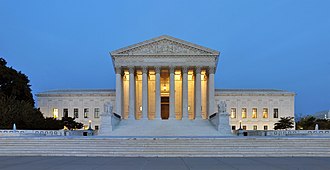
Supreme court
Highest court in a jurisdiction
In most legal jurisdictions, a supreme court, also known as a court of last resort, apex court, high (or final) court of appeal, and court of final appeal, is the highest court within the hierarchy of courts. Broadly speaking, the decisions of a supreme court are binding on all other courts in a nat...
Immigration
Movement of people into another country or region to which they are not native
Immigration is the international movement of people to a destination country of which they are not usual residents or where they do not possess nationality in order to settle as permanent residents. Commuters, tourists, and other short-term stays in a destination country do not fall under the defini...

Donald Trump
President of the United States (2017–2021; since 2025)
Donald John Trump (born June 14, 1946) is an American politician, media personality, and businessman who is the 47th president of the United States. A member of the Republican Party, he served as the 45th president from 2017 to 2021. Born into a wealthy New York City family, Trump graduated from the...
Entity Intersection Graph
Connections for Supreme court:
Mentioned Entities
Deep Analysis
Why It Matters
This challenge to birthright citizenship represents a significant constitutional debate that could reshape American immigration policy and affect millions of people born in the U.S. to non-citizen parents. If successful, it could create a new class of non-citizen residents born on U.S. soil, potentially undermining the fundamental principle of equality enshrined in the 14th Amendment. The outcome would particularly impact immigrant communities, children's rights, and the social fabric of American society that has long embraced birthright citizenship as a cornerstone of national identity.
Context & Background
- The 14th Amendment was ratified in 1868 specifically to guarantee citizenship to formerly enslaved people and their descendants after the Civil War.
- The Supreme Court first interpreted the citizenship clause in United States v. Wong Kim Ark (1898), ruling that a child born in the U.S. to Chinese immigrant parents was a citizen.
- Birthright citizenship has been the consistent interpretation of U.S. law for over a century, affecting millions of Americans including children of immigrants, tourists, and undocumented residents.
- Previous attempts to limit birthright citizenship, such as the proposed 'Birthright Citizenship Act' in Congress, have consistently failed to gain sufficient support.
- The current Supreme Court has a 6-3 conservative majority, including three justices appointed by Trump, which has led to more conservative interpretations of constitutional issues.
What Happens Next
Legal challenges to birthright citizenship will likely make their way through the federal court system, potentially reaching the Supreme Court within the next 1-2 years. Congress may also see renewed legislative efforts to address birthright citizenship, though constitutional amendments would require a two-thirds majority in both houses and ratification by three-fourths of states. Meanwhile, states may continue to pass restrictive laws that will be challenged in lower courts, creating a patchwork of legal precedents across the country.
Frequently Asked Questions
Birthright citizenship is the legal principle that grants U.S. citizenship to all individuals born on American soil, regardless of their parents' immigration status. This policy stems from the Citizenship Clause of the 14th Amendment.
Approximately 300,000 to 400,000 children are born in the U.S. each year to undocumented immigrant parents, who would be directly affected by any changes to birthright citizenship policies.
No, birthright citizenship has been consistently upheld by U.S. courts for over 130 years since the Supreme Court's decision in United States v. Wong Kim Ark (1898).
Eliminating birthright citizenship could create a large population of non-citizen residents born in the U.S., potentially affecting their access to education, healthcare, and future employment opportunities, while also creating complex questions about their legal status.
The United States is one of about 30 countries worldwide that grant unconditional birthright citizenship, including Canada, Brazil, and Argentina.
As a former president, Trump cannot directly change constitutional provisions. Any change would require either a constitutional amendment (a lengthy process) or a Supreme Court decision reinterpreting the 14th Amendment.