
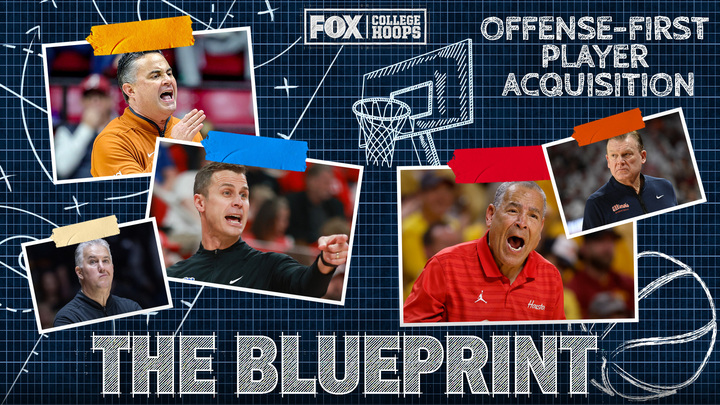
The Blueprint: How Offense-First Roster Construction Is Reshaping College Basketball
#college basketball #offensive efficiency #points per possession #roster construction #scoring surge #KenPom #Sean Miller #NBA draft
📌 Key Takeaways
- Nearly 50 college basketball teams are averaging over 120 points per 100 possessions, a dramatic increase from historical averages of about 4.6 teams per season.
- This surge in offensive efficiency is being driven by a shift toward offense-first roster construction, prioritizing scoring talent.
- Coaches attribute the change to multiple factors, including increased elite-level talent and strategic emphasis on high-powered offenses.
- The trend may mark the greatest offensive season in college basketball history, statistically, reshaping team strategies and competitive dynamics.
📖 Full Retelling
🏷️ Themes
Offensive Efficiency, Roster Strategy
📚 Related People & Topics

NBA draft
National Basketball Association Draft
The NBA draft is an annual National Basketball Association's (NBA) event, dating back to 1947, in which the teams in the league draft players to join their organizations who are eligible and who declare for the draft. The current NBA consists of 30 teams, and all thirty teams have at least one draft...
Ken Pomeroy (statistician)
American sports statistician
Ken Pomeroy is the creator of the college basketball website and statistical archive KenPom. His website includes his College Basketball Ratings, statistics for every NCAA men's Division I basketball team, with archives dating back to the 2002 season, as well as a blog about current college basketba...
The Blueprint
2001 studio album by Jay-Z
The Blueprint is the sixth studio album by American rapper Jay-Z, released on September 11, 2001, through Roc-A-Fella Records and Def Jam Recordings. Its release was set a week earlier than initially planned in order to combat bootlegging. Recording sessions for the album took place during 2001 at M...

Sean Miller
American basketball coach (born 1968)
Sean Edward Miller (born November 17, 1968) is an American college basketball coach who currently serves as head coach at the University of Texas at Austin. He previously served as head coach at the University of Arizona from 2009 to 2021 and Xavier University from 2004 to 2009 and then again from 2...
Entity Intersection Graph
Connections for NBA draft:
View full profileMentioned Entities
Deep Analysis
Why It Matters
This news matters because it reveals a fundamental shift in how elite college basketball programs are being built, prioritizing offensive firepower over traditional balanced approaches. This affects coaches, athletic directors, recruiters, and players who must adapt to this new competitive landscape. The statistical explosion in offensive efficiency represents a potential permanent change in the sport's evolution, similar to how the three-point revolution transformed basketball at all levels. Fans will see higher-scoring games with different strategic priorities, while defensive specialists may find their value diminished in this new environment.
Context & Background
- College basketball has traditionally valued balanced teams with strong defense, with championship teams often ranking highly in defensive efficiency metrics
- The KenPom analytics system has tracked team efficiency data for 30 years, providing historical context for offensive and defensive performance
- Recent rule changes emphasizing freedom of movement and reducing physicality have gradually created conditions favoring offensive play
- The transfer portal and NIL (Name, Image, Likeness) policies have changed roster construction dynamics, allowing teams to assemble offensive talent more quickly
- NBA trends toward positionless basketball and offensive spacing have trickled down to influence college coaching philosophies and player development
What Happens Next
Conference tournaments beginning this week will test whether offensive-focused teams can sustain their efficiency in high-pressure elimination games. The NCAA Tournament in March will provide the ultimate proving ground for this offensive revolution, potentially rewarding or punishing this new approach. Offseason recruiting will see increased emphasis on offensive specialists, while defensive-minded coaches may need to adapt their philosophies. Analytics departments will study whether this represents a one-season anomaly or a permanent shift in competitive strategy.
Frequently Asked Questions
This is the standard offensive efficiency metric in basketball analytics, representing how many points a team scores per 100 offensive possessions. It allows for fair comparison between teams regardless of game pace. Historically, reaching 120 points per 100 possessions indicated an elite offense, but this season nearly 50 teams are achieving this benchmark.
Coaches are prioritizing offensive talent due to rule changes favoring offensive play, the influence of NBA offensive systems, and the ability to assemble specialized rosters through the transfer portal. The statistical evidence showing unprecedented offensive efficiency this season validates this strategic shift and creates competitive pressure for other programs to follow suit.
This offensive revolution could change traditional March Madness wisdom that 'defense wins championships.' Teams built around offensive firepower may advance deeper in the tournament, potentially rewarding different player types and strategies. However, the tournament's single-elimination format will test whether offensive efficiency holds up under extreme pressure.
While the article cuts off before detailing all four pillars, coaches identified offensive-centric roster construction as the primary driver. Additional factors likely include rule interpretations favoring offense, improved shooting development, offensive system innovations, and the impact of analytics on coaching decisions and player evaluation.
The trend will likely continue as successful programs reinforce their offensive approaches through recruiting and system development. However, defensive innovations may emerge to counter these offensive systems, potentially creating a new strategic equilibrium. The long-term impact depends on whether rule changes continue to favor offensive play and whether championship success validates this approach.